
Philippines Freight Rail: USTDA Funding, SCMB Railway Impact
USTDA funds key Philippine freight rail project, Subic-Batangas line. Improving logistics and boosting trade ties.
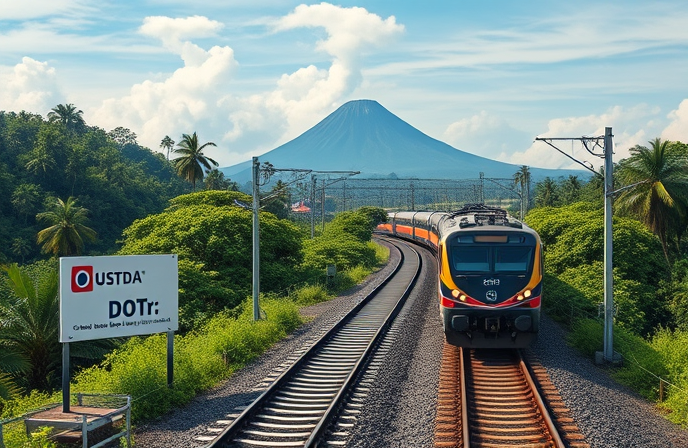
USTDA to Finance Key Philippines Freight Railway Project
The U.S. Trade and Development Agency (USTDA) has committed to funding the development of the Subic-Batangas freight railway in the Philippines, a project poised to reshape the nation’s logistics landscape. The agreement, signed in Arlington, Virginia, on June 26, 2025, marks a significant step in enhancing the Philippines’ infrastructure and strengthening economic ties between the U.S. and the Southeast Asian nation. This article will explore the details of the project, including its scope, intended benefits, and implications for the rail industry, providing a comprehensive overview of the Subic-Clark-Manila-Batangas (SCMB) railway initiative and its potential impact on freight transport and economic growth. The project is set to address major congestion issues in Manila and foster economic cooperation and will serve as a backbone of the Luzon Economic Corridor.
Strategic Partnership and Project Overview
The USTDA’s financing, made possible through an agreement signed with the Philippines’ Department of Transportation (DOTr), will support technical assistance for the SCMB railway. The proposed 132-mile (212.4 km) line will connect three critical ports, including Subic Bay, significantly improving freight transport efficiency. The collaboration exemplifies a strategic partnership focused on the development of key infrastructure projects. The SCMB railway is envisioned as a freight-focused solution to decongest Manila Port, enhance logistics, and facilitate the timely movement of goods. This project includes collaboration with The Cadmus Group LLC, a Virginia-based firm with expertise in engineering and technical consulting. The project will involve transport modeling, rail-port integration analysis, and legal and institutional planning.
Key Benefits: Decongestion, Economic Growth, and Port Efficiency
The SCMB railway is expected to offer multiple key benefits to the Philippines. Firstly, it aims to modernize the country’s logistics infrastructure, addressing the chronic congestion issues plaguing Metro Manila. Secondly, the project will stimulate economic growth by fostering trade and investment. Thirdly, it will significantly improve the efficiency of port operations, reducing turnaround times and facilitating smoother flow of goods to and from major hubs. This will also decentralize port activity and create opportunities to explore passenger services. The freight railway is strategically aligned with broader initiatives under the Luzon Economic Corridor to enhance connectivity across logistics hubs.
U.S. Involvement and Export Opportunities
The USTDA’s involvement also entails providing U.S. technical expertise in various areas, including transport modelling, rail-port integration analysis, and legal and institutional planning. This technical support will help meet the requirements of the Asian Development Bank (ADB) and mobilize financing for the railway’s implementation. Moreover, the project is anticipated to generate significant export opportunities for U.S. companies, especially in providing advanced rail technologies, equipment, and related services. This demonstrates the U.S.’s commitment to supporting infrastructure development and enhancing economic relations with the Philippines.
Industry Implications and Future Outlook
The Subic-Batangas freight railway project is expected to revolutionize freight transport within the Philippines and serve as a catalyst for further infrastructure investment. The project will address inefficiencies while providing opportunities for economic expansion. The project will also improve the efficiency of goods movement, which will reduce supply chain costs and enhance the competitiveness of Philippine businesses. The railway’s integration with the Luzon Economic Corridor and its alignment with regional partners, such as Japan, suggest that the project will be a key element of the wider infrastructure development strategy. This project represents a crucial step forward in the Philippines’ pursuit of modernized infrastructure, improved trade, and sustainable economic growth. It will undoubtedly have far-reaching implications for the rail transport industry and the broader Philippine economy.
Company Summary
The Cadmus Group LLC: The Virginia-based firm will deliver technical assistance for the SCMB railway project, indicating their expertise in transport and engineering consulting. Their involvement will ensure U.S. expertise to the project, helping to address lending requirements from the Asian Development Bank (ADB).
RELATED POSTS

June 18, 2025 9:00 pm
Keolis extends Hyderabad Metro contract, cementing its Indian presence. ...

August 12, 2025 8:33 am
Frauscher opens Indian manufacturing hub, boosting local railway technology &...

July 12, 2025 8:33 am
AAR seeks FRA waiver for automated track inspection, aiming for...

November 22, 2019 4:19 am
This article delves into the approval and implications of the...

September 30, 2025 5:54 pm
STB seeks comments on the *Union Pacific* and *Norfolk Southern*...
July 12, 2021 2:10 pm
This article examines the significant contract awarded to Alstom by...