
NTSB Lexington Accident: UP & CEF Railway Safety Investigation
NTSB investigates Union Pacific conductor’s serious injury in Nebraska rail accident. Shoving movement collision is under scrutiny.
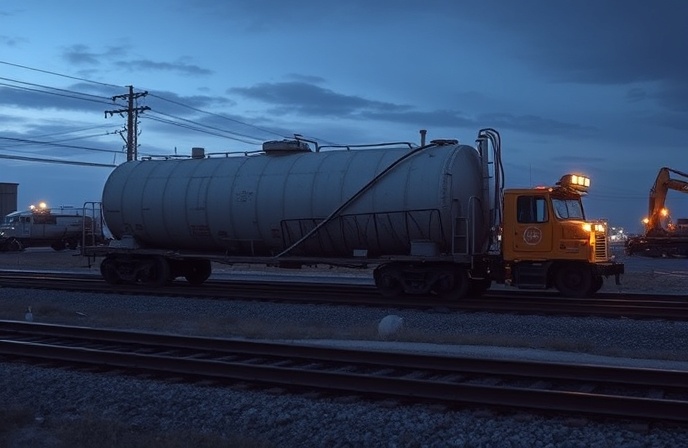
NTSB Investigates Serious Injury to Union Pacific Conductor in Lexington, Nebraska
A Union Pacific Railroad (UP) conductor sustained serious injuries on June 25th in Lexington, Nebraska, prompting a National Transportation Safety Board (NTSB) investigation. The incident, which occurred during a shoving movement at the Chief Ethanol Fuels (CEF) facility, involved a collision between the lead tank car and a stationary trackmobile. This article examines the circumstances surrounding the accident, the ongoing investigation, and the potential implications for railway safety protocols.
The accident unfolded at the CEF facility’s industry lead track. The conductor, riding the lead tank car, was struck when the car sideswiped the trackmobile. Emergency medical services responded, airlifting the injured conductor to a hospital in Kearney. The NTSB’s preliminary report, released this week, has initiated a more extensive review of the incident. The ‘Who’ is the conductor and Union Pacific, the ‘What’ is a sideswipe accident, the ‘When’ was June 25th, the ‘Where’ is Lexington, Nebraska, the ‘Why’ is currently under investigation, and the ‘How’ involved the interaction between a tank car and a trackmobile during a shoving movement. This investigation will delve into employee training, operating procedures, and safety oversight at both UP and CEF, highlighting the importance of railway safety standards.
The Incident’s Dynamics
The specific cause of the sideswipe collision is under investigation, but early findings point to potential issues within the shoving movement operation. Shoving movements, where railcars are pushed instead of pulled, require meticulous coordination and vigilance. The NTSB will analyze factors such as sightlines, communication protocols, and the positioning of the trackmobile, which was fouling the industry lead track. The investigation aims to determine whether existing safety measures were adequate and if any failures contributed to the accident. The investigation will also look at the training of both the conductor and any employees of Chief Ethanol Fuels involved in the movement.
Safety Oversight and Regulatory Scrutiny
A key aspect of the NTSB’s inquiry will be the examination of UP’s and CEF’s safety oversight programs. This will encompass a review of training programs for employees involved in switching operations, including conductors, engineers, and any personnel responsible for track maintenance. Federal regulations, enforced by the Federal Railroad Administration (FRA), mandate specific safety protocols, including the use of hand signals, proper speed restrictions, and the adherence to operating rulebooks. The NTSB will assess compliance with these regulations and identify any potential shortcomings in the implementation or enforcement of safety measures.
Employee Training and Operating Procedures
The NTSB will closely scrutinize both UP and CEF’s employee training programs and operating procedures. The investigation will evaluate the frequency and content of safety training, particularly related to shoving movements and the hazards associated with operating near trackside equipment. Operating procedures, including communication protocols and signal systems, will be reviewed for clarity and effectiveness. A critical element of the investigation will be to determine if employees were adequately trained and prepared to identify and mitigate potential hazards, thus preventing the accident.
Industry Implications and Future Outlook
This accident underscores the ongoing challenges in maintaining a safe operating environment within the railway industry, particularly during complex switching operations. The NTSB’s final report, when released, is expected to provide valuable insights into the root causes of the accident and offer recommendations to improve railway safety protocols. These recommendations will likely address areas such as enhanced employee training, updated operating procedures, and a stricter enforcement of safety regulations. The findings could lead to changes in industry best practices, potentially influencing the design and implementation of new safety technologies. The accident serves as a stark reminder of the importance of constant vigilance and adherence to safety standards in the railway industry.
The investigation’s focus on employee training, operating procedures, and safety oversight highlights the critical role of proactive safety measures. The industry must learn from this incident to prevent similar accidents in the future and ensure the safety of railroad workers and the public.
RELATED POSTS
April 1, 2026 8:45 am
Renfe Alquiler finalized a 15-year lease for ex-DB coaches with...
April 1, 2026 12:10 pm
Alstom secured a €410 million contract from CFR SA to...
April 1, 2026 2:14 pm
Saudi Arabia Railways launched a 1,700 km freight rail corridor...