
NSW TrainLink Bike Trial: Regional Rail Access Enhancement
NSW TrainLink expands bike trial on regional rail, adding Bathurst & Orange stops.
“`html
NSW TrainLink Expands Roll-On Bike Trial, Enhancing Regional Rail Access
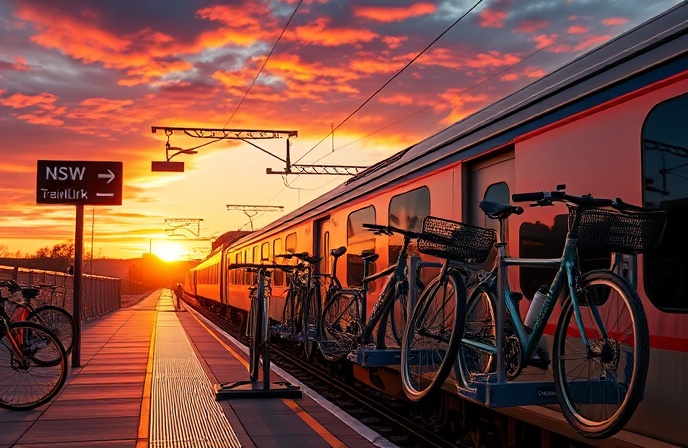
Cycling enthusiasts in New South Wales (NSW) have reason to celebrate as NSW TrainLink launches a second trial for roll-on bike access on its regional services. This initiative, a continuation of a pilot program, allows cyclists to transport their bicycles on select XPT (Express Passenger Train) services without the need for boxing, a departure from the current standard. The trial, commencing this week, expands to include stops at Bathurst and Orange, with the primary goal of evaluating the feasibility of integrating bicycles seamlessly into long-distance regional train journeys. The program will run for up to three months, providing invaluable data on various operational and passenger-related aspects. This article will examine the details of this trial, its implications for the railway industry, and what this might mean for future improvements.
Trial Expansion and Scope
The genesis of this initiative lies in the original pilot program, which focused on the Dubbo to Sydney route. This phase of the trial garnered valuable feedback from cyclists, leading to significant improvements in the current phase. The expanded trial now incorporates Bathurst and Orange stations, offering greater accessibility to cyclists in the western region. These additions will enable a more comprehensive assessment of the logistical challenges and benefits associated with bike transportation. TrainLink, in collaboration with bicycle advocacy groups, has refined the trial parameters based on initial feedback. This includes allowances for larger bikes and rolling bikes on board seven days a week, catering to a wider range of cyclists and accommodating various travel schedules. The primary aim of the trial is to meticulously evaluate several key factors. These include, but are not limited to: the ease of bike loading and unloading procedures, potential impacts on boarding times and service punctuality, effective management of luggage, and the overall passenger experience.
Operational and Logistical Considerations
The operational facets of the trial are central to its success. NSW TrainLink is keenly focused on assessing the impact of the new procedures on core aspects of rail service delivery. Crew logistics, crucial to managing both luggage and mid-journey bike boarding, are under close scrutiny. The company will carefully analyze the processes required for safely securing bikes, ensuring passenger comfort and adhering to safety regulations. The company places a high priority on service punctuality. Any disruption to boarding times will be carefully monitored, and adjustments will be made accordingly. To participate, passengers must secure a first-class ticket and pay an additional $12.10 to accommodate their bikes. A total of two roll-on bike rack spaces are available per service as part of the trial, in addition to space for up to four boxed bikes, providing a balance between accessibility and capacity. The trial is applicable to two services daily between Dubbo and Sydney.
Technical Specifications and Passenger Experience
Rigorous specifications are in place to ensure passenger safety and prevent logistical challenges. Bikes must weigh less than 20 kilograms and adhere to specific dimensional constraints: a maximum length of 1870 millimetres, a height limit of 1270 millimetres, a pedal width of 400 millimetres, and a handlebar width of 720 millimetres. Handlebars exceeding this width, up to 765 millimetres, are permissible, provided they can be loosened and turned to facilitate easier maneuvering. These measurements will be checked at validation. The passenger experience is a key focus. The trial is designed to offer seamless travel experiences, to increase ridership, and is built on the foundation that is passenger safety. Riders are encouraged to book tickets between 21 days and 24 hours before travel by calling NSW TrainLink. The emphasis on pre-booking underscores the importance of effective resource allocation and operational planning.
Conclusion
The expansion of NSW TrainLink’s roll-on bike trial marks a positive step towards fostering sustainable and cyclist-friendly regional travel. By meticulously analyzing operational procedures, the company is gaining invaluable insights into integrating bicycles into its service network. This trial, incorporating Bathurst and Orange, provides a broader platform for assessing the practicalities, challenges, and potential benefits of such a program. The trial’s outcomes will inform future policies and infrastructural investments. This will help train operators better accommodate cyclists while adhering to stringent safety standards. The emphasis on passenger experience and feedback reinforces the commitment to evolving the transport landscape, making regional travel more accessible and inclusive. The initiative reflects a growing awareness of the necessity to align transportation services with diverse traveler requirements, contributing to enhanced regional connectivity and a more sustainable future for public transport in NSW. This will also aid in more efficient resource allocation, enhanced passenger satisfaction, and a move towards more environment-friendly travel options.
“`
RELATED POSTS

March 22, 2019 4:06 pm
Tired of rail fragmentation? An independent regulatory body promises...
June 10, 2021 4:14 pm
This article examines the recent £6 million ($8.48 million) renovation...
August 29, 2021 5:18 pm
Introduction This article examines the significant investment by Avanti West...

Turkey plans to spend nearly $12bn over the next ten...

December 27, 2015 4:38 pm
Alstom has been awarded a contract worth €36 million by...
May 9, 2019 8:16 pm
The LRT1 Cavite Extension: A massive upgrade boosting Metro...