
HS2: Costain’s M&E Innovation & Challenges

The High-Speed 2 (HS2) project, a transformative undertaking in the UK’s railway infrastructure, represents a significant investment in high-speed rail connectivity. This article delves into the complexities of delivering the mechanical and electrical (M&E) systems for this ambitious project, focusing on a major contract awarded to Costain, a leading infrastructure solutions provider. We will explore the scope of Costain’s work, encompassing the design, installation, and testing of crucial systems within tunnels, along open sections of the route, and the innovative technologies being employed to enhance efficiency and safety. Furthermore, we will consider the broader context of HS2, touching upon its technological advancements, sustainability initiatives, and the collaborative partnerships driving its successful implementation. The intricacies of managing such a large-scale project, with its inherent challenges and opportunities, will be examined, highlighting the significant contributions of companies like Costain in shaping the future of high-speed rail in the UK.
Costain’s Role in HS2 M&E Systems
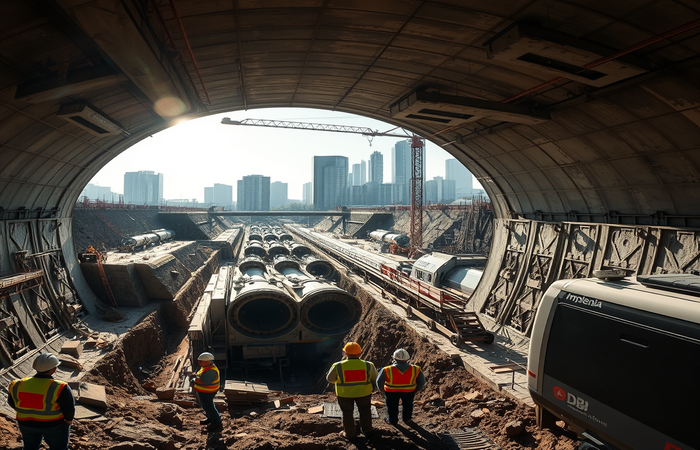
Costain’s £400 million ($507.3 million) contract with HS2 Ltd represents a substantial commitment to the project’s success. The company’s responsibilities extend across the entire M&E lifecycle, from initial design and procurement of materials to the final installation, testing, and commissioning of systems. This includes critical infrastructure within the tunnels, such as ventilation systems, and along the open sections of the line, where low-voltage power distribution and other services need to be installed. The complexity of this task is amplified by the scale of the project and the stringent safety requirements inherent in a high-speed rail environment. This contract underscores the crucial role of specialized contractors like Costain in realizing the vision of HS2.
Innovation and Technological Advancements
Costain’s commitment to innovation is evident in its adoption of advanced technologies aimed at improving safety, efficiency, and cost-effectiveness. The utilization of AI-powered robotics for tunnel installations is a significant step towards enhancing worker safety in challenging environments. Real-time digital assurance during installation further streamlines the process, minimizing errors and optimizing resource allocation. The integration of these technologies reflects a broader trend in the rail industry towards digitalization and the application of cutting-edge solutions to overcome the complexities of large-scale infrastructure projects.
Challenges and Opportunities in Large-Scale Rail Projects
Undertaking projects of the magnitude of HS2 presents significant challenges. Coordinating the work of numerous contractors, managing complex logistical operations, and adhering to strict deadlines and budgetary constraints are just some of the hurdles involved. However, these large-scale projects also offer unparalleled opportunities for innovation, technological advancement, and the development of best practices within the rail industry. The HS2 project, with its focus on high-speed rail, is a catalyst for pushing the boundaries of engineering and construction techniques, shaping the future of rail transport.
Collaboration and Partnerships
The success of HS2 hinges on effective collaboration between various stakeholders, including the client (HS2 Ltd), contractors like Costain, and technology providers. The five-year extension of the IT delivery partnership with Atos emphasizes the importance of robust IT infrastructure and cybersecurity in managing a project of this scale. These partnerships highlight the collaborative nature of modern infrastructure projects and the reliance on specialized expertise to ensure successful delivery.
Conclusion
The award of the substantial contract to Costain underscores the significant progress and investment in the UK’s High-Speed 2 (HS2) rail network. Costain’s involvement, encompassing the design, installation, and commissioning of crucial mechanical and electrical (M&E) systems throughout the project, is pivotal to its success. Their strategic use of cutting-edge technologies, such as AI-powered robotics and real-time digital assurance, demonstrates a commitment to enhancing safety and efficiency while optimizing cost. The project’s scale presents considerable challenges, demanding meticulous coordination, robust risk management, and effective collaboration between various stakeholders. However, the opportunities for technological advancement and the creation of best practices within the rail industry are equally significant. The integration of advanced technologies, such as AI robotics, and the strategic partnerships with firms like Atos, exemplify the progressive and collaborative approach shaping HS2’s development. Ultimately, HS2’s successful implementation will not only transform UK rail travel but also serve as a benchmark for future large-scale infrastructure projects globally, showcasing the capabilities of innovative technologies and collaborative partnerships in delivering complex and ambitious undertakings.
RELATED POSTS

February 20, 2025 1:42 pm
Introduction This article delves into the critical role of railway...

August 21, 2020 10:37 am
The Stonehaven Derailment: A Case Study in Rail Safety The...
April 10, 2017 5:29 am
Transnet's rail division faced significant challenges in 2024, with volumes...
August 13, 2017 4:53 pm
Elevate your passenger experience with optimized railway infrastructure. Discover how...
June 6, 2025 3:00 pm
In Frankfurt, Germany, Implenia is constructing a crucial underground section...

November 30, 2025 6:27 am
A 2025 status report on the world's top 5 mega...