
Estonia’s Rail Revolution: Indra’s €18.4M RTMS Upgrade
The €18.4 million contract for Indra’s Rail Traffic Management System (RTMS) in Estonia represents a significant investment aimed at enhancing safety, efficiency, and capacity of the country’s 1,214km rail network, focusing on real-time overview, automated scheduling, and comprehensive traffic data collection across the entire Estonian rail system.
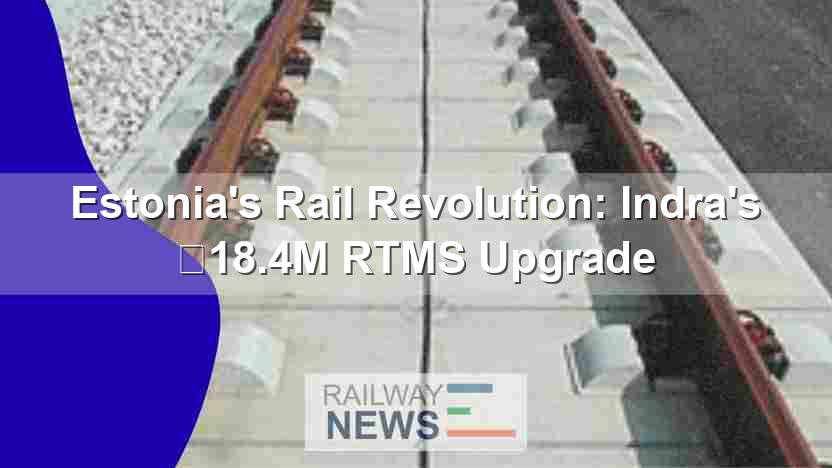
This article explores the significant modernization underway in Estonia’s railway infrastructure, focusing on the implementation of a new Rail Traffic Management System (RTMS) by Indra, a leading technology firm. The €18.4 million contract represents a substantial investment aimed at enhancing safety, efficiency, and capacity of Estonia’s 1,214km rail network. This undertaking is not merely a technological upgrade but a strategic initiative to improve the overall performance and competitiveness of Estonia’s railway system. The project encompasses the design, development, implementation, and initial two-year maintenance of a detailed RTMS, significantly impacting train dispatching, scheduling, and operational oversight. The integration of advanced digital technologies promises to optimize network utilization, reduce operational costs, and bolster safety protocols across the entire Estonian rail network. This discussion will delve into the technical aspects of the system, the broader strategic implications for Estonian railways, and the potential for future advancements in rail technology spurred by this project.
System Design and Functionality
Indra’s solution for Eesti Raudtee is built around a centralized traffic control (CTC) architecture, integrating regulation and planning systems into a cohesive Rail Traffic Management System (Rail TMS). This approach allows for a detailed, real-time overview of train operations across the entire Estonian network. The system’s design emphasizes automation and digitalization, enabling automated scheduling, efficient train dispatching, and the collection of detailed traffic data for performance analysis. The use of an integrated and open system architecture will enhance interoperability and allow for future scalability and expansion of the system to accommodate evolving operational needs. Key features include a ‘unique vision’ for operators, providing a consolidated view of network operations, and advanced algorithms for optimizing train routing and scheduling. This approach promises to improve network capacity utilization and reduce delays.
Strategic Implications for Eesti Raudtee
The implementation of Indra’s Rail TMS is a cornerstone of Eesti Raudtee’s ambitious modernization plan extending to 2030. This upgrade aligns directly with the company’s strategic goals of enhancing safety and efficiency. By automating key aspects of train operations, Eesti Raudtee aims to reduce human error and improve the overall reliability of its services. Additionally, the system’s ability to optimize network capacity and reduce operational costs is crucial for the long-term financial sustainability of the railway. The modernization project, encompassing both the RTMS and the associated Control Command and Signalling System (CCS) project, represents a major investment in upgrading Estonia’s national rail infrastructure, boosting its overall economic competitiveness.
Technological Advancements and Future Prospects
The adoption of a modern, digitally-enabled RTMS positions Eesti Raudtee at the forefront of European rail technology. The system’s open architecture promotes future integration with other emerging technologies, such as predictive maintenance systems and advanced analytics for performance optimization. This forward-thinking approach allows Eesti Raudtee to adapt to future changes in the rail industry and leverage new technological advancements to further enhance operational efficiency and safety. The project’s success could serve as a model for other railway operators seeking to modernize their infrastructure and improve their operational performance.
Economic and Societal Benefits
Beyond the direct operational benefits, the modernization of Estonia’s rail network has significant economic and societal impacts. Improved efficiency and reliability lead to increased freight capacity and reduced transportation costs for businesses. The enhanced safety features contribute to a reduction in accidents and injuries, positively impacting public safety. The modernization effort also stimulates technological advancement and creates opportunities for employment in the rail sector and related industries. Ultimately, a more efficient and reliable railway network strengthens Estonia’s national infrastructure and contributes to its economic growth and overall societal well-being.
Conclusion
The implementation of Indra’s Rail TMS by Eesti Raudtee marks a pivotal moment in the modernization of Estonia’s railway infrastructure. This €18.4 million investment represents a strategic commitment to enhancing safety, efficiency, and capacity across the entire 1,214km rail network. The system’s centralized traffic control (CTC), integrated functionalities, and emphasis on automation and digitalization will lead to substantial improvements in train scheduling, dispatching, and overall network management. This modernization not only enhances Eesti Raudtee’s operational capabilities but also strengthens Estonia’s national infrastructure, benefiting both the economy and society. The project’s success highlights the importance of embracing advanced technologies to improve rail operations and showcases a model for other railway companies seeking to modernize their systems. The open architecture of the Rail TMS ensures future adaptability and scalability, positioning Eesti Raudtee for continued advancement in rail technology and long-term operational excellence. The two-year maintenance contract after the system’s launch in 2025 further emphasizes Indra’s commitment to supporting Eesti Raudtee’s long-term success with this critical infrastructure upgrade. The broader implications of this project extend beyond Estonia, serving as a case study for the successful integration of advanced technology in rail management globally. The successful completion and ongoing operation of this new system will undoubtedly serve as a significant step forward for Estonia’s rail industry and contribute to the country’s overall economic growth and competitiveness.

Railway infrastructure, rolling stock and transport technologies specialist focused on global rail industry developments, high-speed rail systems, signaling technologies and freight transportation. Covering railway investments, public transport modernization, rail operations and international mobility projects across Europe, Asia and North America.
RELATED POSTS
June 2, 2026 8:44 am
⚡ In Brief: The UK Office of Rail and Road...
June 2, 2026 10:31 am
⚡ In Brief: The UK’s Office of Rail and Road...
June 2, 2026 11:37 am
⚡ In Brief: The UK’s Office of Rail and Road...
June 4, 2026 6:22 pm
Network Rail and HS2 demolishes two strategic rail bridges, Saltley...
June 1, 2026 6:57 pm
Amtrak confirmed the delivery of its first Airo trainset for...
June 1, 2026 10:58 pm
MARTA completed 8 Atlanta station upgrades and new Breeze fare...