
Amtrak NER Expansion: Connecting Long Island to Washington, D.C.
Amtrak plans Northeast Regional expansion to Ronkonkoma, Long Island, connecting to Washington, D.C.
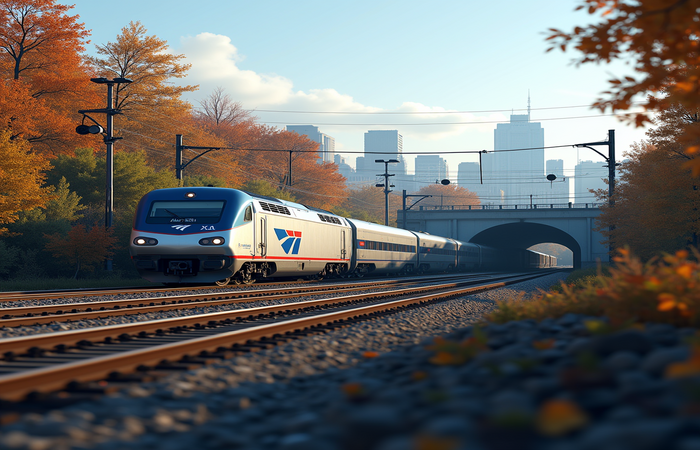
Amtrak Eyes Long Island Expansion, Connecting Ronkonkoma to Washington, D.C.
In a move poised to redefine passenger rail service in the Northeast, Amtrak is developing a plan to extend its Northeast Regional (NER) service from Ronkonkoma, Long Island, New York, all the way to Washington, D.C. This ambitious project, slated for an estimated three daily round trips, promises to revolutionize travel options for millions. The “who” is Amtrak, the “what” is the expansion of the NER, the “when” is the future, as the plan is still in development, the “where” encompasses Long Island, New York City, and Washington D.C., the “why” is to provide expanded intercity rail options and connectivity, and the “how” involves utilizing existing infrastructure along the Northeast Corridor (NEC), as well as the Long Island Rail Road (LIRR) system. This article explores the potential impact of this expansion, examining its logistical challenges and its significance for regional transportation.
Bridging the Gap: The Proposed Route and Infrastructure Utilization
The success of this project hinges on the seamless integration of existing rail infrastructure. The proposed route will leverage Amtrak’s NEC, the LIRR’s Main Line, and the LIRR’s Ronkonkoma Branch. Stations slated to be included are Jamaica and Hicksville, both current LIRR stops. Amtrak plans to navigate the complex network efficiently, integrating the commuter-focused LIRR operations with its intercity NER services. This includes addressing potential conflicts in scheduling and resource allocation, vital considerations for maintaining on-time performance. The NER will likely utilize dedicated tracks where available and carefully coordinate with the LIRR’s existing schedules to minimize any disruptions to both commuter and intercity services. The project necessitates meticulous planning to ensure the interoperability of signaling systems, track gauges, and power supplies, all critical components for operational safety and efficiency.
Connectivity and Regional Impact
This expansion holds significant potential for enhancing regional connectivity and improving the quality of life for Long Island residents. Extending the NER to Ronkonkoma offers a new intercity rail alternative for the island’s 5.4 million residents, marking the first such service in over eight decades. This development promises to reduce reliance on automobile travel, alleviating traffic congestion and reducing greenhouse gas emissions. Moreover, this expansion provides critical connections to major transportation hubs. Passengers can reach John F. Kennedy International Airport (JFK) via the JFK AirTrain at Jamaica Station, and Long Island MacArthur Airport at Ronkonkoma Station. These connections will streamline travel for both leisure and business travelers, boosting regional economic activity and providing increased access to global markets.
Operational Challenges and Considerations
The implementation of the proposed service presents several operational challenges. The integration of Amtrak’s intercity service with the LIRR’s commuter operations requires meticulous coordination. Capacity constraints along the NEC, particularly during peak hours, will need careful management. Ensuring the availability of suitable rolling stock and the implementation of necessary track and infrastructure upgrades are key considerations. Furthermore, securing necessary funding and obtaining the required regulatory approvals from both federal and state agencies will be crucial steps in this project’s realization. Safety protocols and the effective communication of schedules and delays will be essential for managing passenger expectations and minimizing disruptions.
Conclusion
Amtrak’s proposed extension of the NER to Ronkonkoma represents a significant step toward improving passenger rail service in the Northeast. The project promises to enhance regional connectivity, reduce travel times, and offer a viable alternative to automobile travel for millions of residents. While considerable challenges remain in terms of infrastructure integration, operational coordination, and financial planning, the potential benefits are substantial. The successful execution of this project will depend on collaborative efforts involving Amtrak, the LIRR, and relevant government agencies. If the proposal is fully realized, the extension has the potential to be a catalyst for further investment in passenger rail and a more sustainable transportation future for the region. The project’s success may also inspire similar expansions in other metropolitan areas seeking to enhance intercity rail options.
Company Summary: Amtrak
Amtrak, officially known as the National Railroad Passenger Corporation, is a government-supported corporation that operates almost all of the intercity passenger rail service in the United States. Amtrak’s mission is to provide safe, reliable, and efficient rail passenger transportation services. Amtrak operates over a nationwide network of approximately 21,400 route miles, serving more than 500 destinations in 46 states, the District of Columbia, and three Canadian provinces. The company’s core business includes operating passenger trains, maintaining infrastructure, and managing stations. Amtrak relies on a mix of federal funding, ticket revenue, and other commercial activities to fund its operations and capital projects, including infrastructure upgrades and rolling stock acquisitions. The company is committed to sustainability and innovation, including investments in new technologies and exploring options for increased service frequency and route expansions.
RELATED POSTS

December 18, 2023 4:19 am
EN 45545-3 defines the fire resistance requirements for barriers and...

June 19, 2017 10:25 am
Unveiling the Future of Railway Signaling: Innovations in Train Separation...

June 20, 2015 8:54 pm
Alstom handed over a H3 hybrid locomotive1 to Volkswagen (VW)...
September 19, 2023 2:33 pm
UIC Leaflet No: 551 – Chapter 5 – Rolling Stock...
Here's a voiceover-friendly excerpt:"The Canada Line, powered by SelTrac CBTC,...
April 14, 2019 6:23 am
Deutsche Bahn's ICE 4 welding defects expose critical quality control...