
Spain-Morocco Rail Tunnel: Feasible, But Misses 2030 World Cup
Gibraltar rail tunnel confirmed feasible, but misses 2030 World Cup. Estimated cost exceeds EUR 8.5 billion, connecting Europe and Africa by 2035-2040.
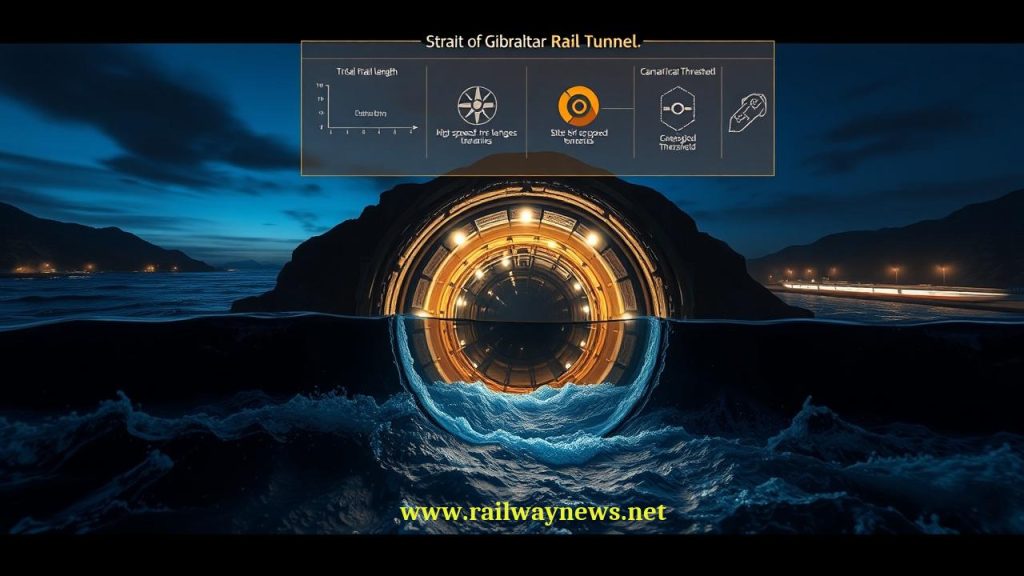
The ambitious rail tunnel connecting Spain and Morocco will not be operational for the 2030 FIFA World Cup, a major event co-hosted by the two nations, according to a new feasibility study. However, the landmark report by German engineering firm Herrenknecht confirms the project’s technical viability, setting a new realistic completion timeline between 2035 and 2040 for the historic Europe-Africa link.
| Category | Details |
|---|---|
| Project Name | Strait of Gibraltar Rail Tunnel |
| Estimated Completion | 2035 – 2040 |
| Lead Feasibility Consultant | Herrenknecht AG (Germany) |
| Estimated Cost (Spanish Side) | Over EUR 8.5 Billion |
| Key Technical Challenge | Camarinal Threshold (Complex Flysch Formations) |
| Maximum Depth / Total Length | 475 meters / ~65 kilometers |
MADRID, SPAIN – A definitive feasibility study has concluded that the Strait of Gibraltar rail tunnel, a generational project linking Europe and Africa, is technically possible but will not meet the highly anticipated 2030 deadline set by the FIFA World Cup. The study, conducted by world-renowned Tunnel Boring Machine (TBM) manufacturer Herrenknecht for the Spanish Society for Studies on Fixed Communication across the Strait of Gibraltar (Secegsa), provides a critical green light for the project’s long-term future. While the symbolic goal of connecting the World Cup co-hosts via rail is now off the table, the report marks a major milestone, shifting the project from a decades-old concept to a tangible engineering plan with a target operational window between 2035 and 2040.
The technical deep-dive confirms that a highly complex underwater railway is achievable with current technology. The proposed design consists of two separate, single-track tunnels for passenger and freight services, alongside a central service and safety gallery. The tunnel will span approximately 65 kilometers in total, with 40 kilometers on Spanish territory, reaching a maximum depth of 475 meters below sea level. The most significant engineering hurdle identified is the Camarinal threshold, a section with extremely challenging geological conditions, including unstable flysch formations that will test the limits of modern TBM capabilities. Upon completion, the high-speed link is expected to reduce the travel time between Spain and Morocco to approximately 30 minutes, with the Spanish terminal planned near Vejer de la Frontera, connecting to the national rail network and major motorways.
The confirmation of technical viability breathes new life into a project relaunched by the Spanish government in 2023. After years of preliminary studies, momentum is building, with Spain’s Secegsa and its Moroccan counterpart, Société Nationale d’Études du Détroit (SNED), advancing a joint strategy. The next crucial step is the finalization of the preliminary infrastructure design (APP07) by Spanish public company Ineco, due by August 2026. This will pave the way for a tender for a first exploratory tunnel before 2027, an essential phase to validate geological data in situ. While the tunnel will miss the 2030 World Cup, officials suggest initial physical works could symbolically commence to coincide with the tournament, underscoring the project’s continued strategic importance for both host nations.
Key Takeaways
- Timeline Reset: The 2030 World Cup deadline is officially unachievable; the project’s new realistic completion target is between 2035 and 2040.
- Technical Green Light: Despite immense geological challenges at the Camarinal threshold, German firm Herrenknecht has confirmed the project is feasible with current engineering and TBM technology.
- Next Steps Solidified: With feasibility confirmed, the project moves to the next phase, with a full preliminary design update due by 2026 and a tender for an exploratory tunnel planned before 2027.
Editor’s Analysis
The Herrenknecht study’s conclusion is the most significant development for the Gibraltar tunnel in over a decade. While the headline focuses on missing the 2030 World Cup, the real news for the global rail and infrastructure industry is the confirmation of technical feasibility. This shifts the project’s status from a political aspiration to a viable, albeit monumental, engineering challenge. For the first time, a clear path forward exists, backed by a world-leading technology provider. The project’s success will now hinge less on engineering possibility and more on political will and the creation of a robust, multi-national financing model. If executed, this tunnel will not just be a transport link; it will be a new economic artery, fundamentally reshaping logistics, trade, and supply chains between Europe and Africa and setting a new global benchmark for mega-project execution.
Frequently Asked Questions
- Will the Spain-Morocco tunnel be ready for the 2030 World Cup?
- No. The latest feasibility study by Herrenknecht confirms the project cannot be completed by 2030. The new estimated completion timeframe is between 2035 and 2040.
- How much is the Strait of Gibraltar tunnel expected to cost?
- The current estimate for the Spanish side of the project alone exceeds EUR 8.5 billion. This figure includes all construction phases, installations, and a reserve for risks and contingencies.
- What is the main engineering challenge for the tunnel’s construction?
- The primary technical hurdle is drilling through the “Camarinal threshold.” This section of the route features complex and unstable geological flysch formations on the seabed, which poses a significant challenge for Tunnel Boring Machines (TBMs).
RELATED POSTS

September 11, 2024 9:06 am
Bologna's new tram network, a €500 million railway project, ...
April 12, 2019 4:35 am
Revolutionize railway safety training with immersive VR! Avanti West...
June 8, 2017 7:36 pm
"The Los Angeles Metro's Purple Line Extension is expanding, with...

June 11, 2025 6:00 pm
Alstom contracts Seville Metro Line 1 signaling system modernization, boosting...

September 17, 2024 12:07 pm
The Los Angeles Metropolitan Transportation Authority (LA Metro) has been...
March 17, 2021 7:21 pm
Algeria's Constantine Tramway expands, boosting railway sector capacity and connectivity....