
Knorr-Bremse: AI Hub in Chennai Drives Railway Digital Transformation
Knorr-Bremse opens AI hub in Chennai, India, to boost railway sector digitalization. The hub, set for launch in August 2025, will use AI for operational efficiency and innovation.
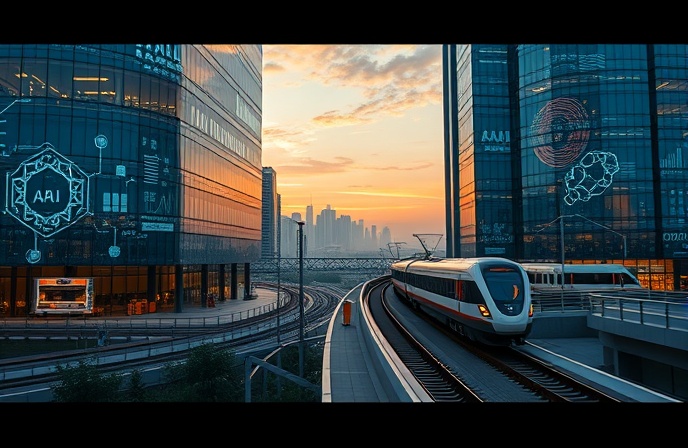
Knorr-Bremse Establishes AI Hub in Chennai, India, to Drive Railway Industry Digital Transformation
In a move poised to reshape operational efficiency and accelerate innovation, Knorr-Bremse, a global leader in braking systems and other railway technology, has launched a new artificial intelligence (AI) center in Chennai, India. This strategic investment, announced recently, will begin its ramp-up phase in August 2025. The initiative aims to leverage the power of AI to optimize internal processes, enhance performance, and expedite the implementation of new technologies across the company. The primary driver is to bolster Knorr-Bremse’s ongoing digital transformation efforts, aiming to solidify its position as a frontrunner in the industrial application of AI. This ambitious undertaking will focus on developing and deploying AI-based solutions to streamline operations and enhance engineering capabilities. The new center will house around 70 specialists initially, reflecting the company’s commitment to utilizing advanced technologies in the railway sector.
AI Agents: The Engine of Operational Efficiency
Central to Knorr-Bremse’s strategy is the deployment of AI agents, sophisticated software programs designed to break down complex tasks into manageable steps and execute them autonomously. These agents will serve as the core of the new AI center’s initial focus, with early applications in areas such as software development and automated invoice verification. The company’s approach centers on developing highly specialized AI models trained using internal data. These models will then be flexibly adapted to meet specific needs. Potential future applications include progress tracking, cost control, virtual product testing, and supply chain management, further underlining the company’s commitment to integrate AI across its operations. These agents will be supported by a bespoke analytics engine designed to boost performance and generate software code rapidly and accurately.
Engineering & Innovation: AI to Drive Faster R&D
Beyond internal processes, Knorr-Bremse intends to integrate AI capabilities into its multi-stage engineering and innovation pipelines for rail and commercial vehicle systems. This is a crucial step that highlights how AI can reshape core competencies. This includes supporting the design of electronic and software components, particularly within braking systems – a critical component of railway safety and efficiency. The company expects AI agents to accelerate research and development (R&D) cycles, improve product development, and better integrate customer requirements into the design process. This approach will allow for faster prototyping, quicker iterations, and a more responsive approach to market demands. This focus will allow Knorr-Bremse to stay ahead of industry trends.
Strategic Vision: BOOST and Digital Transformation
The new Chennai AI center is a direct outcome of Knorr-Bremse’s broader “BOOST” strategy program. This company-wide initiative aims to significantly increase the efficiency and performance of the organization. Marc Llistosella, CEO of Knorr-Bremse AG, emphasized that the AI center represents a strategic investment in digital transformation. By leveraging AI in operational processes, the company aims to rethink and improve numerous processes, working methods, and approaches. This digital transformation strategy reflects the growing importance of digital technologies across the railway industry, with Knorr-Bremse aiming to be at the forefront of innovation.
Chennai’s Advantage: A Technology Hub
The decision to locate the AI center in Chennai was driven by the city’s reputation as a technology hub. Sathees Navaratnam, Chief Digital Officer at Knorr-Bremse, highlighted that Chennai provides ideal conditions for accessing highly qualified specialists and data. This environment enables the company to train AI models using its company data and adapt AI agents to its needs quickly and flexibly. The availability of talent is pivotal for the success of this initiative.
Conclusion
Knorr-Bremse’s establishment of an AI center in Chennai is a bold step that reflects the company’s vision for the future of the railway industry. By investing in AI solutions, the company aims to optimize internal processes, accelerate product development cycles, and strengthen its position as a technological leader. The initial focus on AI agents for software development and accounting, alongside future applications in supply chain management and process optimization, paints a picture of a company-wide transformation. The potential to integrate AI into the design and engineering of braking systems and other rail components signals a significant advancement in railway technology. This initiative highlights the ongoing digitalization of the rail sector and the importance of AI in driving operational excellence and innovation. Other industry players should take note of how Knorr-Bremse leverages its data and expertise to implement these cutting-edge AI solutions. This investment in Chennai is a testament to the power of global collaboration.
Company Summary: Knorr-Bremse in the Railway Sector
Knorr-Bremse is a global market leader for braking systems and other safety-critical systems for rail and commercial vehicles. The company’s core business centers on providing braking systems, entrance systems, HVAC systems, and other essential components that are critical to safe and efficient railway operations. With a focus on innovation and sustainability, Knorr-Bremse plays a crucial role in shaping the future of rail transport, providing advanced technologies that improve performance, safety, and environmental responsibility across railway networks worldwide. Knorr-Bremse’s commitment to research and development ensures that it continues to be at the forefront of the rapidly evolving railway technology landscape.
RELATED POSTS

April 5, 2025 2:47 am
The CSX-Teamsters Contract: A Case Study in Labor Relations within...

September 15, 2018 4:48 pm
India's $82.64 million investment in 160 new passenger coaches for...

September 12, 2025 7:25 pm
UK railway stations ripe for redevelopment, boosting economic and social...

June 19, 2025 1:35 pm
Go-Ahead Group enters Australian rail market, aiming for improved service...
The COVID-19 pandemic presented unprecedented challenges to global transportation systems,...

May 28, 2025 9:00 pm
Canadian National Railway (CN) has unveiled a significant investment of...