
UK Stations: Reimagining Assets for Long-Term Value
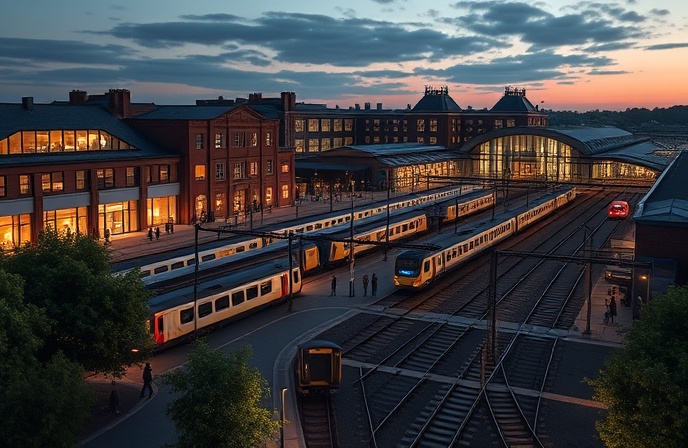
UK railway stations ripe for redevelopment, boosting economic and social value. Network Rail’s 2,500+ stations can generate revenue through diverse sources.
“`html
Introduction
Egis in the UK’s Intercity Director discusses the potential for railway stations to be reimagined as long-term assets capable of delivering both economic and social value. This shift could be applied to smaller, local stations across the UK, which, from Margate to Middlesbrough, can be reimagined as long-term assets that incorporate and maximize various revenue sources to fund infrastructure upgrades.
A Network Under Pressure
A significant portion of the UK’s railway stations are constrained by outdated designs. Small and medium-sized stations, which constitute 80% of Network Rail’s estate, are particularly affected. Network Rail owns the freehold to the majority of over 2,500 stations in the UK. Many stations struggle to meet passenger demands, and overcrowding and accessibility are growing concerns. Additionally, the backlog of maintenance work for station buildings and infrastructure has reached approximately £2 billion. With a projected passenger growth of at least 37% by 2050, modernizing the station network is crucial.
A Joined-Up Approach
Stations should be developed as multi-modal transport hubs. This involves integrating rail with buses, trams, cycling infrastructure, walking routes, and emerging modes like e-scooters. An example of this is the Bee Network in Greater Manchester, which facilitates seamless journeys by bus, tram, train, walking, wheeling, or cycling. This demonstrates how stations can become gateways to wider transport networks, improving accessibility and reducing car dependency. Stations also have the potential to be vibrant, multi-functional hubs delivering economic and social value.
Transit Points to Daily Destinations
Several revenue streams can be harnessed to make station upgrades more affordable. These include advertising, car parking, and retail. The latter is a reliable source of revenue, and small stations can benefit by tailoring to the local market. An example is Melton station in Suffolk, which has housed a local butcher for the past two decades. Indirect revenue streams include housing and over-station development, with residential and commercial property values increasing within a certain radius of new stations. For instance, an over-station development at Farringdon comprising 138,000 square feet of office space raised £500 million for Transport for London. The Solum Twickenham Gateway project by Network Rail has also seen 121 high-quality residential homes and a new public space with shops and amenities built at Twickenham Station. Community amenities can also be accommodated in stations to become catalysts for local growth. Victorian station buildings with surplus space could attract visitors by housing pubs or restaurants. Rural stations could offer parcel collection services. Installing cycle hire points can also enhance accessibility and encourage sustainable transport.
Last June 2025, we published an article about Renfe’s cutting-edge Aranjuez maintenance hub, boosting Cercanías efficiency. Click here to read – Future of Rail: Renfe’s Railway Technology Hub, Aranjuez: Essential Guide
The Case for Investment – and Why it Could Pay for Itself
Integrated station developments have the potential to be self-funding by unlocking land value, increasing footfall, and generating new income streams. Investment models require clarity, certainty, and appropriateness to attract private capital into stations, which aligns with the government’s 10-year infrastructure strategy. Investors often prefer stable and measurable revenue streams. Station portfolios should be large enough to diversify risk. Many improvements can be cost-neutral or positive over time. The Northern Line Extension to Battersea exemplifies this approach, incorporating developer contributions and retained business rates to finance the project. Projects must align with national strategies on transport, housing, and infrastructure and integrate local transport plans to demonstrate social value. Effective collaboration between public and private sectors is essential, with public-private partnerships (PPPs) able to align interests, as demonstrated by the Northern Line Extension.
Conclusion
With the right approach, stations can evolve from aging assets into spaces that serve passengers and the wider community. By aligning public and private investment and fostering long-term partnerships, a new approach can create the conditions for train stations to be designed not just for operational efficiency, but with social and economic value taking centre stage.
Company Summary
Egis is a company mentioned in the article.
Network Rail is an organization mentioned in the article.
Transport for London is a company mentioned in the article.
“`
RELATED POSTS

January 28, 2019 9:25 pm
Taiwan's railway modernization leaps forward! Hitachi's 600 new EMU...
April 14, 2025 10:37 am
This article explores the significant development of Siemens Mobility’s new...
October 12, 2023 3:43 pm
This article analyzes the strategic acquisition of a 50% stake...
October 31, 2025 2:54 am
Virgin Trains secures ORR approval for Temple Mills depot, paving...
February 7, 2019 12:59 pm
Melbourne's Metro Tunnel project: Anzac Station's massive excavation—400,000 tonnes...
February 26, 2020 10:43 pm
The Akiem Group’s Acquisition of Macquarie Europe Rail: Expanding its...