
Eurostar: UK High-Speed Rail Expansion & Depot Investment
Eurostar urges UK investment in high-speed rail, seeking to expand European network and establish London as a maintenance hub.
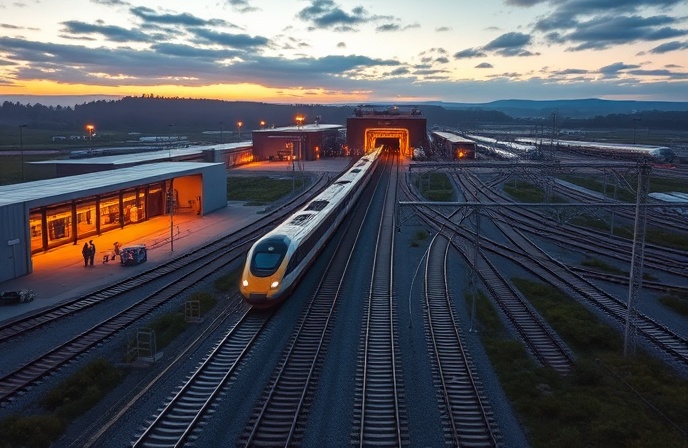
Eurostar Calls for Strategic UK Investment to Lead European High-Speed Rail Expansion
In a bid to cement the UK’s role in the future of European high-speed rail, Eurostar has issued a call to action for UK regulators and the government. This follows the company’s latest submission to the Office of Rail and Road (ORR) concerning the long-term use of the Temple Mills International (TMI) depot in East London. The core of Eurostar’s plea revolves around a “system-wide” approach to encourage expansion, capitalising on rising demand for international rail travel. Specifically, Eurostar seeks support to establish London as a major maintenance hub. This report analyzes Eurostar’s expansion plans, the critical role of depot capacity, potential infrastructure investments, and the wider implications for the UK rail industry. The aim is to outline the necessity of strategic partnerships and investments to ensure a sustainable and leading position for the UK in Europe’s high-speed rail network.
Expanding the Network: Eurostar’s Ambitious Growth Strategy
Eurostar, having carried 19.5 million passengers in 2024 – a 5% increase year-on-year – has set an ambitious target of 30 million annual passengers. This growth is underpinned by a comprehensive EUR 2 billion investment program designed to modernize operations. Key components include procuring up to 50 new high-speed trains, upgrading existing station infrastructure in London, Paris, and Brussels, and significantly expanding its maintenance capabilities. The company’s growth strategy also encompasses the launch of new direct routes, with plans for services connecting London to Frankfurt and Geneva, in line with recent agreements between the UK government and Germany and Switzerland. This expansion is set to reinforce London’s position as a key international travel hub and a significant link in the European rail network.
The Capacity Conundrum: Temple Mills International and the Need for Expansion
A pivotal element of Eurostar’s expansion plan is the TMI depot, its sole UK maintenance facility. The operator has earmarked EUR 80 million for infrastructure investment to support the new high-speed fleet. However, the existing capacity at TMI presents a significant challenge. The ORR’s previous statement indicated that the depot could support either Eurostar’s growth or a new entrant, but not both. Eurostar contends that the capacity constraints at TMI must be addressed and argues that it highlights the need for further government and industry collaboration. “Industry and Government must work together to encourage private investment in new depot facilities beyond TMI to facilitate the growth of the sector,” the operator stated in its recent submission. This issue necessitates immediate action to secure the future expansion of Eurostar’s service portfolio.
Proposed Solutions and Potential Infrastructure Sites
To alleviate capacity limitations, Eurostar has put forward several potential sites to support increased depot capacity. The operator has suggested utilising existing infrastructure and exploring new development opportunities. These potential sites include Southeastern and Hitachi’s Ashford Train Maintenance Centre, freight facilities at Dollands Moor, and Singlewell depot. Other options include Ripple Lane, the HS1 chord, Fawkham Junction, and various sites in East London. The locations suggested are strategically chosen to ensure efficient maintenance operations. This would facilitate the introduction of more trains and a wider network of routes. According to Eurostar, “expanding depot capacity is essential to delivering its growth ambitions while also meeting surging demand for sustainable transport.”
A Call for Collaboration and Long-Term Planning
Gareth Williams, General Secretary and Chief Strategic Partnerships Officer at Eurostar, underscored the significance of forward-thinking planning and collaborative efforts. “Eurostar is on the side of solutions, and we believe there is an incredible opportunity to grow international rail as demand for sustainable travel increases.” Williams continued, “Our plans are financed, already underway, and designed to deliver for the long term.” He emphasized the importance of TMI. “Temple Mills is an important foundation of that future. We want to be a leading centre for European high-speed maintenance, bringing skilled jobs and industrial investment.” His remarks reiterate the need for decisive action to capitalize on the expanding market for international rail travel. The company believes the UK has a unique moment to make bold decisions to unlock the huge potential of international rail and encourage more European links for tourism, trade and education.
Conclusion
Eurostar’s call to action is a critical initiative aimed at positioning the UK as a central figure in Europe’s high-speed rail network. The company’s ambitious growth plans, supported by significant investment, are contingent upon resolving capacity constraints, particularly at the TMI depot. The suggested strategies encompass a “system-wide” approach, including expanding maintenance infrastructure and fostering collaborations with both governmental bodies and private investors. These measures underscore the significance of long-term planning and strategic investments in sustaining and expanding the UK’s rail infrastructure. The UK stands at a pivotal moment, where bold decisions can unlock vast potential within the international rail sector. Failure to act decisively could limit the UK’s capacity to capitalize on the escalating demand for sustainable transport and economic growth driven by enhanced international connectivity. The next steps involve securing commitments from regulators and the government to provide the necessary support to ensure that Eurostar’s expansion plans contribute significantly to the UK’s growth agenda and position the nation as a leading centre for European high-speed rail.
RELATED POSTS

January 20, 2018 4:19 pm
Revolutionize railway operations with data-driven predictive maintenance and intelligent scheduling....
February 18, 2020 4:01 pm
This article examines the significant investment by the European Investment...

June 6, 2025 4:00 pm
UK rail gets a boost! A Costain-led consortium, including GHD,...
February 10, 2017 6:07 pm
New DB Regio EMUs are revolutionizing Stuttgart's S-Bahn, enhancing capacity...
November 7, 2025 6:54 pm
Alstom begins manufacturing *Elizabeth line trains* in Derby, UK, bolstering...

November 30, 2025 6:27 am
A 2025 status report on the world's top 5 mega...