
UAE’s New Railway: Linking Abu Dhabi & Dubai

Introduction
This article explores the significant completion of the Abu Dhabi-Dubai direct railway line, a pivotal component of the UAE National Rail Network (UAE NR). This project, undertaken by Etihad Rail, represents a substantial step towards enhancing logistical efficiency, boosting economic integration between the emirates, and solidifying the UAE’s position as a regional transportation hub. The project’s scope extends beyond mere infrastructure development; it incorporates advanced technologies, such as a centralized train control system (CTC) and a commitment to environmental sustainability through the use of electric locomotives. The successful completion of this 256-kilometer (km) line, involving extensive civil engineering works and a substantial investment of AED 50 billion ($13.61 billion), marks a crucial milestone in the UAE’s ambitious railway program. The ensuing discussion will delve into the project’s engineering feats, technological advancements, economic implications, and its contribution to the overall vision of a unified national rail network.
Engineering and Construction
The construction of the Abu Dhabi-Dubai railway line presented significant engineering challenges. The project involved the construction of 29 bridges, 60 crossings, and 137 drainage channels, necessitating meticulous planning and execution. The sheer scale of earthworks, with 46 million cubic meters of excavation and backfill, highlights the magnitude of the undertaking. The successful completion, facilitated by a workforce of 13,300, speaks to the effective project management and logistical prowess demonstrated by Etihad Rail. This phase showcased robust engineering solutions to overcome geographical challenges and ensure the durability and safety of the rail infrastructure. The adherence to the highest international standards and specifications, particularly concerning environmental impact and safety, ensured a project executed to the highest quality.
Technological Integration
The Abu Dhabi-Dubai line is not merely a physical connection; it is a technologically advanced railway system. The implementation of a centralized train control system (CTC) represents a significant leap in operational efficiency and safety. CTC allows for real-time monitoring and control of train movements, optimizing schedules, and enhancing safety protocols. This contrasts sharply with older, less efficient systems. Furthermore, the commitment to electric locomotives underlines the UAE’s dedication to environmental sustainability. This decision reduces reliance on fossil fuels, mitigating harmful emissions and contributing to a greener transportation sector. The selection and integration of these technologies demonstrates a commitment to future-proof infrastructure that aligns with global best practices.
Economic and Logistical Impact
The completion of this rail link promises substantial economic benefits. It will significantly reduce transportation costs for both goods and potentially passengers, fostering greater economic integration between Abu Dhabi and Dubai. This improved connectivity will facilitate the efficient movement of goods, streamlining supply chains, and boosting the competitiveness of businesses operating within the UAE. The line’s role in developing the broader UAE National Rail Network is crucial; its completion provides a vital artery within this larger network, facilitating inter-emirate trade and boosting domestic economic growth. The potential for increased tourism and improved accessibility for both residents and tourists further emphasizes the far-reaching economic benefits of this project.
Conclusion
The successful completion of the Abu Dhabi-Dubai direct railway line marks a significant achievement for the UAE. The project demonstrates not only robust engineering capabilities but also a clear commitment to technological advancement and environmental responsibility. The adoption of a centralized train control system and the use of electric locomotives highlight the UAE’s forward-thinking approach to railway infrastructure development. The economic and logistical implications are profound, promising increased efficiency in the movement of goods, reduced transportation costs, and enhanced connectivity between the two major emirates. The project’s success serves as a testament to the UAE’s ambitious vision for its National Rail Network, a network designed to enhance domestic trade, drive economic growth, and reinforce the country’s position as a pivotal player in regional and global logistics. The project’s completion is not simply an end point but a foundation upon which further expansion and integration of the UAE’s railway network can be built, ushering in a new era of efficient and sustainable transportation within the nation. The AED 50 billion ($13.61 billion) investment underscores the UAE’s commitment to long-term strategic infrastructure development, setting a benchmark for other nations aiming to modernize their transport sectors. The integration of cutting-edge technologies, such as the CTC system, ensures not only efficiency but also a high level of safety and reliability. The commitment to electric locomotives is a further sign of the UAE’s dedication to sustainable development, showcasing a responsible approach to infrastructure development that balances economic progress with environmental stewardship. The future of the UAE’s railway network looks bright, promising a more connected, efficient, and sustainable future for the nation.
RELATED POSTS
September 14, 2021 5:46 am
This article examines the significant concession agreement between the Brazilian...
July 3, 2025 1:33 pm
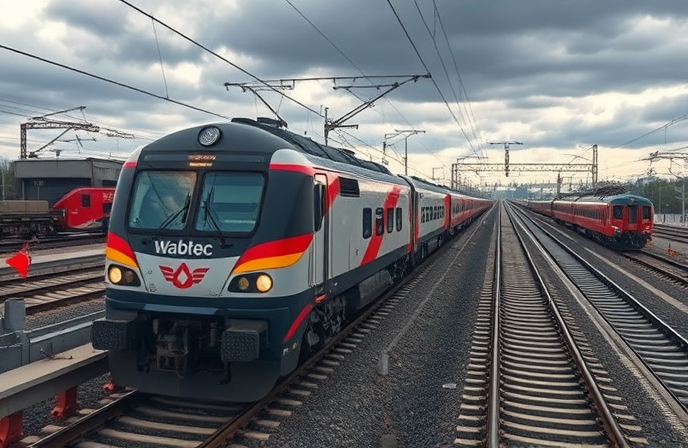
Wabtec acquires Evident's inspection tech, boosting railway digital intelligence and...
September 30, 2025 9:54 pm
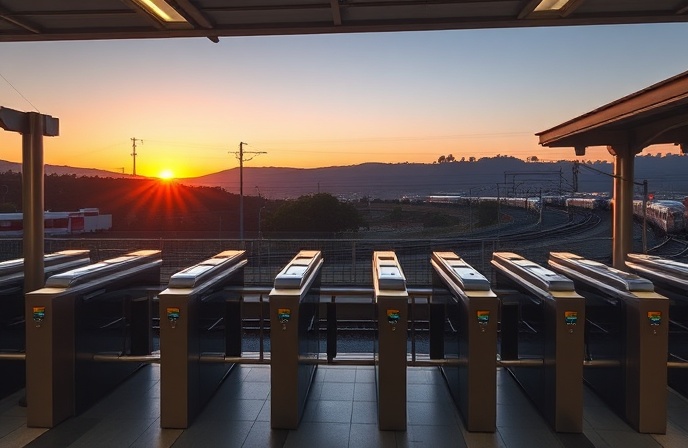
BART completes installation of 715 new *fare gates* across 50...
December 21, 2021 4:09 am
This article examines the successful field testing of silicon carbide...

February 13, 2025 2:44 pm
This article explores the critical need for enhanced safety and...

November 8, 2013 7:05 am
A consortium of three Japanese companies has won a contract...