
Cologne Light Rail: Stadler’s Rail Innovation & Modernization
Cologne orders €700M Stadler light rail fleet, boosting city’s transport. 132 vehicles, deliveries start 2029.
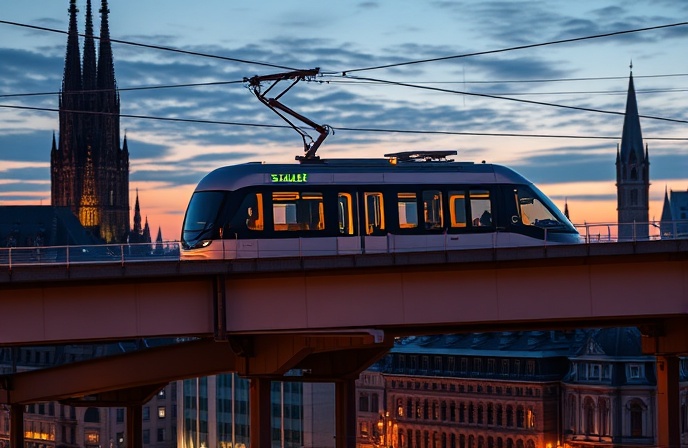
Cologne Orders New Stadler Light Rail Fleet in €700 Million Modernization Push
In a landmark move set to transform urban mobility, Kölner Verkehrs-Betriebe (KVB), Cologne’s public transport operator, has commissioned Swiss rail manufacturer Stadler to supply 132 high-floor light rail vehicles. Valued at just under €700 million, this significant investment represents a major modernization of the city’s light rail network, with the first vehicles slated to enter service in 2029. This ambitious project will replace aging rolling stock, enhance passenger capacity, and integrate cutting-edge technology to improve operational efficiency and passenger experience. The “Who” is KVB and Stadler; the “What” is the order for new light rail vehicles; the “When” is with deliveries starting in 2029; the “Where” is Cologne, Germany; the “Why” is to modernize and increase the capacity of the city’s public transportation; and the “How” involves Stadler supplying the vehicles and ongoing support. The article will focus on the technical and operational advancements incorporated within this new fleet, highlighting their impact on Cologne’s transport infrastructure and the broader rail industry.
Capacity and Operational Efficiency: Vehicle Configuration and Design
The new fleet is engineered for operational flexibility, featuring a modular design centered around the ability to couple vehicles together. Stadler will also provide 34 intermediate modules, each 10 meters long, allowing for flexible configuration and capacity expansion. This design permits trains to be assembled in various lengths, accommodating passenger demand on specific routes. When coupled with intermediate modules, these light rail vehicles can reach lengths of approximately 70 meters, significantly increasing passenger capacity to up to 470 passengers, substantially more than the current fleet. The design is aimed at facilitating faster boarding and alighting, improving accessibility, and facilitating a more even passenger distribution. The modular concept also supports infrastructure efficiency, helping to reduce congestion during peak travel times. This is critical for an aging city like Cologne which will benefit from increased rider capacity.
Technological Advancements: Enhancing Driver Experience and Operational Safety
The new vehicles are equipped with advanced technology to enhance operational performance and safety. The driver’s cabs feature an ergonomic layout with optimal visibility and digital display systems which adjust to ambient light. A video-based rear-view mirror system eliminates blind spots. Driver assistance technology is included to help prevent collisions. Each vehicle will also integrate a passenger counting system supported by analytical software to assist in operational planning and allow for real-time capacity adjustment. Hybrid wheels with aluminum rim rings will also be used to reduce both the vehicle’s overall weight and noise levels during operation. These technological integrations are designed to optimize operations, improve safety, and provide a superior passenger experience.
Passenger Comfort and Accessibility: Inclusive Design Principles
Passenger comfort and accessibility are key priorities in the design of the new light rail vehicles. Energy-efficient air conditioning systems, using natural refrigerants, will maintain a comfortable cabin temperature. Uniform LED lighting and large 29-inch information displays will provide a well-lit and informative travel environment. Wide gangways and a fully accessible, walk-through compartment will provide enhanced accessibility for passengers with reduced mobility. Both KVB and Stadler have emphasized inclusive design principles, meticulously selecting materials and color schemes to accommodate the diverse needs of all passengers. This inclusive approach is designed to significantly enhance the passenger experience, reflecting a modern focus on accessibility and comfort.
Long-Term Partnership: Service, Maintenance, and Support
The new fleet is designed for a service life exceeding 30 years. As part of the agreement, Stadler will provide comprehensive support including spare parts, servicing, and technical assistance. This commitment extends to preventive maintenance and advisory services designed to ensure ongoing reliability and safety throughout the operational lifespan of the vehicles. This long-term partnership with Stadler underscores the importance of sustainable operation and lifecycle management. This will assist KVB in its ongoing aim to streamline the overall operation of the tram network.
Conclusion
The recent order by KVB for 132 Stadler light rail vehicles represents a significant investment in Cologne’s public transport infrastructure, with implications for the wider rail industry. By incorporating advanced technology, prioritizing passenger comfort, and focusing on operational efficiency, KVB aims to create a more modern, accessible, and sustainable urban transport system. The modular design, coupled with the capacity-enhancing intermediate modules, addresses the need for increased passenger capacity while enhancing network flexibility. This investment aligns with broader trends in urban mobility, emphasizing the importance of sustainable and efficient public transportation solutions. The long-term partnership between KVB and Stadler, including comprehensive service and support, underscores the focus on lifecycle management and operational reliability. Looking ahead, the success of this project will serve as a model for other cities aiming to modernize their light rail networks, with the potential to drive further innovation in vehicle design, operational technologies, and passenger experience. The gradual rollout of the new fleet, starting in 2029, will progressively replace the existing 2200/2300 and 5100 series vehicles, improving service on lines 4, 13, and 18. The successful integration of this new fleet has the potential to greatly benefit the citizens of Cologne for years to come.
Company Summary
Stadler Rail AG is a Swiss manufacturer of railway rolling stock, with a significant global presence. Stadler specializes in designing and producing a wide range of railway vehicles, including high-speed trains, regional trains, light rail vehicles, and trams. Their products are known for their reliability, energy efficiency, and modular design. Stadler is heavily invested in research and development. Stadler has a strong reputation for building customized solutions to meet the specific needs of different railway operators worldwide.
RELATED POSTS

March 5, 2018 1:34 am
Knoxville Locomotive Works boosts efficiency and sustainability with powerful, EPA...

September 17, 2025 11:55 pm
Rail Customer Coalition warns of potential disruptions and cost increases...
July 15, 2025 4:33 pm
Railway initiative "Never Mind the Gap" trains women for rail...
January 9, 2021 11:51 pm
This article explores the implementation of Alstom’s ground-level power supply...
December 22, 2020 11:19 pm
The arrival of Florence and Cecilia, two massive Tunnel Boring...
September 7, 2025 2:36 pm
PJ Monitoring expands its Austrian operations, boosting WaggonTracker system development...