
EU Prioritizes Military Mobility: €17.5B for Rail Infrastructure
EU’s CEF III plan prioritizes military mobility with €17.5B, reshaping infrastructure for defense. This impacts future rail projects across Europe.
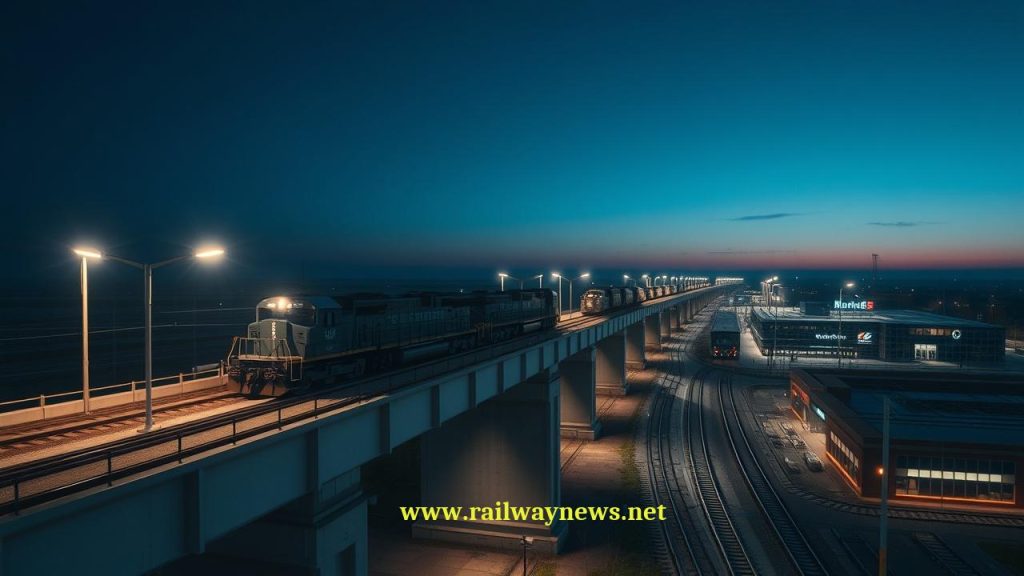
BRUSSELS – The European Union has advanced plans for its next major infrastructure funding program, CEF III, after the EU Council adopted a partial negotiating mandate for the 2028–2034 period. This move greenlights talks with the European Parliament on a framework that strategically pivots towards dual civil-military use infrastructure, proposing a significant €17.5 billion allocation for military mobility amid a tense geopolitical climate.
| Category | Details |
|---|---|
| Program Name | Connecting Europe Facility 2028–2034 (CEF III) |
| Proposed Transport Budget | €51.5 Billion (Subject to MFF negotiations) |
| Proposed Military Mobility Allocation | €17.5 Billion (within the transport budget) |
| Key Strategic Focus | Dual Civil-Military Use, TEN-T Completion, Decarbonization, Resilience |
| Current Status | Partial negotiating mandate adopted by EU Council; talks with Parliament to begin |
Main Body:
The EU Council’s decision marks a critical step in defining the third iteration of the Connecting Europe Facility, the Union’s primary instrument for funding strategic transport and energy networks. While the mandate is partial—excluding definitive financial figures until the broader Multiannual Financial Framework (MFF) is settled—it confirms the program’s structure and priorities. CEF III will continue to focus on completing the Trans-European Transport Network (TEN-T) by prioritizing projects with a cross-border dimension. However, the new framework places unprecedented emphasis on adapting infrastructure to the EU’s new security realities, promoting resilience, digitalization, and sustainability across the continent’s transport corridors.
A central feature of the proposal is the substantial focus on dual-use infrastructure, capable of serving both civilian and military needs. The Council’s mandate validates the European Commission’s proposal to concentrate investment along four priority EU military mobility corridors, a direct response to the heightened geopolitical tensions in Eastern Europe. This strategic shift extends beyond transport, as the CEF Energy component has been amended to bolster the resilience of energy grids against cyber and hybrid threats. This dual focus on physical and digital security underscores a comprehensive approach to fortifying Europe’s critical infrastructure against a new generation of risks.
The negotiations for CEF III are taking place against a backdrop of intense, high-stakes discussions at the highest levels of the EU. Leaders are concurrently working to resolve Ukraine’s funding crisis, with proposals to leverage frozen Russian assets for a massive loan to support Kyiv’s military and financial needs. The urgency of these parallel negotiations, which leaders are determined to conclude before the Cypriot presidency of the Council begins, highlights the interconnectedness of Europe’s financial, security, and infrastructure policies. The final budget allocated to CEF III will inevitably be influenced by the outcomes of these broader strategic financial decisions, which aim to reshape Europe’s economic and defense posture for the long term.
Key Takeaways
- Military Mobility is Central: Dual-use infrastructure is no longer a niche consideration but a core pillar of CEF III, with a proposed €17.5 billion allocation reflecting Europe’s urgent security priorities.
- Budget Remains Undecided: The final funding for CEF III is contingent on the outcome of the EU’s wider 2028-2034 budget (MFF) negotiations, which are linked to other major financial commitments like aid for Ukraine.
- Increased Member State Influence: The EU Council is advocating for greater involvement from Member States in the program and for special consideration of geographical specificities, such as those of island nations.
Editor’s Analysis
The framework for CEF III signals a paradigm shift in European infrastructure investment, moving decisively from a purely economic and environmental rationale to one that fully integrates defense and security. For the global rail and infrastructure market, this is a clear directive: future projects, particularly on the TEN-T core network, will be evaluated not just for their commercial and green credentials, but for their strategic value in enabling rapid military deployment. This will likely translate into a new wave of tenders for upgrading bridge load capacities, reinforcing track, enhancing cybersecurity for signaling systems, and improving intermodal connections at ports. Companies that can demonstrate expertise in delivering robust, resilient, and dual-use compliant infrastructure will be best positioned to capitalize on this next multi-billion-euro funding cycle.
Frequently Asked Questions
- What is the Connecting Europe Facility (CEF)?
- The Connecting Europe Facility (CEF) is the European Union’s key funding instrument for promoting growth, jobs, and competitiveness through targeted infrastructure investment at the European level. It supports the development of high-performing, sustainable, and efficiently interconnected trans-European networks in the fields of transport, energy, and digital services.
- Why is military mobility a key focus of CEF 2028-2034?
- The increased focus on military mobility is a direct response to the changed geopolitical and security landscape in Europe. The goal is to ensure that transport infrastructure across the EU is suitable for dual civil and military use, allowing for the swift movement of military personnel and equipment to enhance the EU’s security and defense capabilities.
- Is the budget for CEF III finalized?
- No, the budget is not final. The figures mentioned, such as the €51.5 billion for transport, are from the European Commission’s initial proposal. The final amounts will be determined during the comprehensive negotiations for the EU’s next Multiannual Financial Framework (MFF) for the 2028-2034 period.
RELATED POSTS

August 20, 2022 7:14 pm
Introduction This article explores the significant partnership between Network Rail...

September 5, 2015 11:17 am
In the Port of Zeebrugge, to the south of the...
December 14, 2021 5:39 pm
The China-Laos Railway: A Case Study in Cross-Border Rail Cooperation...
December 5, 2020 6:49 am
This article explores the recent €70 million contract awarded to...
August 24, 2018 12:17 am
Network Rail's East Coast Main Line upgrade tackles the Werrington...

August 7, 2025 1:33 pm
Amtrak upgrades Washington Union Station, adding an accessible platform and...