
Siemens Wins Big: 61 Battery Trains to Decarbonize Germany
Siemens will deliver 61 Mireo Plus B battery trains to Germany, creating a large BEMU fleet, replacing diesel, and advancing sustainable regional transport.
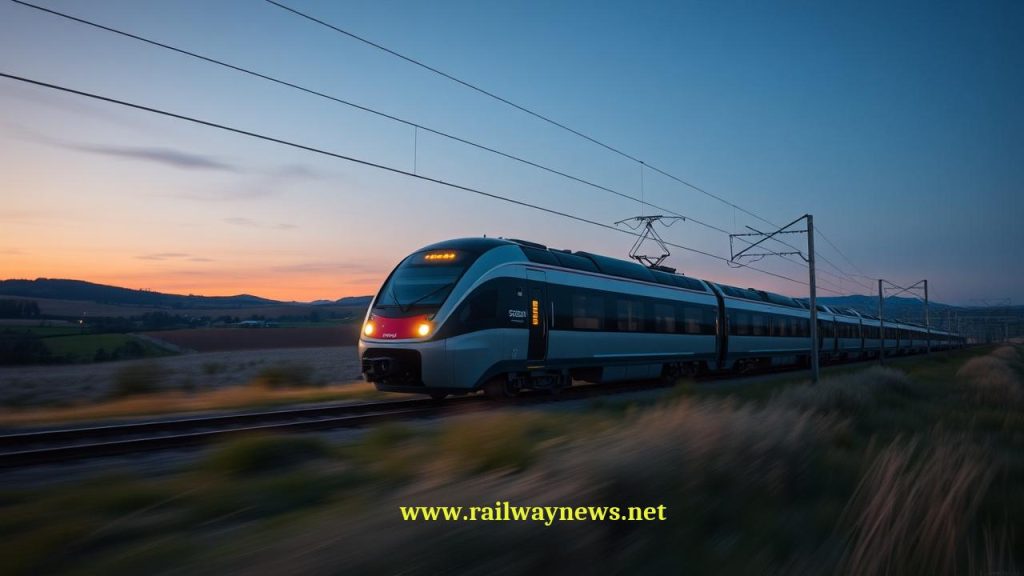
Siemens Mobility has secured a landmark order from Zweckverband Nahverkehr Westfalen-Lippe (NWL) for 61 Mireo Plus B battery-electric trains, set to create Germany’s second-largest battery-electric multiple unit (BEMU) fleet. The new trains, scheduled to enter service in December 2029, will replace the region’s legacy diesel fleet and significantly advance sustainable regional transport on routes with non-electrified sections.
| Category | Details |
|---|---|
| Project | Northern Westphalia Network (NNW) Fleet Replacement |
| Train Model | Siemens Mireo Plus B (Battery Electric Multiple Unit) |
| Quantity | 61 two-car trainsets |
| Fleet Financier | Rock Rail NnW (via leasing arrangement) |
| Service Commencement | December 2029 |
MAINZ, GERMANY – In a significant move towards decarbonizing Germany’s regional rail network, Siemens Mobility has been contracted by the local transport authority Zweckverband Nahverkehr Westfalen-Lippe (NWL) to supply 61 two-car Mireo Plus B trains. The order marks a pivotal step in NWL’s strategy to phase out conventional diesel railcars in East Westphalia-Lippe and Münsterland. Once operational, the fleet will cover an annual service volume of approximately 7.1 million train-kilometres under an operational contract of at least 15 years, establishing the second-largest BEMU fleet in the country and setting a new benchmark for sustainable regional mobility.
The Mireo Plus B is a state-of-the-art hybrid train designed for operational flexibility. It draws power from overhead lines on electrified sections to charge its high-performance Lithium-Titanate-Oxide (LTO) batteries. On non-electrified track segments, the batteries provide the necessary power, offering a range of over 100 kilometres for locally emission-free and near-silent operation. The trains feature advanced regenerative braking, which recovers energy during deceleration to recharge the batteries, further enhancing efficiency. Designed with sustainability in mind, the materials used in the vehicles boast a recyclability rate exceeding 90%. Inside, passengers will benefit from modern amenities including Wi-Fi, power outlets, USB ports, and step-free access, with each train accommodating two wheelchair users and up to 18 bicycles.
The procurement is underpinned by an innovative financing model led by Rock Rail NnW, which will purchase the fleet and lease it to the transport authority. This arrangement mitigates the significant upfront capital investment typically required for such a large-scale fleet modernization. Mark Swindell, CEO of Rock Rail, commented, “This project is an excellent example of how innovative financing models can accelerate the introduction of state-of-the-art, environmentally friendly rail technology.” This public-private partnership structure is becoming increasingly crucial for enabling transport authorities to adopt green technologies and meet climate targets without overburdening public finances.
Key Takeaways
- Major Fleet Decarbonization: The order for 61 BEMUs will create Germany’s second-largest battery train fleet, directly replacing diesel units and eliminating local emissions on regional routes.
- Innovative Financing Model: A leasing arrangement with Rock Rail enables the multi-million euro project, providing a scalable financial blueprint for other public transport authorities to modernize their fleets.
- Bridging the Infrastructure Gap: The hybrid battery technology provides a practical and cost-effective solution for operating zero-emission services on networks with a mix of electrified and non-electrified tracks.
Editor’s Analysis
This deal between NWL, Siemens, and Rock Rail is more than just a regional fleet upgrade; it is a powerful statement on the maturity and viability of battery-electric technology in mainstream rail transport. It effectively solves the “last mile” problem for electrification, allowing operators to decarbonize entire networks without the prohibitive cost of electrifying every kilometre of track. The financing structure is equally significant, demonstrating how private capital can be leveraged to accelerate the public sector’s transition to sustainable infrastructure. For the global rail market, this project serves as a compelling case study, proving that BEMUs are a robust, scalable, and financially accessible solution for replacing aging diesel fleets, a challenge faced by countless operators worldwide.
You can interested with : Beyond the Wire: Battery-Electric Multiple Unit (BEMU) Explained
Frequently Asked Questions
What type of train is the Siemens Mireo Plus B?
The Mireo Plus B is a battery-electric multiple unit (BEMU). It is a hybrid train that operates using electricity from overhead lines where available, while simultaneously charging its onboard batteries. These batteries then power the train on sections of track that are not electrified.
When will the new battery-powered trains start operating in Westphalia-Lippe?
The new fleet of 61 Siemens Mireo Plus B trains is scheduled to commence operations on the Northern Westphalia Network in December 2029.
How is the purchase of the 61 new trains being financed?
The fleet is being financed and procured by Rock Rail NnW. They will own the trains and provide them to the transport authority NWL through a long-term leasing arrangement, which reduces the upfront financial burden on the public operator.

Transport and railway industry editor covering global rail infrastructure, sustainable mobility, urban transit systems and next-generation railway technologies with a focus on accessible and industry-focused reporting.
RELATED POSTS
September 6, 2026 8:17 am
DB InfraGO reopened the Nuremberg-Regensburg line in Bavaria on 31...

September 11, 2026 12:14 pm
European Loc Pool has ordered 20 more Stadler EuroDual locomotives,...

September 11, 2026 9:12 am
Deutsche Bahn confirmed AC failure on Bilger's Berlin-Hamburg ICE, closed...

September 11, 2026 10:12 am
Germany approved EUR 1.7 billion in July 2026 to retrofit...