
Network Rail Clock: UK’s Rail Innovation For Passenger Navigation
Network Rail unveils a new national **railway clock** design at London Bridge, improving passenger navigation. Digital integration enhances the **rail** experience network-wide.
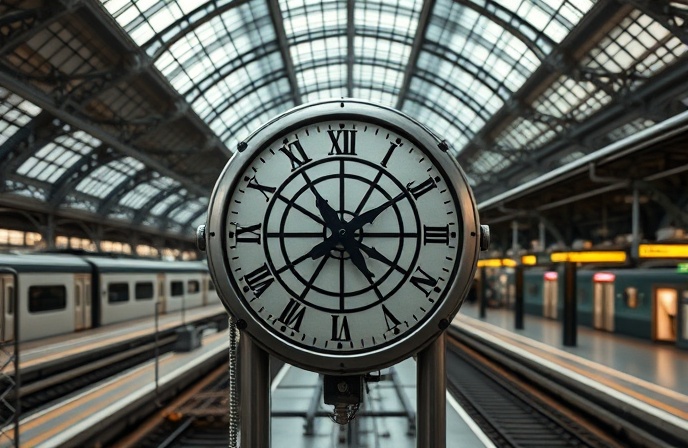
“`html
Introduction
Network Rail, in partnership with government and industry, has introduced a new national railway clock design at London Bridge station, marking the first such launch in over 50 years. The 1.8-metre physical clock, chosen from over 100 entries in an international design competition, aims to improve passenger navigation and accessibility across the rail network.
The New Clock Design
The new railway clock is a collaborative effort involving Network Rail, the Royal Institute of British Architects (RIBA), and the Design Museum. The design was selected through an international competition. The clock serves as both a physical and digital timepiece, integrating the railway’s design and brand history.
Features and Implementation
The physical clock at London Bridge station measures 1.8 metres in diameter. The design will also be featured digitally on departure boards across the network, including stations such as London Waterloo, London Victoria, and London Charing Cross. Accessibility experts were consulted during the clock’s creation, which features easy-to-read numbers in a modified version of the Rail Alphabet 2 typeface. The double arrow railway logo rotates around the rim every 60 seconds.
Historical Context and Significance
The launch of this new clock design marks a significant step, with the last national design dating back to British Rail’s 1974 design manual. Since privatization in 1996, the railway network has utilized various clock designs. London Bridge station, which previously housed the second electrically-controlled railway clock in the world installed in 1852, was selected for the launch. Lewisham station was the first station to display the design.
Digital Integration
The Rail Clock is adaptable for digital use, including phones and smart watches, and was developed with Cognizant. It will soon be available as a watchface via Android app stores.
Last June 2025, we published an article about Renfe’s cutting-edge Aranjuez maintenance hub. Click here to read – Future of Rail: Renfe’s Railway Technology Hub, Aranjuez: Essential Guide
Conclusion
The new railway clock, launched at London Bridge station, represents the first national design in over 50 years. It will be implemented both physically and digitally across the rail network to improve passenger experience and navigation.
Company Summary
Network Rail: Network Rail, in partnership with government and industry, introduced a new national railway clock design.
Royal Institute of British Architects (RIBA): The Royal Institute of British Architects partnered with Network Rail and The Design Museum on the clock initiative.
Design Museum: The Design Museum partnered with Network Rail and the Royal Institute of British Architects (RIBA) on the clock initiative.
Cognizant: The Rail Clock is adaptable for digital use, including phones and smart watches, and was developed with Cognizant.
Technology
Rail Alphabet 2: The clock’s numbers are displayed in a slightly amended version of the railway’s own typeface, Rail Alphabet 2.
“`
RELATED POSTS

August 25, 2016 3:03 am
L&A's $4 million CWR upgrade in Louisiana, completed July 2024,...
June 2, 2019 6:21 am
Hong Kong's East Rail Line signalling system testing resumes after...

November 10, 2025 7:54 am
Siemens Mobility and SBB partner to modernize Switzerland's rail network...

August 11, 2025 8:33 am
Poland's Container Terminal Mala to build intermodal terminal, boosting EU...
October 11, 2018 5:07 pm
Trainline's partnership with Real Russia revolutionized Russian rail access. ...
March 11, 2025 9:21 am
Improving Railway Accessibility: A Focus on Innovation and Inclusion The...