
TriMet’s MAX Station Closure: Light Rail Efficiency in Portland
TriMet closes Skidmore Fountain MAX station to boost Portland light rail efficiency, aiming for faster commutes.
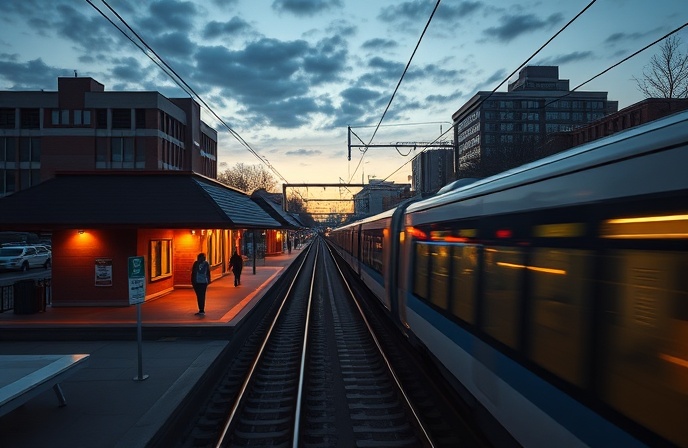
TriMet to Permanently Close Skidmore Fountain MAX Station to Boost Light Rail Efficiency
In a move aimed at streamlining operations and improving commute times, TriMet will permanently close the Skidmore Fountain MAX station on August 24th. This decision, approved by the TriMet board last year, directly addresses the issue of slow train speeds in downtown Portland, Oregon. This article will explore the reasons behind this closure, its impact on riders, and the broader implications for light rail efficiency. The focus is on how TriMet is optimizing its MAX Blue and Red lines by strategically reducing stops to enhance overall performance for commuters. This is a strategic move to improve efficiency on the Portland MAX light rail system.
Enhanced Downtown Efficiency: The 5W1H of the Closure
The closure of the Skidmore Fountain MAX station, effective August 24th, directly addresses the inefficiency caused by closely spaced stops along 1st Avenue in downtown Portland. Who: TriMet, Portland’s public transportation agency, is the key player. What: The permanent shutdown of a light rail station. When: The closure becomes effective August 24th. Where: Skidmore Fountain MAX station, located in downtown Portland. Why: To increase train speeds and reduce commute times for passengers. How: By eliminating one stop along a congested stretch of the Blue and Red MAX lines.
Understanding the Current Operational Bottleneck
Currently, MAX trains on the Blue and Red lines experience delays due to the proximity of three stations located in a small area of downtown Portland. The frequent stopping and starting significantly slow down train movement. This situation leads to increased travel times for passengers and reduces the overall efficiency of the light rail system. By eliminating a stop, TriMet aims to mitigate these delays, allowing trains to travel directly between the Old Town/Chinatown and Oak St/SW 1st Avenue stations, thereby enhancing the flow of passengers.
A Strategic Plan: The Fourth Station Closure
The Skidmore Fountain station closure is the final phase of a larger, multi-year initiative to improve the speed and reliability of the MAX Blue and Red lines. This initiative began with proposals in 2018 to close four stations in total. The other three closures were implemented in 2020. These earlier closures have already resulted in approximately 1.5 minutes saved per trip for riders on affected lines. The Skidmore Fountain closure alone is projected to save an additional 45 seconds per trip, reflecting TriMet’s commitment to optimizing the network.
Impact on Commuters and the Broader System
The primary beneficiary of this change is the commuting public. By reducing travel times, TriMet is striving to improve the overall passenger experience, making public transportation a more attractive option. While the closure means a loss of immediate station access for those who use Skidmore Fountain, the trade-off of faster commutes for a wider ridership is a key consideration. Furthermore, this strategic closure highlights the importance of continuously evaluating and optimizing light rail networks to adapt to changing traffic patterns, passenger demand, and technological advancements. The improved efficiency from this closure will further allow the existing light rail infrastructure to meet the needs of a growing population.
Conclusion
The permanent closure of the Skidmore Fountain MAX station represents a strategic step by TriMet to improve the efficiency of its light rail system. By reducing travel times and enhancing the overall passenger experience, this change demonstrates a commitment to providing a reliable and attractive public transportation option for Portland residents. The closure, and the preceding closures, are part of a larger system optimization strategy to continuously evaluate and refine the performance of its rail lines. This decision aligns with the global trend of railway companies seeking operational efficiency in the face of evolving transportation demands. This type of assessment ensures the system continues to support a sustainable and efficient transportation network. As the city continues to grow and evolve, this model of proactive adjustment and improvement will be crucial to maintaining a robust and future-proof light rail system.
RELATED POSTS

April 30, 2008 11:45 pm
Electronics and systems group Thales has won a £10.4m resignalling...

November 24, 2021 4:27 am
Introduction The railway industry is undergoing a significant transformation driven...

April 22, 2025 3:24 pm
Addressing the Growing Demand for Green Rail Engineers in Canada...
September 27, 2017 5:53 pm
Unlock railway performance optimization through robust contractual agreements. Learn...

July 17, 2025 1:33 pm
Network Rail's Western route adopts geofencing tech for enhanced track...
November 15, 2018 7:11 pm
Bombardier's TRAXX locomotives: 33 new units for Akiem! This...