
PKP Intercity: High-Speed Rail Boost in Poland – Passenger Experience
PKP Intercity boosts high-speed rail, reaching 200 km/h with new locomotives. Modernizing Poland’s rail network.
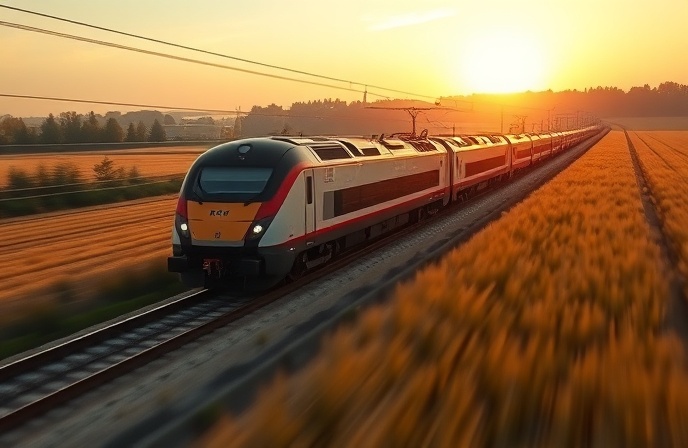
PKP Intercity Accelerates High-Speed Services, Enhancing Passenger Experience
Poland’s national rail operator, PKP Intercity, is significantly enhancing its high-speed rail offerings, marking a pivotal moment in its modernization efforts. Two classic locomotive-hauled trains, the EIC Jantar and the EIC Posejdon, are now operating at speeds of up to 200 km/h on key routes. This development, effective from mid-July, directly addresses the growing demand for faster and more efficient rail travel, while showcasing the capabilities of Poland’s upgraded infrastructure. The acceleration is achieved through the deployment of modern rolling stock and powerful Griffin locomotives. The move represents a strategic shift towards a more competitive and passenger-centric rail network, responding to increased travel needs. The company’s extensive investment in modernizing its fleet of rolling stock shows PKP Intercity’s commitment to providing faster, more comfortable, and more convenient journey options for its passengers, thus enhancing their overall travel experience.
Operational Milestones: EIC Jantar and EIC Posejdon at 200 km/h
The acceleration of the EIC Jantar, pulled by a Griffin locomotive, commenced on July 15th, running at 200 km/h on the Warsaw–Gdańsk corridor. This marks the first time a conventional locomotive-hauled train has achieved this speed on a scheduled basis within the PKP Intercity network. The EIC Jantar boasts up to 14 modern, air-conditioned carriages, including both first and second-class accommodations, along with a WARS dining carriage. The EIC Posejdon followed suit on July 25th, operating at the same speed on the Warsaw–Kołobrzeg route. Comprising up to seven second-class carriages, one first-class carriage, and a WARS unit, it also benefits from the power and efficiency of a Griffin locomotive. The upgrade represents a significant advancement in the operator’s ability to provide fast, comfortable, and reliable rail service.
Rolling Stock and Infrastructure Alignment
The increased speeds are made possible by leveraging both advancements in locomotive technology and Poland’s modernized rail infrastructure. The deployment of Griffin locomotives, known for their power and reliability, is crucial in achieving the 200 km/h speeds with conventional carriages. This initiative, supported by the infrastructure upgrades, demonstrates PKP Intercity’s commitment to synchronizing rolling stock capabilities with infrastructural investments. The ability to integrate the modernized carriages into the existing network is essential for optimizing operations, which in turn significantly enhances passenger experience by providing quicker and efficient journey times.
The Griffin Locomotive Advantage
The cornerstone of this speed increase is the utilisation of the Griffin locomotive, designed for high-speed operation and hauling passenger trains. The “Griffin” is a new generation of electric locomotives designed and manufactured by domestic manufacturers that are central to PKP Intercity’s strategy. These locomotives boast high power output and efficient braking systems. The performance of the Griffin, coupled with the existing infrastructure and the air-conditioned carriages, not only reduces travel times but also contributes to the overall comfort and safety of passengers. It represents a substantial improvement in operational capabilities.
Strategic Investment and Future Prospects
This operational upgrade perfectly aligns with PKP Intercity’s long-term rolling stock strategy. The company is currently executing contracts exceeding PLN 16.5 billion (EUR 3.8 billion) with domestic manufacturers and service providers, focused on upgrading and expanding its fleet. This investment supports the introduction of new connections and aligns its services with the capabilities of modern infrastructure, catering to the growing passenger demand. Future plans include further enhancements to both rolling stock and infrastructure, potentially leading to higher speeds and even greater passenger comfort and capacity. The move signals a strong and positive outlook for the Polish rail transport system, strengthening its place within Europe.
Conclusion
The acceleration of PKP Intercity’s services, with the EIC Jantar and EIC Posejdon reaching 200 km/h, is a decisive step in the company’s modernization plan. This move, coupled with significant investments in rolling stock and infrastructure, showcases PKP Intercity’s dedication to enhancing passenger experience and meeting the rising demand for faster and more comfortable rail travel. The strategic use of Griffin locomotives is crucial for the achievement of high speed with conventional hauled stock, while the upgrades contribute to a more integrated and efficient rail network. This strategic shift holds significant implications for the rail industry in Poland, encouraging further innovation and competition. Looking ahead, continued investments and advancements in technology will likely drive further improvements in speed, capacity, and service quality, reinforcing rail’s position as a competitive and sustainable mode of transport. This will contribute to better accessibility and a more eco-friendly transport environment, reflecting the Polish Government’s ambitions for a greener future.
Company Summary: PKP Intercity
PKP Intercity is the largest intercity passenger rail operator in Poland, a subsidiary of the Polish State Railways (PKP). It operates a vast network of connections throughout Poland and to neighboring countries, focusing on providing comfortable and efficient long-distance travel. PKP Intercity plays a key role in Poland’s transportation infrastructure, with constant investments in rolling stock and infrastructure, improving the comfort and safety of its passengers. Its commitment to modernize its fleet, introduce new routes, and adopt sustainable practices reflects its strategic importance to the country’s economic development and environmental goals.
RELATED POSTS

December 10, 2025 6:01 pm
Konux launches AI-powered CoBrix, a predictive maintenance system in the...

May 29, 2018 11:58 pm
Hydrogen trains are revolutionizing UK railways! Alstom's Coradia iLint offers...
December 30, 2016 4:35 pm
Here's a voiceover-friendly excerpt:"Porterbrook's upgrading Class 172 trains! 100 MTU...
February 10, 2020 3:50 am
This article examines the burgeoning partnership between Belarus and Mongolia...
August 24, 2018 6:54 am
Jacobs Engineering's Etihad Rail expertise delivers world-class railway solutions. ...

October 8, 2016 12:50 pm
Ansaldo STS announces that it has been signed the contract...