
Prague-Copenhagen Rail: Sustainable Transport with ComfortJet
New Prague-Copenhagen train service launches May 2026, connecting three European capitals via Berlin. ComfortJet trains offer a sustainable travel option.
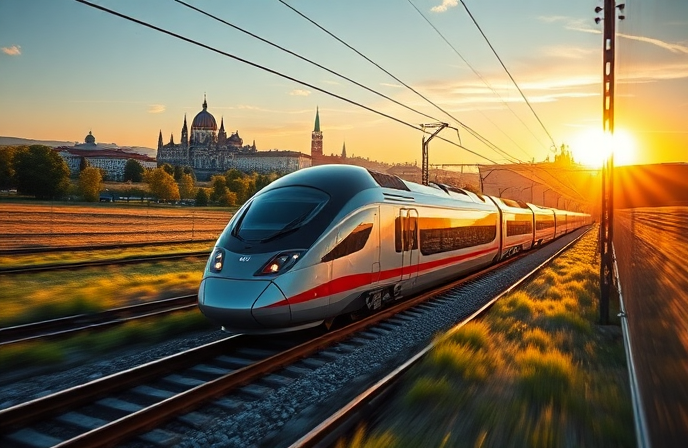
Prague to Copenhagen: Rail Renaissance with New Direct Train Service
A new era of cross-border rail travel is dawning across Europe. In a landmark agreement, České dráhy (ČD), Deutsche Bahn (DB), and Danske Statsbaner (DSB) have joined forces to launch a direct train service linking Prague, Berlin, and Copenhagen. This eagerly anticipated service, slated to begin on May 1, 2026, will reconnect three European capitals with a climate-friendly ComfortJet train fleet, offering a streamlined and efficient travel experience. This article delves into the specifics of this collaborative effort, examining the route, rolling stock, operational details, and the broader implications for European railway connectivity. The launch represents the resurgence of direct rail connections, promoting seamless international travel and further solidifying the commitment to sustainable transportation solutions within Europe.
Route and Rolling Stock: ComfortJet at the Forefront
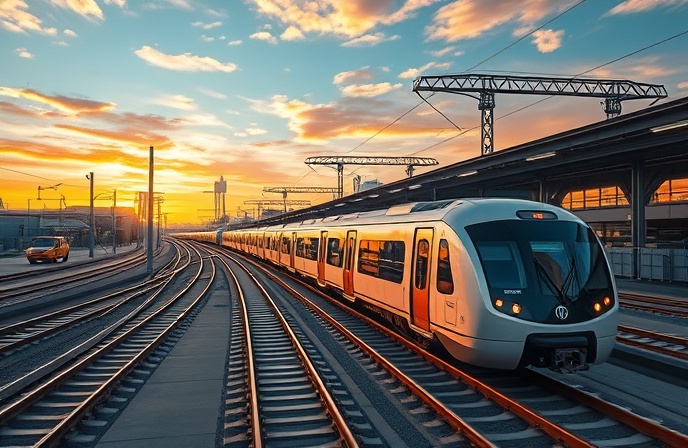
The new service will operate on a route connecting Prague, Berlin, and Copenhagen, with significant stops in Dresden and Hamburg. The backbone of the operation will be ČD’s ComfortJet trainsets, renowned for their modern design and passenger comfort. These electric multiple units (EMUs) offer significant environmental benefits, reducing carbon emissions compared to air travel or private vehicles. Each trainset, in its full configuration, provides ample seating with 99 seats in first class and 456 seats in second class, supplemented by an 18-seat dining compartment. This dining car offers hot and cold meals, refreshments, and a range of amenities including a modern kitchen, multi-modal convection oven, coffee machine, beer tapping system, and dishwasher. The integration of these features underlines the focus on passenger comfort and catering to different travel needs across the route.
Operational Plan: Frequency, Duration and Partnerships
The service will initially operate with two daily train pairs, expanding to three pairs during the summer season, enhancing the frequency and availability of this key transport link. The entire journey between Prague and Copenhagen is expected to last approximately 11 hours, and with the completion of the Fehmarn Belt tunnel the journey will be further reduced. A crucial element of the preparations involves a joint effort of DB and DSB employees operating the train in Germany and Denmark. The dining car crew, however, will travel the full route. Tickets will be available for purchase six months prior to the launch. To ensure operational readiness, a test run of the ComfortJet to Copenhagen is scheduled for autumn of 2025. This is a critical step for familiarizing DB and DSB staff with the ComfortJet’s operational specifics. The collaboration between ČD, DB, and DSB emphasizes a unified approach to customer service and operational consistency across the entire network.
A Return to Direct Services: Bridging the Gap
The return of direct train service between Prague and Copenhagen marks a significant development in European rail transport. Direct night trains connecting Prague and Denmark were last operated in 2014, with passengers forced to change trains in Hamburg in recent years. The reintroduction of a direct service streamlines travel, reducing travel times and improving the overall passenger experience. This commitment to direct routes reflects the wider European Union objective to promote cross-border railway connections. The Prague-Berlin-Copenhagen route is one of ten pilot projects initiated by the European Commission to foster interconnectedness and incentivize the use of rail travel, furthering the goals of sustainable transport infrastructure.
Conclusion
The upcoming launch of the Prague – Berlin – Copenhagen direct train service represents a significant milestone in European rail transport. The collaborative efforts of ČD, DB, and DSB, utilizing modern ComfortJet trains, will deliver a more efficient, comfortable, and climate-friendly travel option for passengers. This initiative not only restores a crucial link between three major European capitals but also contributes to the broader goal of promoting sustainable transportation across borders. The successful implementation of this service could serve as a model for future cross-border rail projects, encouraging further investment and cooperation among European railway operators. The planned route stands to benefit tourism, business travel, and regional connectivity, reinforcing the railway’s role as a vital component of Europe’s transport infrastructure. The focus on advanced rolling stock, operational efficiency, and integrated customer service will play a vital role in the long-term success of this venture, reinforcing the railway as a convenient and environmentally beneficial mode of travel.
RELATED POSTS

July 5, 2007 7:32 pm
The first ever automatic metro system – which operates without...
October 1, 2025 8:54 pm
Alpha Trains orders 15 **Vectron Dual Mode locomotives** from Siemens...
July 7, 2025 3:33 am
Saudi e-fuel plant signals global rail decarbonization push, potentially benefiting...

December 5, 2025 8:42 am
The Warsaw-Łódź high-speed rail line advances, securing its first location...
October 16, 2025 2:42 pm
Rail apprenticeships are booming! UK train operators offer diverse roles,...
September 15, 2025 8:55 pm
Alstom wins €42.1M Delhi Metro maintenance contract, covering Bombardier trains...