
Hitachi Rail: Türkiye’s Kapıkule Signalling Upgrade for High-Speed Rail
Hitachi Rail modernizes Kapıkule station signaling, a key European gateway, boosting Türkiye’s rail network. Advanced systems enhance safety and efficiency, crucial for high-speed operations.
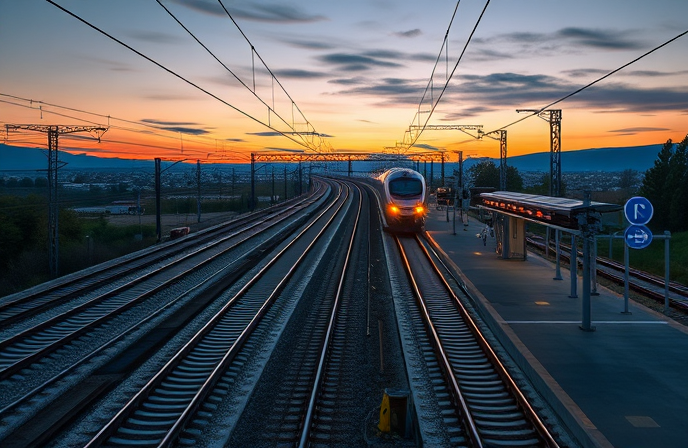
Hitachi Rail to Modernize Signalling at Türkiye’s European Gateway, Kapıkule Station
Hitachi Rail has been awarded a significant contract by KOLİN İNŞAAT TURİZM SANAYİ VE TİCARET A.Ş. to modernize the signalling systems at Kapıkule Station in Türkiye, the final rail link to Europe. This strategic project, announced recently, will equip the critical border station with advanced rail technologies, specifically designed to facilitate high-speed operations. The project, which encompasses the design, supply, and installation supervision, will significantly enhance capacity and efficiency. This article will delve into the details of the project, exploring the technologies involved, the strategic importance of Kapıkule, and the broader implications for Türkiye’s rail modernization goals. The contract encompasses vital signaling technologies including Interlocking (IXL), Centralised Traffic Control (CTC), track circuits for Train Detection, and European Train Control System (ETCS) Level 1, crucial for supporting high-speed rail operations. The modernization of Kapıkule station forms a pivotal part of Türkiye’s larger initiative to enhance east-west rail connectivity.
Enhancing Cross-Border Rail Operations with Advanced Signalling
The core of the project revolves around the implementation of cutting-edge signalling systems, critical for the safe and efficient operation of high-speed rail services. The upgrades include the installation of Interlocking (IXL) systems, which manage the routes and movements of trains through the station and track circuits, used for train detection. Centralised Traffic Control (CTC) will enable centralised monitoring and control of the entire rail network, optimizing traffic flow and minimizing delays. Further enhancing safety, the project incorporates European Train Control System (ETCS) Level 1, an advanced train protection system that communicates with onboard equipment to monitor train speed and enforce speed restrictions. These technologies are designed to support operations at speeds up to 200 km/h. This integration of advanced systems is crucial for managing the expected increase in both freight and passenger traffic, bolstering Türkiye’s function as a vital transit hub between Europe and Asia.
Strategic Importance of Kapıkule and Corridor Modernization
Kapıkule Station, situated near the Bulgarian border, is a pivotal gateway for both freight and passenger transport between Türkiye and the European Union. This project addresses the conventional line section from Edirne West to Kapıkule East, and the short stretch between Kapıkule East and Kapıkule West. The upgrade is part of a larger initiative to transform the Istanbul to Europe rail corridor by replacing a single-track line with a high-speed double-track route. The strategic significance of this upgrade extends beyond merely improving the efficiency of rail transport. It directly supports Türkiye’s role within the Trans-European Transport Network (TEN-T), fostering better integration with the European rail network and bolstering cross-border connectivity. The modernisation of Kapıkule is critical to handling increased passenger and freight traffic and improving transport times between major cities and key European hubs.
Integrated Approach and Technological Synergies
The modernization project at Kapıkule emphasizes a holistic approach, aiming for seamless integration with existing signalling assets. This ensures that the new systems work harmoniously with the established infrastructure, maintaining consistent traffic control across the entire corridor. The new infrastructure will benefit from modernised track circuits and ETCS Level 1 signalling, improving the safety and the reliability of railway operations. The project also incorporates IXL and CTC systems to ensure that operational reliability is greatly improved. Hitachi Rail’s involvement extends to the second phase of the broader project, currently under construction between Çerkezköy and Kapıkule (excluding the station itself), including the provision of track circuits, thus ensuring a consistent technological standard across the entire line. This integrated approach reduces downtime, streamlines operational workflows, and reinforces Türkiye’s railway modernization plans.
Hitachi Rail’s Expanding Footprint in the Turkish Rail Sector
This recent contract further solidifies Hitachi Rail’s presence in the Turkish rail market. The company has a proven track record of successful signalling and control system deployments, including projects on the Gaziray, Başkentray, and Eskişehir lines. Notably, the Eskişehir project involved comprehensive signalling, telecommunications, and safety system upgrades across the station’s network. This accumulation of experience highlights Hitachi Rail’s ability to successfully deliver complex, large-scale rail projects. By contributing to this major project in Kapıkule, the company is supporting the long-term vision for a modern, connected, and secure rail infrastructure, and contributing to its integration with the wider European network.
Conclusion
The modernization of Kapıkule Station represents a critical step forward in Türkiye’s ambition to establish a modern and efficient rail network, and to enhance the role the country plays in the European Transport Network. The implementation of advanced signalling systems by Hitachi Rail will not only improve operational efficiency and safety but also increase the capacity of the line. The project has far-reaching implications, as it is designed to reduce travel times and stimulate economic growth by enabling the seamless movement of both passengers and freight. The success of this project will contribute to Türkiye’s broader railway modernization program, encouraging cross-border cooperation and furthering the country’s role as a vital transit hub. With the railway sector poised for further innovation and development, projects like this are expected to set a standard for railway technology advancements and encourage other stakeholders to focus on similar strategic projects to improve railway operations.
RELATED POSTS

August 13, 2023 4:50 am
This article analyzes the delay in the launch of Brightline’s...
September 2, 2018 11:19 pm
The Guangzhou-Shenzhen-Hong Kong High-Speed Rail's successful trial run, led by...
September 11, 2020 6:33 am
This article examines the significant €650 million investment by the...
September 18, 2023 11:26 am
Introduction This article analyzes the recent six-month trial implemented by...
March 8, 2019 11:51 am
Revolutionizing rail emissions! Porterbrook and Eminox's SCRT technology slashes...

February 14, 2025 3:45 pm
Upgrading the TransPennine Express Network: Implementing ETCS on Class 185...