
HS2: Emily Tunnel Drive Complete, High-Speed Rail Trends, Future of Transport
HS2’s TBM “Emily” completes Northolt Tunnel section, a key step for high-speed rail.
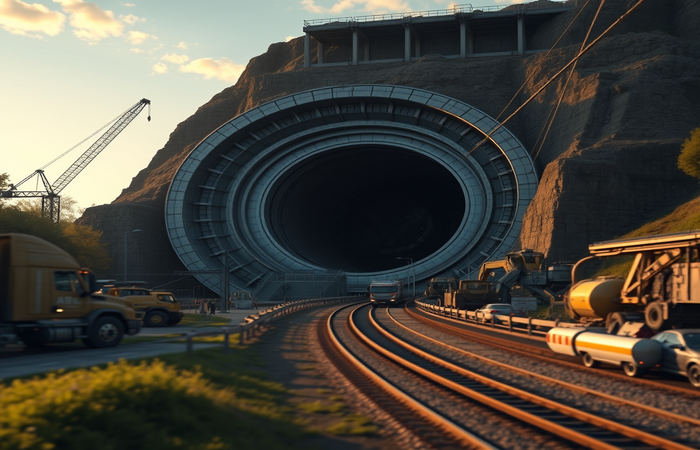
HS2’s ‘Emily’ Completes Northolt Tunnel Drive, Paving the Way for High-Speed Rail
In a significant milestone for the High Speed 2 (HS2) project, the tunnel boring machine (TBM) named “Emily” has completed its 3.4-mile drive for the Northolt Tunnel, located in west London. The breakthrough at Green Park Way in Greenford marks the third of four TBMs to finish their work on this critical section of the HS2 route. Launched in February 2024, “Emily” has excavated the eastern section, removing a staggering 775,000 tonnes of London Clay and installing 17,514 tunnel segments. This achievement brings HS2 closer to realizing its goal of connecting the outer edge of the capital with the new Old Oak Common super-hub station. This article explores the meticulous engineering, historical context, and the overall impact of this achievement on the HS2 project.
A Tribute to Local History: The Naming of ‘Emily’
The tradition of naming TBMs after women continues with “Emily,” named in honor of Emily Sophia Taylor, a pivotal figure who helped establish the Perivale Maternity Hospital in 1937 before becoming Ealing’s first female mayor in 1938. This practice highlights the historical significance and human element intertwined with these massive engineering projects. This custom offers a glimpse of the significant impact that such a feat in civil engineering has.
The Northolt Tunnel Project: A Technical Overview
The Northolt Tunnel, a vital 8.4-mile component of the HS2 project, is being constructed using four TBMs: two for the western section from West Ruislip and two for the eastern section, commencing at Victoria Road in North Acton. All machines converge at Green Park Way, where they are extracted from the underground shaft. The fourth and final TBM, “Anne,” is slated to complete its drive later this year. These twin-bore tunnels will serve HS2’s high-speed trains, providing a direct connection between the city’s periphery and the Old Oak Common super-hub. Due to high water pressure at Green Park Way, the TBMs are finishing their drives within a reception can. This “reception can” method allows the TBM to maintain pressure while sealant is applied to the tunnel lining, preventing water ingress, before depressurization and extraction.
Engineering Excellence: The Anatomy of ‘Emily’
Manufactured by Herrenknecht in Germany, TBM “Emily” is an impressive piece of engineering, weighing 1,700 tonnes and boasting a 9.11-meter diameter cutterhead. An earth pressure balance machine (EPB), “Emily” was specifically designed to excavate the soft London Clay. Operated by three teams of 48 workers working around the clock, the machine advanced at approximately 38 meters per day at its peak. The cutterhead meticulously carved through the earth, with a conveyor system removing the clay while concrete segments, each weighing up to 7 tonnes, reinforced the tunnel. These segments, constructed in Hartlepool by STRABAG, play a critical role in the tunnel’s structural integrity.
Logistics and Sustainability: Reusing Excavated Material
The excavated London Clay extracted by “Emily” was transported from Victoria Road Crossover Box, near Old Oak Common station, via a conveyor system to the London Logistics Hub at Willesden Euro Terminal. From there, the material was efficiently transported by rail and then reused at various sites in Cambridgeshire, Kent, and Warwickshire. This innovative approach underscores HS2’s commitment to sustainability, minimizing waste, and maximizing resource utilization in its projects.
Conclusion
The completion of “Emily’s” drive represents a major accomplishment for the HS2 project, further solidifying the progress towards a high-speed rail network connecting London with the rest of the UK. The meticulous planning, engineering excellence, and adherence to sustainable practices displayed in this undertaking reflect a commitment to delivering a world-class infrastructure project. As the remaining work, including cross passages, tunnel walkways, ventilation shafts, and portals, is completed, HS2 will begin to redefine the UK’s rail infrastructure, providing greater connectivity, reducing travel times, and stimulating economic growth. The upcoming breakthrough of TBM “Anne” and the subsequent completion of the tunnel’s internal systems will pave the way for track laying and system installations, with HS2 set to revolutionize rail travel in the coming years.
“`
RELATED POSTS

August 1, 2020 1:28 am
This article delves into the significant infrastructure development undertaken for...
January 26, 2022 1:46 pm
Introduction This article explores the pioneering pilot program undertaken by...
September 30, 2025 9:54 pm
BART completes installation of 715 new *fare gates* across 50...
February 11, 2021 1:39 am
The Alstom-Bombardier Merger: A New Era in Global Rail This...

February 21, 2025 11:16 pm
This article examines the persistent disparity in pricing between digital...
October 12, 2022 8:21 pm
The Strategic Acquisition of Delta Southern Railroad by Patriot Rail:...