
Kanpur Metro Orange Line Extension Opens: Boosts Connectivity
Kanpur Metro’s Orange Line extension is now live, connecting key areas with efficient, Indian-made trains. Learn how this expansion is transforming urban transit!

News Article: Kanpur Metro Orange Line Extension Inaugurated
India – May 30, 2025
The city of Kanpur, India, witnessed a significant milestone in its urban infrastructure development with the inauguration of the Kanpur Metro Orange Line extension on May 30, 2025. Prime Minister Narendra Modi presided over the official ceremony held at the newly established Chunniganj station, marking the addition of five underground stations to the city’s Metro Corridor I (Orange Line). This expansion, stretching from Chunniganj to Kanpur Central, signifies a crucial step towards enhancing public transportation and easing the commute for residents. The extension underscores the government’s commitment to providing modern, efficient, and sustainable mobility solutions for the rapidly growing city. This initiative aims to alleviate traffic congestion, reduce travel times, and boost economic activity by seamlessly connecting key areas, including commercial hubs and educational institutions. The project highlights the utilization of domestically manufactured metro trains equipped with advanced technology, further contributing to the “Make in India” and “Atmanirbhar Bharat” initiatives.
Expanding the Network: The Orange Line Extension
The newly inaugurated Orange Line extension represents a pivotal addition to Kanpur’s Metro Corridor I, providing enhanced connectivity and accessibility throughout the city. This phase of the project introduces five underground stations, optimizing the route to serve high-density areas and key transit points. The extension’s strategic design ensures that it intersects with vital commercial zones like Naveen Market and Bada Chauraha, benefiting both traders and consumers. Moreover, it improves the commute for students and faculty traveling to and from the prestigious IIT Kanpur, as well as providing easier access to the Central Railway Station for the general public. This expansion not only reduces travel times but also contributes to a more sustainable urban environment by encouraging the use of public transportation and reducing the reliance on private vehicles. The project is an example of how integrated transportation systems are transforming urban landscapes, contributing to economic growth and improved quality of life for citizens.
Technological Advancements and Indigenous Manufacturing
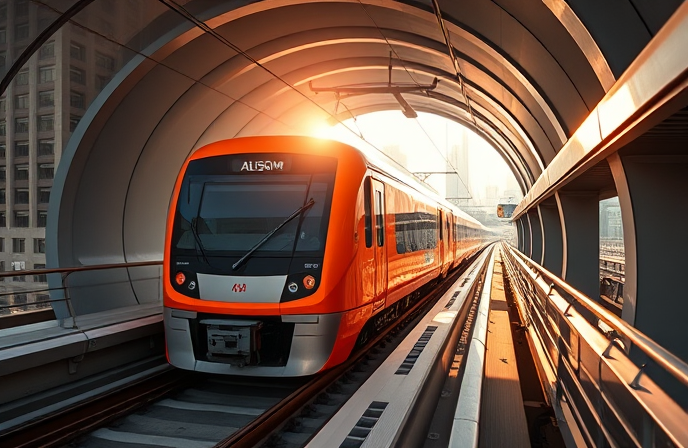
The Kanpur Metro Orange Line extension leverages cutting-edge technology, primarily through the use of Indian-made metro trains supplied by Alstom. These trains are equipped with advanced Communication-Based Train Control (CBTC) systems, guaranteeing high levels of safety, reliability, and operational efficiency. The CBTC system, a critical component of modern railway systems, continuously monitors and controls train movements, optimizing headways (the time between trains), and enhancing overall network capacity. The trains’ design prioritizes passenger comfort and accessibility, catering to the diverse needs of the commuting public. The entire project is a testament to India’s growing capabilities in railway technology and manufacturing, aligning with the “Make in India” and “Atmanirbhar Bharat” initiatives that promote indigenous production and technological self-reliance. The use of domestically produced trains and systems not only stimulates the local economy but also reduces dependency on foreign imports, creating long-term benefits for the nation’s infrastructure development.
Operational Scope and Future Developments
Currently, 40 Alstom-built metro trains are in operation on the Orange Line, each configured with three cars and capable of accommodating approximately 960 passengers. The operational efficiency and capacity of the metro system are continuously being optimized to meet the increasing demands of the growing urban population. The ongoing expansion of the metro network reflects a commitment to providing a comprehensive and integrated transportation solution. With the completion of the planned extensions, Corridor I will stretch to 23.8 km, with the aim to provide seamless east-west connectivity. This future expansion includes seven more stations, five of which will be elevated and two underground. This strategic expansion plan ensures that the metro system continues to serve as a vital artery of the city, fostering economic development and enhancing the overall quality of life for residents.
Conclusion: A Modern Metro for a Growing City
The inauguration of the Kanpur Metro Orange Line extension marks a significant advancement in India’s urban infrastructure, providing an efficient, sustainable, and accessible public transportation system for the city of Kanpur. The integration of advanced CBTC technology and the use of domestically manufactured trains underscores the country’s progress in railway technology and its commitment to self-reliance. The expansion of the network, particularly the inclusion of the underground stations, further enhances connectivity and reduces travel times, supporting economic growth and improving the quality of life for Kanpur’s citizens. The ‘Make in India’ initiative ensures the economic boost of the project, the sustainability of the environment and the creation of jobs.
The success of the Kanpur Metro Orange Line extension serves as a model for other Indian cities, demonstrating the transformative potential of modern metro systems in urban development. As the network expands, it is essential that the focus remains on operational efficiency, passenger safety, and continuous technological upgrades. The development of the Kanpur Metro is not just about building a transportation system; it is about creating a more connected, sustainable, and prosperous future for the city and its residents.
About the Companies:
- Alstom: Alstom is a global leader in the railway industry, providing a wide range of products and services, including rolling stock, signalling, and infrastructure solutions. They are known for their innovative technology and commitment to sustainable mobility. Alstom has a strong presence in India, contributing significantly to the country’s railway modernization efforts through various projects such as the Kanpur Metro.
RELATED POSTS

May 24, 2017 6:55 pm
In September 2023, the South Central Railway completed the Guntakal-Raichur...

Siemens has agreed to buy the rail signalling division of...
July 14, 2025 8:33 pm
Alstom delivers first São Paulo Line 6-Orange train, boosting urban...

July 27, 2025 8:33 am
San Gabriel Valley's rail service revitalized by new A Line...
November 27, 2008 6:58 pm
Leipzig's new City Tunnel, a major railway infrastructure project, improves...
December 16, 2025 4:39 pm
TIP Košice terminal transforms Eastern Europe's logistics with dual-gauge rail,...