
Alstom’s €910M Coradia Stream Deal: Italy’s Rail Revolution

The global railway industry is undergoing a significant transformation, driven by the increasing demand for sustainable, efficient, and passenger-centric transportation solutions. This article delves into a substantial contract awarded to Alstom, a leading player in the rail manufacturing sector, to supply 150 Coradia Stream regional trains to Trenitalia, the Italian national railway company. This contract, valued at approximately €910 million, highlights several key trends shaping the future of regional rail: the adoption of advanced safety technologies, the integration of sustainable propulsion systems, and a focus on enhanced passenger experience. The procurement signifies a commitment to modernizing Italy’s regional rail network, aligning with broader European objectives for greener and more efficient transportation. We will examine the technological specifications of the Coradia Stream trains, the strategic implications of the contract for both Alstom and Trenitalia, and the broader impact on the Italian railway landscape and the global rail market.
Coradia Stream: Technological Advancements and Sustainability
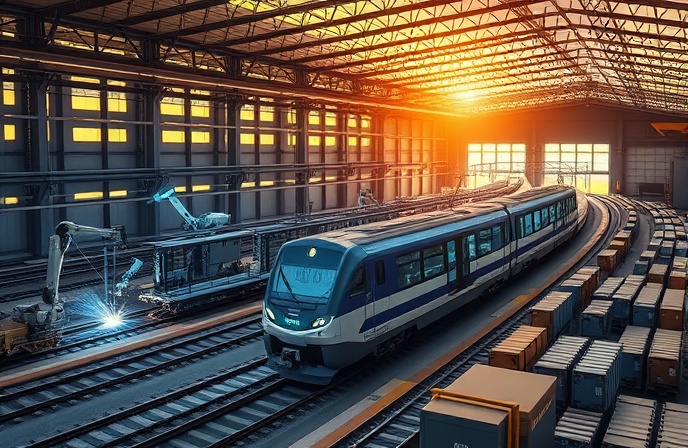
The Coradia Stream EMU (Electric Multiple Unit) represents a significant advancement in regional rail technology. Its key features include a maximum operating speed of 160 km/h, onboard equipment enhancing safety and passenger comfort, and compatibility with the European Rail Traffic Management System (ERTMS). The trains’ bi-directional capability allows for flexible operational strategies, improving network efficiency. The adoption of 3 kV electric power signifies a commitment to electrification, reducing reliance on diesel-powered trains and lowering greenhouse gas emissions. Crucially, Alstom highlights the train’s emission-free traction technologies for non-electrified lines, suggesting a likely integration of hybrid or battery-electric propulsion systems to maintain sustainability even on non-electrified routes. The modular design allows for customization based on operator needs, ensuring optimal configuration for varying passenger demands and operational requirements. Features such as sliding steps improve accessibility for passengers with reduced mobility, and dedicated bicycle spaces cater to growing eco-friendly commuting habits, even for electric bikes.
Strategic Implications for Alstom and Trenitalia
For Alstom, this contract represents a substantial win, solidifying its position as a leading supplier of modern regional trains. The deal demonstrates their capacity to deliver large-scale projects involving complex technological integration. It also reinforces Alstom’s commitment to sustainable transportation solutions, aligning with the growing global focus on decarbonizing the transport sector. For Trenitalia, the acquisition of 150 Coradia Stream trains signifies a major investment in modernizing its regional fleet. This modernization will improve the efficiency and reliability of their regional services, leading to enhanced passenger satisfaction and potentially increased ridership. The integration of ERTMS also brings Trenitalia’s network in line with the highest European safety standards, contributing to a safer and more reliable railway system. The 15-year maintenance contract secured by Alstom in a similar deal with Danish railways suggests a long-term commitment to supporting the operational life cycle of these new trainsets.
Made in Italy: Domestic Manufacturing and Economic Impact
The decision to design and manufacture the Coradia Stream trains in Italy at Alstom’s facilities in Savigliano, Sesto San Giovanni, and Bologna underscores the importance of domestic manufacturing and its contribution to the Italian economy. The project will generate jobs and stimulate economic activity in these regions, boosting local skills and expertise in the rail manufacturing sector. Furthermore, this investment in Italian manufacturing capacity highlights the potential for Italy to become a significant player in the global supply chain for sustainable railway technology.
The Broader Context: Sustainable and Efficient Rail Transport in Europe
This contract reflects a broader trend across Europe towards modernization and sustainability in regional rail transport. Governments and rail operators are increasingly investing in modern rolling stock to enhance passenger experience, improve efficiency, and reduce environmental impact. The adoption of ERTMS across the European rail network is a critical component of this modernization effort, leading to enhanced safety and interoperability. The focus on electric and emission-free technologies underscores a commitment to environmental sustainability, aligning with broader climate change objectives. The success of the Coradia Stream project in Italy could serve as a model for similar modernization efforts in other European countries.
Conclusion
The Alstom contract to supply 150 Coradia Stream regional trains to Trenitalia represents a significant milestone in the modernization of Italy’s regional rail network. The technologically advanced trains, featuring ERTMS, sustainable propulsion systems, and improved passenger amenities, reflect a commitment to enhancing both safety and the passenger experience. The contract’s strategic importance extends beyond Italy, showcasing the increasing global demand for sustainable and efficient rail solutions. Alstom’s success highlights the company’s capabilities in delivering large-scale projects while promoting domestic manufacturing and economic growth. The project’s impact extends to broader European goals for sustainable and efficient transport, positioning Italy as a leader in this transformation. The long-term maintenance contract further solidifies the partnership and illustrates a commitment to the ongoing performance and sustainability of the new fleet, marking a promising future for regional rail transport in Italy and beyond. The adoption of innovative technologies such as hybrid or battery-electric propulsion, in addition to the standard 3kV electric systems, signals a progressive approach to reducing the environmental footprint of rail travel, setting a positive example for the wider industry and promoting a more sustainable future for railway transportation.
RELATED POSTS
August 25, 2016 7:23 pm
Caltrain electrification is on track for Fall 2024 revenue service!...
February 18, 2021 3:03 pm
This article explores the significant contract awarded to Škoda Transportation...
July 22, 2025 9:33 am
Siemens Mobility invests €250M to boost Vectron locomotive production and...
The LIRR's Port Washington substation replacement, a $26.2 million success...
October 2, 2023 9:49 pm
Introduction The optimization of railway infrastructure necessitates advanced tools for...

September 6, 2025 3:01 pm
US freight rail traffic fell 0.7% last week, with mixed...