
Brandenburg Chooses Škoda ForCity Plus Trams: €110M Deal

This article explores the significant contract awarded to Škoda Transportation for the delivery of new low-floor trams to three cities in Brandenburg, Germany. The €110 million contract highlights the growing demand for modern, accessible, and energy-efficient urban transit solutions across Europe. This procurement demonstrates a strategic shift towards improving public transportation infrastructure, focusing on passenger comfort and sustainability. We will examine the technical specifications of the Škoda ForCity Plus trams, the rationale behind the joint tender by the cities of Frankfurt an der Oder, Brandenburg an der Havel, and Cottbus, and the broader implications of this deal for the future of urban rail transit in Germany and beyond. The analysis will delve into the competitive bidding process, the advantages of low-floor trams, and the long-term benefits for both the cities and Škoda Transportation. Finally, we will consider the wider context of this contract within the evolving landscape of European urban rail transport, emphasizing the trend toward sustainable and accessible public transit systems.
The Škoda ForCity Plus Tram: A Technical Overview
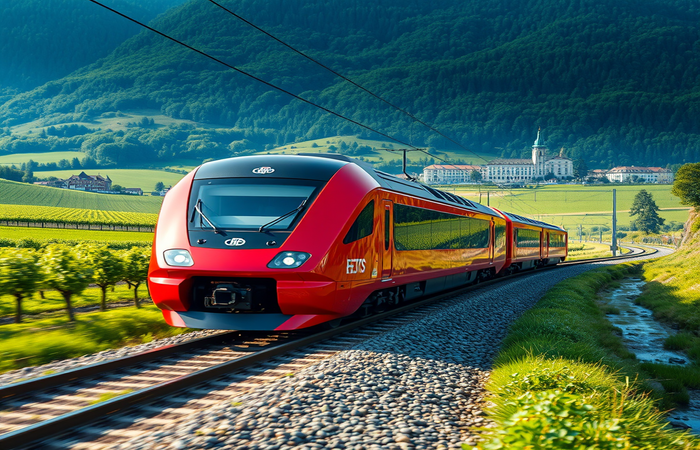
The heart of this contract is the Škoda ForCity Plus tram, a partially low-floor, unidirectional vehicle designed for modern urban environments. The three-section design, incorporating two radial drive bogies (wheeled assemblies providing support and drive) and one regular non-radial bogie, offers a balance between passenger capacity and maneuverability. The “partially low-floor” design ensures accessibility while maintaining structural integrity and optimizing space utilization. This configuration allows for efficient passenger flow and accommodates passengers with mobility impairments, making the tram suitable for a diverse range of users. The trams’ design also incorporates features such as air-conditioning, ample space for prams and bicycles, and multifunctional areas, significantly enhancing passenger comfort and experience. The adaptability of the vehicle, with variations in width to meet the specific needs of each city, showcases Škoda’s engineering expertise and commitment to customer requirements. This flexibility is a crucial factor in securing contracts in diverse urban settings.
A Joint Procurement Strategy: Collaboration for Efficiency
The joint tender by Frankfurt an der Oder, Brandenburg an der Havel, and Cottbus represents a novel approach to procurement in the urban rail sector. By collaborating on a single tender, these cities achieved economies of scale, streamlining the process and potentially reducing costs. This unified approach also enabled them to specify their common requirements for modern, accessible, and efficient trams, leading to a more effective and efficient procurement process. The standardization of tram specifications across three cities, a first according to Škoda Transportation, simplifies maintenance, parts procurement, and operator training, yielding significant long-term cost savings and operational efficiencies. This innovative procurement model could serve as a template for other urban centers looking to upgrade their public transportation systems.
Market Implications and Future Trends
The Brandenburg contract is more than just a single order; it signifies a significant market trend in European urban transit. The increasing demand for low-floor trams reflects a growing focus on accessibility and sustainability. Škoda Transportation’s success underscores their ability to adapt to these changing market demands, delivering high-quality, modern trams that meet stringent technical and accessibility requirements. Furthermore, the company’s ongoing discussions for similar contracts in other German cities (Heidelberg, Mannheim, Ludwigshafen and Bonn) indicate a strong market position and potential for future growth. The success of this project highlights the importance of investing in R&D to create vehicles suitable for the diverse requirements of modern urban transport systems across Europe and beyond.
Conclusion
The awarding of the Brandenburg tram contract to Škoda Transportation marks a significant milestone in the evolution of urban rail transit. The procurement of the Škoda ForCity Plus trams by Frankfurt an der Oder, Brandenburg an der Havel, and Cottbus showcases a forward-thinking approach to public transportation, prioritizing accessibility, sustainability, and cost-effectiveness. The joint tender highlights a new model for efficient procurement, benefiting all participating cities. The technical specifications of the ForCity Plus trams—specifically, the partially low-floor design, the modular configuration, and the inclusion of passenger amenities—demonstrate a commitment to providing a comfortable and accessible transit experience. Škoda Transportation’s success in securing this large-scale contract confirms their position as a leading innovator and supplier in the European tram market. This project not only delivers significant improvements in public transportation for Brandenburg but also sets a precedent for future urban transit developments across Europe, encouraging collaboration and the adoption of modern, sustainable rail solutions. The contract’s focus on accessibility underscores a broader societal shift toward inclusive urban planning, ensuring that public transport systems cater to the needs of all citizens. This successful collaboration among cities and the supplier will likely inspire similar projects in other regions, driving further innovation and improvement in urban rail transportation.
RELATED POSTS

March 3, 2025 1:39 am
The railway industry is undergoing a significant transformation driven by...
May 28, 2025 9:48 am
DB Regio Awarded Contract for Regional Transport in Baden-Württemberg DB...
September 5, 2023 11:34 pm
This article explores the innovative integration of solar power into...
August 19, 2019 1:02 am
Modernizing Sri Lanka’s Railway System: A Comprehensive Overview This article...
August 12, 2025 4:33 pm
Madhya Pradesh Poised to Become a Leading Rail Manufacturing Hub...

September 29, 2010 5:44 pm
Freight rail service has commenced along a 120km section of...