
WinterTech Success: Autonomous Rail in Canada

Introduction
This article explores the successful completion of the WinterTech Programme in Canada, a significant milestone in the advancement of autonomous rail technology. The program, a collaborative effort between Thales, Invision AI, and Metrolinx, focused on validating the functionality and reliability of a cutting-edge rail-centric system designed for operation in challenging winter conditions. The initiative involved extensive real-world testing on operational Metrolinx GO Transit lines in Toronto, utilizing a train equipped with a suite of advanced sensors and a robust cyber-secure communication network. This project showcases the potential of integrating Artificial Intelligence (AI) and advanced sensor technologies to enhance safety, efficiency, and situational awareness within the rail industry, particularly in regions experiencing harsh weather patterns. The implications extend beyond improved commuter experience, impacting maintenance strategies and the overall operational reliability of railway networks globally. The successful demonstration of this technology paves the way for widespread adoption of autonomous and advanced driver-assistance systems (ADAS) in rail transportation.
Sensor Integration and Data Acquisition
The core of the WinterTech Programme involved the integration of a diverse array of sensors onto a Metrolinx GO train. These sensors included radar, lidar (Light Detection and Ranging), and multiple cameras, providing a comprehensive view of the train’s immediate surroundings. The data collected from these sensors was crucial for validating the system’s ability to accurately perceive and interpret its environment, even in the face of adverse weather conditions such as snow, ice, and reduced visibility. This data was transmitted via a secure 4G/LTE network, enabling real-time processing and analysis. The secure communication infrastructure is essential not only for efficient data transfer but also for the robust operation of the autonomous system. The cyber security aspect is critical for the integrity and safety of the entire system.
System Validation and Performance Enhancement
The data gathered during the shadow mode operation of the equipped Metrolinx GO train was used to refine and optimize the autonomous system. Shadow mode operation, where the system operates alongside a human operator, allows for continuous monitoring and evaluation of its performance. This iterative process of data collection, analysis, and system upgrades ensured the robustness and reliability of the system under various operational scenarios. The system’s ability to identify obstacles, even in challenging weather, was a key focus of the validation process. This involved analyzing the sensor data to develop robust algorithms capable of differentiating between genuine obstacles and environmental noise. The continuous refinement of algorithms ensured improved situational awareness and a higher degree of safety.
Operational Benefits and Future Implications
The successful completion of the WinterTech Programme has demonstrated the potential for significant improvements in railway operations. The real-time data provided by the integrated sensor system enhances maintenance and operational efficiency, allowing for proactive identification and resolution of potential issues. This proactive approach minimizes delays, enhances network safety, and improves the overall reliability of the railway system. Furthermore, the modular design of the system facilitates easy integration with existing infrastructure, such as smart monitoring systems at level crossings and stations. This flexibility allows for a phased implementation approach and supports future upgrades and expansions of the system, making it adaptable to evolving technological advancements and operational needs.
Conclusions
The WinterTech Programme represents a landmark achievement in the development and validation of autonomous rail technology. The collaboration between Thales, Invision AI, and Metrolinx has resulted in a functional and dependable system capable of operating reliably in challenging winter conditions. The program’s success hinges on the effective integration of various sensor technologies, the utilization of a robust cyber-secure communication network (4G/LTE), and a rigorous system validation process. The real-world testing on operational Metrolinx GO Transit lines provided invaluable data for system optimization and demonstrated its capacity to provide real-time situational awareness, enhancing both safety and operational efficiency. The modular design, minimal equipment footprint, and ease of integration with existing infrastructure make this technology readily deployable and adaptable to diverse railway environments. This project positions Canada as a global leader in autonomous rail technology and sets a precedent for the future development and implementation of advanced driver-assistance systems (ADAS) and autonomous train operations worldwide, particularly within regions experiencing harsh weather conditions. The positive impact extends beyond immediate operational benefits, potentially leading to significant improvements in commuter experience, railway safety, and overall operational cost reductions. The ongoing development and refinement of this technology are crucial for creating safer, more efficient, and more reliable railway systems for future generations. This initiative represents a significant advancement in the field, signaling a shift towards a more autonomous and technologically advanced railway sector.
RELATED POSTS
June 3, 2025 1:00 pm
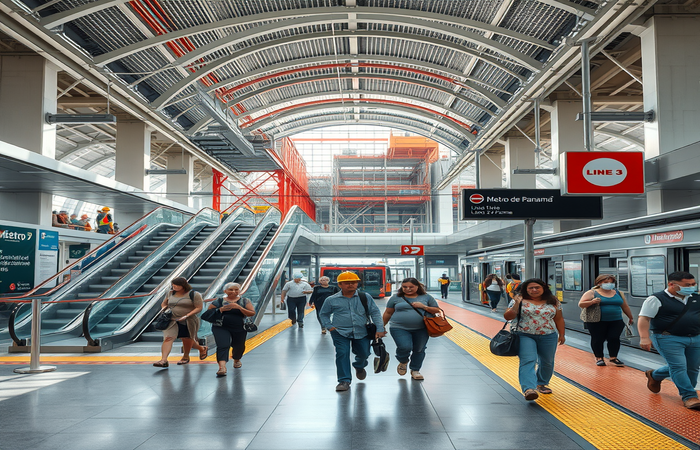
Metro de Panamá is expanding Albrook station, integrating Line 3,...

The Rail Freight Forum 2025, part of TRAKO Fair, ...
October 24, 2019 4:40 pm
This article explores Deutsche Bahn’s (DB) strategic expansion of its...
July 28, 2016 4:52 am
Infrastructure issues caused a significant percentage of delays. Further analysis...
June 4, 2017 9:37 am
Here's an excerpt suitable for railway professionals:"At the Port of...
August 18, 2025 8:32 pm
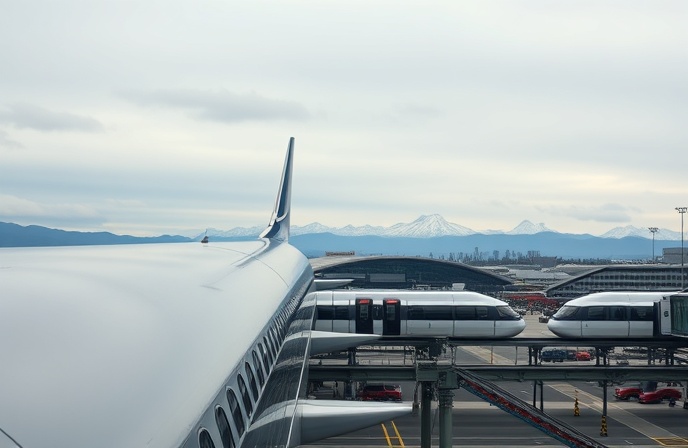
Seattle-Tacoma Airport's North SeaTac Access project, a new passenger boarding...