
UIC 566: Loadings of Coach Bodies & Structural Integrity Requirements (2026 Guide)
Definitive guide to UIC 566 (2026). Structural requirements for railway coach bodies. Explaining the 2000 kN compressive load, component acceleration limits (3g/5g), and the difference between Static and Fatigue loads.
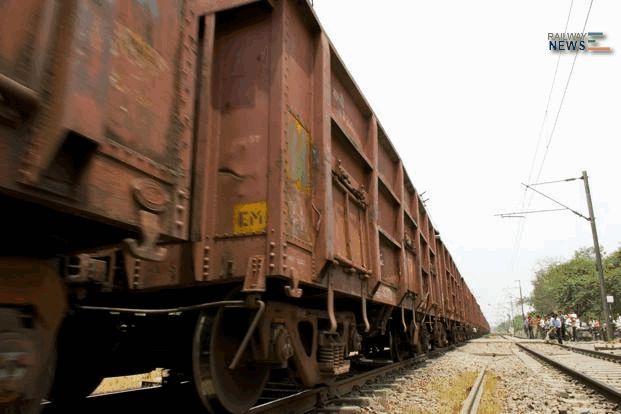
💡 Key Takeaways: UIC Leaflet 566
- Core Scope: Defines the static and dynamic loads that a passenger coach body (shell) and its internal components must withstand without permanent deformation.
- The “2000 kN” Rule: Establishes the standard compressive force (at buffer level) the chassis must resist during coupling or operation.
- Component Safety: Specifies that seats, toilets, and luggage racks must be attached securely enough to withstand accelerations of up to 5g (longitudinal) during shunting impacts.
- Fatigue Life: Requires the structure to survive 30+ years of vibration and pressure cycles (tunnels).
🏗️ 2026 Materials Update: The race for energy efficiency is pushing UIC 566 to its limits. Engineers are now replacing steel with Carbon Fiber and Aluminum Composites to reduce weight. The 2026 challenge is proving via FEA (Finite Element Analysis) that these light materials meet the rigid strength requirements of UIC 566.
A train carriage is not just a box on wheels; it is a complex structural shell designed to protect passengers. UIC Leaflet 566 is the structural bible that dictates exactly how strong this shell must be.
It answers the critical question: “If we overload this train with passengers and slam it into another carriage at 10 km/h, will the seats rip off the floor?”
The Carbody Shell: The 2000 kN Barrier
The primary structure (Underframe + Side Walls + Roof) must be incredibly rigid. UIC 566 categorizes loads into two main types:
1. Static Loads (Proof Loads)
These are forces applied to verify the design doesn’t bend permanently (Plastic Deformation).
- Compressive Load: The train must withstand 2000 kN (approx. 200 tons) of force applied at the buffers. This simulates heavy braking or coupling impacts.
- Vertical Load: The body must support 130% of its maximum passenger payload without sagging.
- Lifting Load: The entire coach must be liftable from the workshop jacking points without twisting.
2. Fatigue Loads (Endurance)
Trains vibrate. Constantly. UIC 566 mandates a fatigue analysis (often utilizing Goodman Diagrams) to ensure that millions of small vibration cycles over 30 years won’t cause cracks in the welds.
Interior Components: Stops Seats Becoming Projectiles
One of the most critical, yet overlooked, aspects of UIC 566 is the mounting of “add-on” equipment. In a sudden stop or crash, a 50kg water tank or a double seat can become a lethal projectile.
UIC 566 defines the Acceleration Factors ($g$) that mountings must withstand:
| Direction | Acceleration Requirement | Real-World Scenario |
|---|---|---|
| Longitudinal ($x$) | $\pm 3g$ to $\pm 5g$ | Shunting impact or emergency braking. The seat must not detach from the wall/floor. |
| Lateral ($y$) | $\pm 1g$ | Passing through a sharp curve at high speed (Centrifugal force). |
| Vertical ($z$) | $(1 \pm c) \times g$ | Track irregularities and bumps. Equipment hanging from the ceiling must not fall. |
UIC 566 vs. EN 12663
While UIC 566 is the heritage standard for international coaches (RIC), EN 12663 is the modern European Norm.
- UIC 566 is prescriptive (tells you exactly what loads to apply).
- EN 12663 is categorized (defines categories P-I, P-II based on train type).
- Note: Most modern contracts require compliance with both, but UIC 566 remains the benchmark for component attachment.
FAQ: Structural Strength
What is FEA (Finite Element Analysis) in this context?
FEA is a computer simulation method used to virtually test the train body against UIC 566 loads before it is built. It creates a “Heat Map” of stress, showing engineers exactly where the metal might buckle or crack under the 2000 kN load.
Does UIC 566 cover crashworthiness?
Not directly. UIC 566 ensures the body is strong (doesn’t deform under normal loads). Actual Crash Energy Management (crumple zones) is covered by a different standard, EN 15227. However, a rigid passenger cell (UIC 566) is a prerequisite for a safe crash strategy.
What are “Aerodynamic Loads”?
When two high-speed trains pass each other in a tunnel, the pressure difference creates a massive “slap” on the side walls. UIC 566 requires the windows and doors to withstand this pulsating pressure ($\pm 6000$ Pa) without shattering or popping open.
RELATED POSTS
December 15, 2024 2:02 am
Discover EN 50463-3: the railway standard for on-board data handling....

October 1, 2023 6:54 am
UIC Leaflet No: C6 – Chapter 0 – Statutes and...

September 21, 2023 3:16 am
UIC Leaflet 644 defines the acoustic warning devices (horns) for...
September 26, 2023 1:47 am
UIC Leaflet 920-8 establishes the standard for coding digital information...

October 9, 2023 9:10 pm
UIC Leaflet 961 establishes the principles for the training and...
December 28, 2023 2:28 am
Protect critical data from interference. A technical guide to EN...
COMMENTS