
U.S. Rail Safety: Yardmaster Protection Act & Operational Efficiency
Bipartisan bill aims to enhance safety for U.S. railway yardmasters by extending hours-of-service protections.
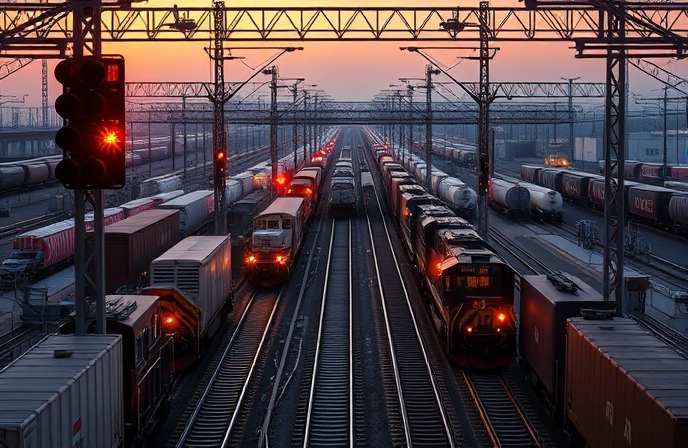
Yardmasters’ Safety: Bipartisan Bill Seeks Enhanced Protections
In a move poised to bolster safety across the U.S. rail network, Representatives Salud Carbajal (D-Calif.) and Mike Lawler (R-N.Y.) have reintroduced the “Railroad Yardmaster Protection Act.” This bipartisan bill, unveiled recently, aims to extend crucial workplace protections to railroad yardmasters, mirroring the existing safeguards afforded to other safety-sensitive rail workers. The legislation, first introduced, seeks to address a long-standing safety gap by including yardmasters under federal hours-of-service regulations. The bill’s core intention is to ensure these critical personnel, responsible for managing rail traffic flow, are not overworked, thereby mitigating the risk of fatigue-related accidents. This article will delve into the specifics of the proposed legislation, its implications for the rail industry, and the potential safety benefits for both rail workers and the traveling public.
Defining the Role: Yardmasters and their Current Status
Yardmasters serve as the air traffic controllers of the railway, making decisions that impact countless lives, with responsibility for the safe and efficient movement of trains within rail yards and terminals. They are the critical link in the railway’s operational chain. Unlike locomotive engineers, conductors, switchmen, dispatchers, and signal employees, these personnel are not currently subject to the stringent hours-of-service regulations outlined by the Federal Railroad Administration (FRA). This means yardmasters can, and often do, work extended hours, raising concerns about fatigue and its impact on safety. The current lack of regulated rest periods presents a potential risk that the “Railroad Yardmaster Protection Act” seeks to rectify.
Key Provisions of the Proposed Legislation
The “Railroad Yardmaster Protection Act” centers on implementing limitations on working hours. The bill explicitly mandates that yardmasters are not required or permitted to work more than 12 hours consecutively. After completing a 12-hour shift, yardmasters are entitled to a minimum of 10 hours off-duty before returning to work. This aligns the yardmaster’s work schedule with the provisions already in place for several other safety-sensitive rail workers, fostering greater consistency in workplace safety standards. Additionally, the bill’s passage would require the FRA to provide training programs for railroad yardmasters.
Impact on Safety and Operational Efficiency
The primary benefit of the proposed legislation is the expected improvement in rail safety. By regulating yardmasters’ working hours, the bill aims to reduce the incidence of fatigue-related errors. Such errors can lead to costly derailments, collisions, and other incidents that endanger both rail workers and the public. Furthermore, enhanced safety measures can, in turn, boost operational efficiency. By minimizing accidents and delays, railroads can improve on-time performance and potentially reduce operational costs. This directly affects all aspects of the rail system from freight shipment to passenger travel.
Industry Response and Potential Challenges
While the “Railroad Yardmaster Protection Act” enjoys bipartisan support, the rail industry may have concerns regarding its implementation. Railroads could face the challenges of managing increased staffing needs. Additional staff could be required to ensure adequate coverage and adherence to the new hour limitations. However, many industry experts and the bill’s proponents maintain that the long-term benefits of improved safety and operational efficiency outweigh these considerations. The Association of American Railroads (AAR), along with individual railroad companies, are expected to be actively involved in the discussion and potential amendment process.
Conclusion
The reintroduction of the “Railroad Yardmaster Protection Act” represents a crucial step toward fortifying safety standards within the U.S. railway system. By extending federal hours-of-service protections to yardmasters, the bill acknowledges the vital role these personnel play in ensuring safe rail operations. The proposed legislation seeks to reduce the potential for fatigue-related incidents. This will have significant implications for the industry, affecting both worker safety and operational efficiency. While some implementation challenges may arise, particularly concerning staffing, the anticipated benefits, including a safer railway environment and improved reliability, are expected to justify the necessary adjustments. As the bill progresses, the industry’s response and adaptation will be critical to the success of the legislation. With increased focus on safety within the rail sector, this measure is poised to contribute to a safer and more efficient rail network for years to come.
RELATED POSTS

April 2, 2026 9:48 am
China expanded its high-speed rail network to 50,000 km by...

April 7, 2026 4:33 pm
From HS2's $137bn to California's $126bn rail disaster — discover...
April 1, 2026 6:21 pm
Federal Transit Administration awarded $20.6 billion in formula-based apportionments to...

April 1, 2026 8:40 pm
BNSF Railway expands Galesburg, Illinois, yard capacity, with second hump...
April 1, 2026 2:14 pm
Saudi Arabia Railways launched a 1,700 km freight rail corridor...

April 1, 2026 12:10 pm
Alstom secured a €410 million contract from CFR SA to...