
Siemens Goole: UK Rail’s New Powerhouse
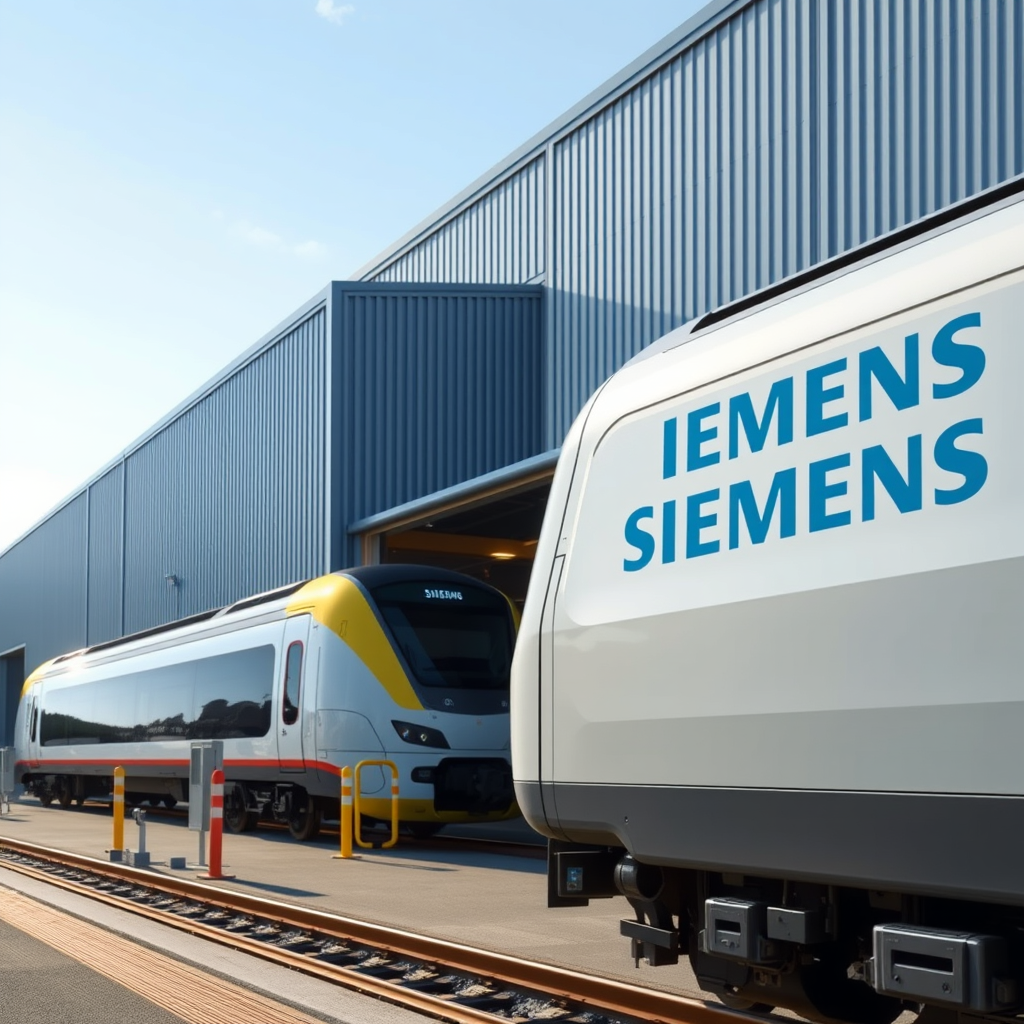
This article explores the significant expansion of Siemens Mobility’s rail manufacturing capabilities in the United Kingdom, focusing on the opening of their new Train Manufacturing Facility in Goole, Yorkshire. The establishment of this facility represents a substantial investment in the UK rail industry, impacting job creation, economic growth, and the modernization of rolling stock. We will examine the facility’s role in assembling new trains for the London Underground (LU) Piccadilly line, its contribution to the wider Goole Rail Village development, and the broader political and economic implications of this investment. Furthermore, we will delve into the strategic importance of this expansion for Siemens Mobility, considering their long-standing presence in the UK and their commitment to providing cutting-edge rail solutions. Finally, the article will assess the environmental implications, particularly given the focus on electric rolling stock and the shift towards sustainable railway practices.
The Goole Rail Village: A Hub for Rail Innovation
The opening of Siemens Mobility’s Train Manufacturing Facility marks a pivotal moment in the development of the Goole Rail Village. This new campus is not just a single factory; it’s a strategically planned complex encompassing various facilities crucial to the rail industry. Beyond the Train Manufacturing Facility, the Goole Rail Village includes a Components Facility, providing parts for train assembly and maintenance, a Logistics Center for efficient warehousing and distribution, and the Rail Accelerator and Innovation Solutions hub for Enterprise (RaisE), a business center fostering innovation and collaboration within the sector. This integrated approach streamlines the entire process, from component manufacturing to final assembly and beyond, maximizing efficiency and reducing lead times. The planned addition of the University of Birmingham’s Centre of Excellence for Railway Through-Life Engineering further solidifies the site as a center for innovation and research in railway technology.
Assembly of Piccadilly Line Rolling Stock
The immediate focus of the Goole facility is the final assembly of rolling stock for the London Underground’s Piccadilly line upgrade. This represents a significant contract for Siemens Mobility and highlights the facility’s capability to handle large-scale rolling stock projects. At least 80% of the new LU rolling stock will be assembled at the Yorkshire plant, underscoring the facility’s crucial role in modernizing one of London’s busiest underground lines. The selection of this site, approximately 150 miles from London, also demonstrates the evolving landscape of UK rail manufacturing and its potential to create significant economic opportunities outside of traditional hubs. The use of modern technologies in the manufacturing process ensures high quality, reliable trains are produced for the London Underground’s needs.
Economic and Political Significance
The Goole Rail Village project has attracted considerable political attention, underscoring its significance to the UK economy. The investment is expected to create up to 900 direct jobs at the facility, with a further 1,700 jobs supported in the supply chain. This injection of jobs and investment will revitalize the Goole region and contribute to the wider UK economy. The project also reflects a broader political strategy aimed at revitalizing the UK rail industry, promoting sustainable growth, and creating high-skilled employment opportunities. This commitment contrasts with previous “boom-and-bust” cycles and positions the UK as a leader in innovative rail manufacturing.
Expansion and Future Investments: The Bogie Assembly and Service Centre
Siemens Mobility’s commitment extends beyond the initial Train Manufacturing Facility. A €47 million Bogie Assembly and Service Centre (a crucial component of railway vehicles) is slated to open towards the end of 2026. This expansion will further enhance Siemens Mobility’s capabilities, securing around 100 existing jobs and creating up to 200 more. The centre will not only overhaul bogies for the 572 trains Siemens currently maintains in the UK but also establish new production lines for assembling bogies for new trains – a first for Siemens in the UK. This strategic move underscores Siemens’ long-term commitment to the UK market and their confidence in the region’s potential for growth within the rail sector. This expansion further highlights the significance of the Goole Rail Village as a dynamic and growing centre for rail manufacturing and innovation.
Conclusions
The opening of Siemens Mobility’s Train Manufacturing Facility in Goole signifies a major step forward for the UK rail industry. The establishment of the Goole Rail Village, with its integrated approach encompassing manufacturing, logistics, and innovation, represents a significant investment in infrastructure and job creation. The facility’s role in assembling rolling stock for the London Underground’s Piccadilly line upgrade demonstrates its capacity to handle large-scale projects and contribute to the modernization of critical transport networks. The economic and political impact of this project is substantial, with the potential to create thousands of jobs and revitalize the Goole region. Furthermore, the planned expansion, including the Bogie Assembly and Service Centre, solidifies Siemens Mobility’s long-term commitment to the UK rail sector, positioning the country as a leader in rail innovation and sustainable transportation solutions. The project’s success underscores the benefits of strategic, long-term investment in the rail industry, fostering economic growth, creating employment opportunities, and contributing to a more sustainable and efficient transport future. The Goole Rail Village serves as a model for future rail infrastructure development, highlighting the importance of collaborative partnerships between industry, academia, and government in driving innovation and economic prosperity within the sector. The success of this venture promises to stimulate further investment in the UK’s railway system, laying the groundwork for a more modern, efficient, and environmentally responsible transportation network.
RELATED POSTS

October 2, 2024 10:25 am
Deutsche Bahn (DB) has unveiled an extensive programme aimed at...

January 12, 2025 10:54 am
This article delves into the significant undertaking of the Intercity...

October 23, 2025 2:54 am
VRE enhances commuter access! A new $34.6M parking structure in...

August 4, 2015 6:23 pm
Transport for London (TfL) has awarded the contract to deliver...
December 3, 2021 8:17 am
This article explores the innovative partnership between the Chicago Transit...
April 1, 2025 4:51 am
Introduction The railway industry is undergoing a significant transformation, driven...