
LILEE Systems Launches Trials of SafeRail Wireless Activation System to Enhance Rail Crossing Safety
The SafeRail system is designed to address safety gaps in standard PTC systems, offering a comprehensive Limits Compliance and Collision Avoidance System (LCCAS) for rail crossings and maintenance-of-way vehicles.

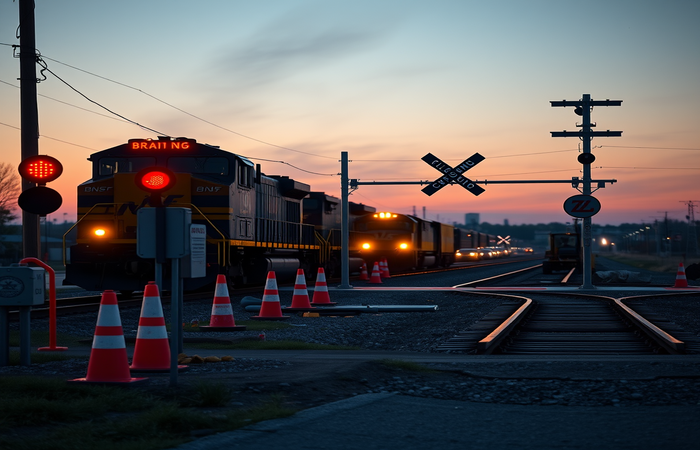
LILEE Systems has commenced trials of its SafeRail wireless grade crossing activation solution in collaboration with an unnamed Class I freight railroad operating over 30,000 miles of track across North America. This initiative is part of the broader Positive Train Control (PTC) 2.0 efforts aimed at improving crossing safety, reducing service interruptions, and increasing train speeds. The SafeRail system is designed to address safety gaps in standard PTC systems, offering a comprehensive Limits Compliance and Collision Avoidance System (LCCAS) for rail crossings and maintenance-of-way vehicles.
The SafeRail system incorporates the LILEE TransAir STS-2025 gateway, which is compliant with AAR S-9202 standards and features Wayside Message Server capabilities. This ensures communication redundancy, minimizing train delays and enhancing long-term safety and reliability. Jia-Ru Li, CEO of LILEE Systems, emphasized the company’s decade-long experience with Class I railroads and its commitment to advancing rail safety through PTC 2.0 technologies. The SafeRail system aims to improve the timing and accuracy of crossing activations, reducing the risk of malfunctions that could lead to safety hazards and service disruptions.
The Class I freight railroad is using the SafeRail system as a backup to ensure crossings are activated even when the primary system fails. This is particularly beneficial for long freight trains, allowing them to maintain higher safe speeds and improve operational efficiency. The system also integrates AI and sensor fusion technologies, including LiDAR and camera imaging, to monitor crossings and tracks. These technologies detect locomotives and maintenance-of-way vehicles, ensuring accurate crossing activations when the main system is offline. This trial marks a significant step forward in enhancing rail safety and operational efficiency across North America.
RELATED POSTS

November 22, 2017 5:08 pm
Electrification is revolutionizing railway efficiency. Discover how TRAXX electric...

March 10, 2026 7:54 am
Singapore's LTA mandates multi-system rail upgrades. 20% of operations and...
June 10, 2025 11:00 pm
Illinois invests $3.8M in rail safety upgrades, focusing on Galesburg...
February 8, 2019 8:04 am
The Siemens-Alstom merger failure: A crucial antitrust lesson for...
September 13, 2025 2:00 pm
Hitachi Rail opens $100M digital factory, creating jobs and boosting...
July 1, 2025 7:33 am
Polish rail freight speeds up, cutting journey times dramatically. ...
COMMENTS