
India’s Hyperloop: High-Speed Rail Future
Revolutionizing high-speed rail: Discover how cutting-edge technologies are boosting efficiency and sustainability in the industry!

Revolutionizing Rail: The Future of High-Speed Transportation
The global railway industry is undergoing a period of significant transformation, driven by technological advancements, evolving passenger demands, and growing environmental concerns. This article delves into the key trends shaping the future of high-speed rail, focusing on innovative technologies and their potential impact on rail infrastructure development. From the development of cutting-edge propulsion systems to the implementation of smart infrastructure solutions, we explore how these innovations can enhance efficiency, reduce operating costs, and promote sustainability within the railway sector.
The Rise of High-Speed Rail Technologies
High-speed rail (HSR) networks are experiencing a surge in popularity, driven by their ability to provide fast and convenient travel options. Modern HSR systems leverage advanced propulsion technologies, including electric traction with optimized power management systems, allowing for faster acceleration and higher top speeds. Aerodynamic train designs play a crucial role in minimizing air resistance, further contributing to increased speed and reduced energy consumption. The integration of advanced signalling systems, such as CBTC (Communication-Based Train Control) and ETCS (European Train Control System), enhances operational safety and reliability by enabling precise train spacing and reducing delays.
Infrastructure Advancements and Smart Solutions
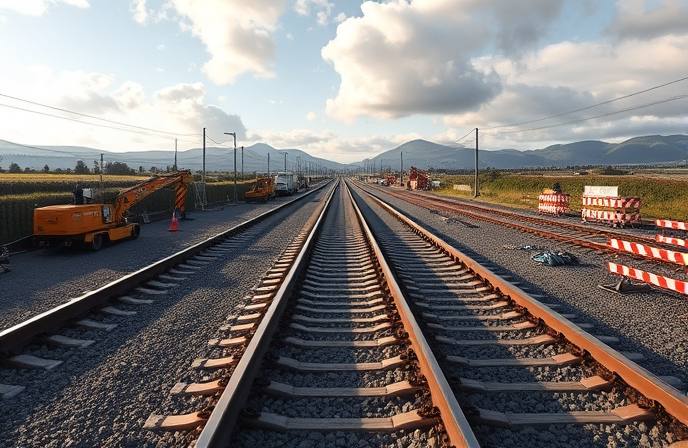
Modernizing existing rail infrastructure is essential to accommodate the high speeds and capacities of advanced trains. This involves upgrades to track geometry, including the use of advanced materials to improve resilience and reduce maintenance requirements. The introduction of smart infrastructure solutions, including digitalized monitoring systems and predictive maintenance technologies, enables proactive identification of potential issues, minimizing downtime and ensuring the long-term reliability of the system. This integration of IoT (Internet of Things) devices also enables real-time monitoring of track conditions, allowing for faster responses to any irregularities. Utilizing advanced materials like high-strength steel in track construction, and implementing advanced ballastless track systems can increase resilience and durability. Furthermore, smart station design incorporates technologies like contactless ticketing and integrated transit connections, enhancing passenger experience and streamlining workflows.
The Impact of Electrification and Sustainable Practices
The transition to fully electrified railway networks is becoming increasingly critical, reducing reliance on fossil fuels and lowering carbon emissions. Efficient energy management systems are crucial for maximizing energy utilization and minimizing wasted energy during operation. Green and sustainable practices extend to the use of eco-friendly materials in construction, from the rail tracks to the train cars themselves. This is a crucial step towards achieving a more environmentally friendly transportation system. Moreover, bio-sourced materials in construction, and the utilization of renewable energy resources to power railway operations contribute to a lower carbon footprint. This is particularly important for future expansion of railway networks, especially in densely populated urban areas, and high-speed lines connecting major metropolitan regions.
Hyperloop Transportation and the Future of Passenger Rail in India
The concept of hyperloop transportation, while not currently widespread in railway systems, presents a fascinating vision for the future of passenger rail. The potential for significantly reduced travel times and enhanced transportation efficiency holds great promise. The infrastructure requirements and challenges for introducing hyperloop systems in regions like India will be significant. India’s diverse geographical terrain, including mountainous regions, dense urban landscapes, and vast stretches of plains, present unique hurdles to implementation. The political and social aspects also need to be carefully considered. This technology’s effectiveness within the existing rail network and its suitability for existing infrastructure needs further investigation.
You might be interested in:
Last January 2019, we looked at the Siemens-Alstom merger and its impact on rail industry competition. Click here to read – Siemens-Alstom Merger: Competition, Divestments, & Rail’s Future
Conclusion: Shaping the Future of Rail
The future of railway transportation is intricately linked to innovation and a commitment to sustainability. This article has explored the convergence of advanced technologies, such as advanced propulsion systems, with smart infrastructure solutions. We’ve examined the crucial role of electrification and sustainable practices in reducing environmental impact. Furthermore, the evolving passenger demands for faster and more comfortable travel solutions are motivating the exploration of innovative concepts like hyperloop transportation, which requires further study for successful implementation within established networks, particularly in a region like India. Implementing these changes requires careful planning, investment in research and development, and robust collaboration between governments, railway operators, and technology providers. Ultimately, the successful integration of these innovations will pave the way for a more efficient, sustainable, and passenger-centric rail network, fostering economic growth and improved connectivity worldwide. The future of rail transportation promises to be a complex interplay of established systems and disruptive technologies. This complex interplay will not only affect the efficiency and the speed of passenger transportation but also the integration with the broader transportation infrastructure, and the overall economic development within areas that rely on high speed rail. The critical consideration for hyperloop transportation in India, and in other areas around the globe, is the feasibility of integrating these systems with existing rail infrastructure, given the complexities of adapting to the terrain, and maintaining safety standards.
RELATED POSTS
May 24, 2020 10:05 pm
This article explores the successful commissioning of Bombardier FLEXITY high-floor...
July 7, 2025 8:33 am
GCRE trains Tata Steel workers for rail jobs. New...

November 12, 2016 8:38 pm
1st Talgo High Speed Train, worked on way
August 22, 2023 2:23 am
This article examines the significant partnership between Costain and GHD,...
February 15, 2026 12:21 pm
Union Pacific awarded Wabtec a $1.2 billion contract for AC4400...

April 10, 2025 10:15 am
This article explores the successful completion of Phase 1 of...