
CTA Secures Funding: Chicago Transit Boosted by State & Feds
Chicago Transit Authority averts funding cut by submitting a security plan, securing federal funds while Illinois invests $1.5 billion for transit improvements.
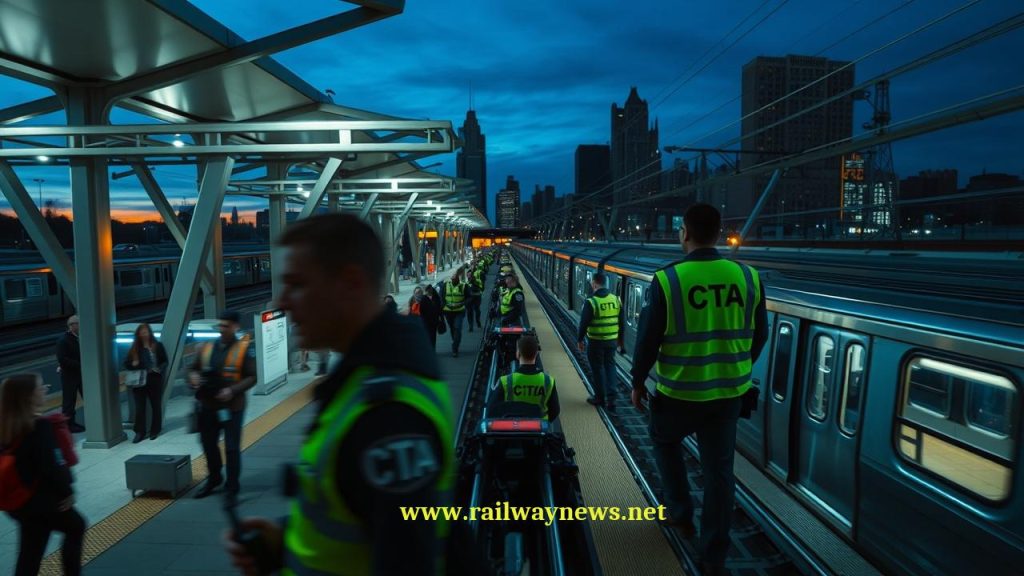
CHICAGO, USA – The Chicago Transit Authority (CTA) has successfully submitted a mandated security enhancement plan to the Federal Transit Administration (FTA), averting a threatened loss of 25% of its federal funding. This decisive action, which includes plans to increase police presence, comes just as a new state law injects $1.5 billion in annual funding to stabilize and improve the region’s public transit network.
| Category | Details |
|---|---|
| Agency | Chicago Transit Authority (CTA) |
| Federal Mandate | FTA Special Directive on Crime Reduction |
| Funding at Risk | 25% of Federal Transit Administration funding |
| Security Plan Deadline | December 15 (Met) |
| New State Funding | $1.5 billion annually for CTA, Metra, and Pace |
The Chicago Transit Authority confirmed it has met a critical December 15 deadline to submit a comprehensive crime reduction plan to the Federal Transit Administration. The submission follows a special directive issued by the FTA just one week prior, which was prompted by a severe Nov. 17 incident where a passenger was set on fire on a Blue Line train. Citing that attack and increased rates of assault against both passengers and employees, the FTA ordered the CTA to develop a concrete plan or face the withholding of a quarter of its federal funding. The transit authority must also submit a separate, broader safety plan by December 31.
While the full details of the security plan have not been publicly released, sources confirm a central component is the significant increase in the number of police officers patrolling the city’s bus and rail systems. This measure directly addresses the FTA’s demand for tangible steps to curb violent crime. The federal directive has been linked to the Trump administration, which has previously highlighted violence on public transit in major US cities, framing the funding threat as a tool to compel action on public safety.
The federal pressure on the CTA unfolds against a backdrop of unprecedented state-level financial support. Illinois Governor JB Pritzker recently signed a landmark law that provides a $1.5 billion annual infusion for the region’s public transit systems, including the CTA, Metra commuter rail, and Pace suburban bus service. This new funding is designed to avert a looming fiscal crisis, prevent major service cuts, and empower the agencies to focus on performance, reliability, and rider-focused enhancements, creating a complex dynamic of federal scrutiny and state-level investment.
Key Takeaways
- The CTA has complied with the FTA’s initial deadline, securing its federal funding stream for the immediate future.
- Enhanced security will be visibly implemented through an increased deployment of police officers across the transit network.
- The federal ultimatum coincides with a new $1.5 billion state funding package aimed at long-term stabilization and service improvement for Chicago-area transit.
Editor’s Analysis
The situation in Chicago presents a microcosm of the challenges facing major urban transit systems globally. The CTA is navigating a delicate balance between federal political pressure, which uses funding as a lever for immediate security action, and a new wave of state investment aimed at long-term systemic health. For the global rail industry, this underscores the critical link between public perception of safety, operational funding, and political will. While the immediate funding crisis is averted, the CTA’s ability to effectively deploy these new resources—both for security and service—will be closely watched. This case serves as a potent reminder that a transit system’s viability depends not just on its infrastructure, but on its capacity to ensure passenger security and maintain public trust in the face of complex political and financial crosscurrents.
Frequently Asked Questions
Why did the Federal Transit Administration (FTA) issue a directive to the CTA?
The FTA issued the special directive following a high-profile violent attack on a passenger on November 17 and cited rising rates of assaults against both passengers and CTA employees as the primary reason for demanding a crime reduction plan.
What was the immediate consequence of the CTA submitting its plan?
By submitting the security plan by the December 15 deadline, the CTA has avoided the immediate threat of losing 25% of its federal funding, a crucial component of its operating budget.
How is the state of Illinois supporting the CTA?
Illinois recently enacted a new law that generates a $1.5 billion annual funding increase for the region’s transit systems (CTA, Metra, and Pace). This is intended to prevent service cuts, improve reliability, and ensure long-term financial stability.
RELATED POSTS

June 12, 2025 10:00 pm
HS2's TBM "Emily" completes Northolt Tunnel section, a key step...

October 31, 2022 12:01 pm
This article explores the significant development of Hitachi Rail’s new...

November 10, 2025 6:54 pm
RFI and Vossloh ink a multi-year deal exceeding EUR 100...

September 7, 2025 4:12 pm
Spain launches market consultation for cleaner railway technology, seeking alternatives...
September 16, 2022 10:33 pm
This article examines the recent contract awarded to Construcciones y...

May 30, 2025 2:00 am
Poland, October 26, 2024 – Alstom (a French multinational rolling...