
Croatia Debuts Battery Train: Green Rail Revolution in Split
Croatia unveils its first battery-powered train, a Končar unit, backed by €17.1M, revolutionizing sustainable transport and expanding services in Split.
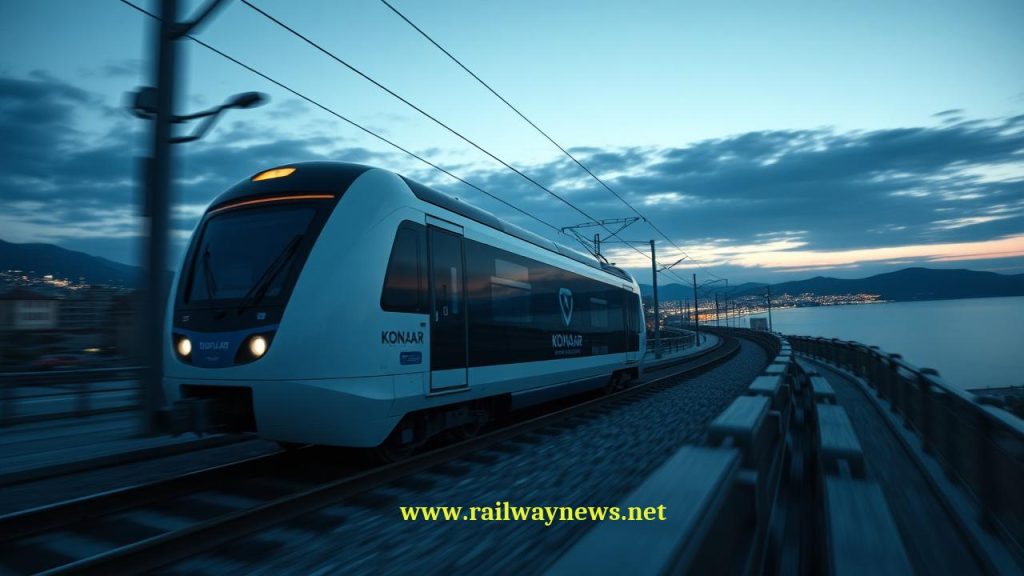
Croatia has officially launched its first-ever battery-powered train, a landmark achievement in the nation’s push for sustainable transport set to begin regular service in the Split metropolitan area on December 15, 2025. The domestically produced Končar unit is the centerpiece of a EUR 17.1 million green technology initiative, funded by the EU’s Recovery and Resilience Plan, aimed at modernizing the country’s non-electrified railway lines.
| Category | Details |
|---|---|
| Project | Application of green technologies in passenger rail transport |
| Total Project Value | EUR 17.1 million (via National Recovery and Resilience Plan) |
| Train Manufacturer | Končar-Electric Vehicle (Croatia) |
| Operator | HŽ Putnički prijevoz |
| Service Launch Date | December 15, 2025 |
| Route | Split – Kaštel Stari – Split |
| Passenger Capacity | 113 seats |
Main Body:
The milestone was marked at a ceremony in Split, led by Žarko Tušek, State Secretary at the Ministry of the Sea, Transport, and Infrastructure. He was joined by regional leaders and the heads of national operator HŽ Putnički prijevoz and manufacturer Končar-Electric Vehicle. “In Split, we are introducing the first battery-powered train into regular service… an exclusively battery-powered train – the first of its kind in Croatia,” stated Tušek. He highlighted the government’s broader commitment to fleet renewal, noting that 70 new trains have been purchased to date, with contracts for 19 more and preparations for an additional 40 units, including more battery-electric models.
The new train is a key deliverable of the “Application of green technologies in passenger rail transport” project. This comprehensive program also funded the construction of a hybrid electric-battery train and six crucial charging stations located at Bjelovar, Virovitica, Osijek, Varaždin, and Split Predgrađe. The train has already undergone testing since September on the Virovitica–Bjelovar route, and the completion of the charging station at Split Predgrađe was the final step enabling its deployment in the Split suburban network. The unit is equipped with modern passenger amenities, including a capacity for 113 seated passengers, accessibility ramps for wheelchairs, dedicated bicycle storage, an audio-visual information system, and free Wi-Fi.
This initiative places Croatia within a global trend of transport decarbonization, where authorities are increasingly adopting battery and electric solutions to reduce emissions. Similar green transitions are occurring across different transport modes, such as the initiative in San Diego, USA, to replace diesel-powered ferries with a new $21 million fleet of all-electric boats. For Croatia’s railway, the introduction of the battery train is already yielding results. The introduction of 14 new daily services on the Split – Kaštel Stari route will bring the total to 32, catering to an anticipated passenger volume of 480,000 this year in the Split area—a 6% increase from the previous year. This fleet modernization is set to continue, with new diesel-electric trains slated to connect Split and Zagreb next year.
Key Takeaways
- National Milestone: Croatia deploys its first fully battery-powered train, manufactured domestically by Končar, marking a significant step in modernizing its rail fleet.
- EU-Funded Modernization: The train is part of a EUR 17.1 million project financed by the National Recovery and Resilience Plan, which also includes vital charging infrastructure across five cities.
- Service Expansion and Growth: The new technology enables a major service expansion in the Split suburban area, with daily trains on the key route more than doubling to 32, supporting strong passenger growth.
Editor’s Analysis
Croatia’s deployment of the Končar battery train is more than a technological debut; it’s a strategic blueprint for decarbonizing non-electrified secondary lines, a common challenge throughout Central and Southeastern Europe. By leveraging domestic manufacturing and EU funding, HŽ is creating a scalable model that avoids the prohibitive cost and time of full electrification for less-trafficked routes. This positions Croatia as a regional leader in practical green rail solutions and demonstrates a clear pathway for other national operators to enhance service, boost passenger numbers, and meet climate targets without waiting for massive infrastructure overhauls. The success of this project will be closely watched as a proof-of-concept for the entire region.
Frequently Asked Questions
- When will the new battery train begin regular service in Split?
- The battery-powered train is scheduled to begin regular passenger service on the Split–Kaštel Stari–Split route starting on December 15, 2025.
- Who manufactured the new battery train for Croatia?
- The train was developed and manufactured by the Croatian company Končar-Electric Vehicle, with support from the Croatian government and the relevant ministry.
- How is the introduction of this new train and its infrastructure being financed?
- The project is financed through the National Recovery and Resilience Plan 2021–2026 (PNRR) as part of a EUR 17.1 million initiative titled “Application of green technologies in passenger rail transport.”
RELATED POSTS

January 20, 2018 10:47 pm
Revolutionize rail efficiency with predictive maintenance and advanced signaling. ...
July 17, 2021 6:24 pm
The Northeast Corridor (NEC), a vital transportation artery connecting major...
September 27, 2023 2:36 am
UIC Leaflet No: 583 – Chapter 5 – Rolling Stock...

February 25, 2025 10:41 pm
The Labour Party’s Rail Nationalisation Proposal: A Critical Analysis The...
July 22, 2025 6:33 am
NTSB investigates Illinois train derailment, raising safety concerns for Norfolk...
April 26, 2022 7:12 pm
Modernizing Melbourne’s Tram Network: Alstom’s €700 Million Contract This article...