
Hungary Launches 1,000 km Rail Upgrade: Bolstering Central European Connectivity
Hungary launches a massive railway infrastructure upgrade! A 1,000 km overhaul aims to boost Central European connectivity and economic growth through strategic rail investments.
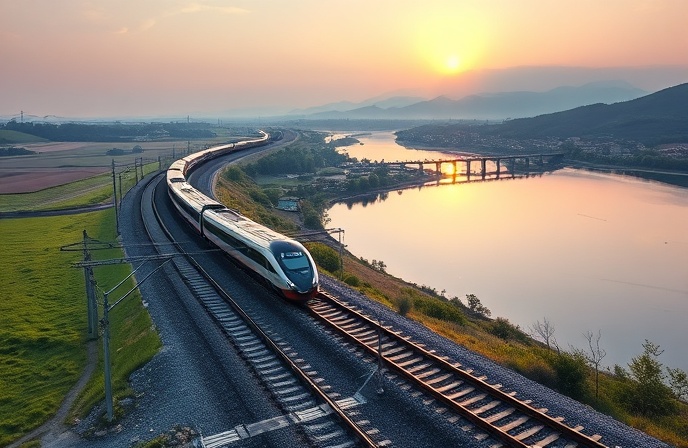
Hungary Unveils Ambitious Railway Overhaul: 1,000 km Upgrade Bolsters Central European Connectivity
Hungary has announced a monumental plan to revitalize its railway infrastructure, committing to the rehabilitation of 1,000 km of track over the coming years. Minister of Construction and Transport János Lázár confirmed that full funding has been secured for this initiative, positioning it as one of the largest coordinated railway investments in Central Europe and a cornerstone of the nation’s economic growth and regional competitiveness strategy.
| Key Entity | Critical Detail |
|---|---|
| Hungary | Railway Infrastructure Modernization |
| János Lázár, Minister of Construction and Transport | Confirmed full funding secured, including EIB credit |
| Investment Scope | Rehabilitation of 1,000 km of railway |
| Timeline | Long-term strategic vision, 8-year development cycle |
| Broader Initiative | €2.5 billion investment package around Liszt Ferenc Airport by 2035 |
Strategic Vision Drives Infrastructure Investment
The comprehensive modernization plan, detailed by Minister Lázár to the Parliament’s Economic Committee, represents a significant leap forward for Hungary’s rail network, which currently comprises 8,000 km in total, with 6,000 km operational. This new undertaking builds upon a strong track record since 2010, during which Hungary successfully completed 103 railway projects valued at HUF 2.091 billion (approximately EUR 5.4 billion), leading to the upgrade of 1,800 km of track. The forthcoming 1,000 km rehabilitation is fully funded, with the European Investment Bank (EIB) credit instruments playing a crucial role in compensating for currently blocked European Union funds.
Minister Lázár highlighted the substantial lead times involved in major railway investments, estimating an eight-year development cycle that Budapest is consciously integrating into its public planning framework. This forward-thinking approach is further underscored by a warning regarding potential future funding challenges for rail and road projects in the next EU financial year. Lázár indicated that such projects might require partial classification as investments with military relevance to secure access to additional extra-budgetary funds, a reclassification permitted by European regulations. This strategic maneuver demonstrates Hungary’s pragmatic approach to securing financial continuity and recognizing its rail infrastructure as a vital strategic asset for its regional positioning.
Last June 2025, we published an article about Renfe’s Aranjuez maintenance hub. Click here to read – Future of Rail: Renfe’s Railway Technology Hub, Aranjuez: Essential Guide
Strategic Economic and Geopolitical Positioning
Hungary is strategically leveraging its rail infrastructure to enhance its economic and logistical attractiveness, particularly by strengthening corridors to the West. This initiative is part of a broader, integrated investment package of €2.5 billion centered around Liszt Ferenc Airport, slated for completion by 2035. This multi-modal approach, encompassing rail, airport, and road developments, is a rare undertaking in Central Europe and signals Budapest’s clear intention to bolster its influence and increase the GDP-generating capacity of its inland regions. “If the western routes pass through here, Hungary gains a position of influence, and the GDP-generating capacity of the inland regions can increase significantly,” Minister Lázár stated, emphasizing that rail infrastructure is viewed not merely as a technical project but as a critical component of economic and geopolitical policy.
Industry Context
This significant investment by Hungary underscores a growing trend among European nations to prioritize rail infrastructure as a key enabler of economic growth, regional integration, and logistical efficiency. The proactive securing of funding, even amidst challenging EU financial landscapes, and the innovative approach to potential funding sources demonstrate a robust commitment that railway industry leaders will monitor closely. Such large-scale, strategically aligned projects signal opportunities for suppliers, contractors, and technology providers, while also highlighting the evolving geopolitical considerations influencing infrastructure development across the continent.
RELATED POSTS

November 6, 2019 2:56 am
The following article explores the crucial collaboration between Network Rail...
May 3, 2018 8:49 pm
Kansas City Southern's modernized railroad operating system, powered by CloudMoyo's...
January 4, 2019 1:18 am
Seven billion pounds! Network Rail's massive CP6 upgrade transforms Southern...

July 17, 2025 11:33 am
China unveils 600 km/h maglev train, revolutionizing high-speed rail. ...
June 23, 2025 4:33 pm
UK rail industry welcomes £725B infrastructure plan, stressing coordinated delivery.

April 28, 2025 3:44 am
The Expanding European Rail Leasing Market: RIVE’s €300 Million Locomotive...