
Mott MacDonald to Lead Ireland’s CONNECT Rail Project for Decarbonization
Iarnród Éireann’s ambitious **rail project**, led by Mott MacDonald, will modernize the **railway** network, focusing on Dublin-Cork and Limerick routes, promising faster, greener journeys.
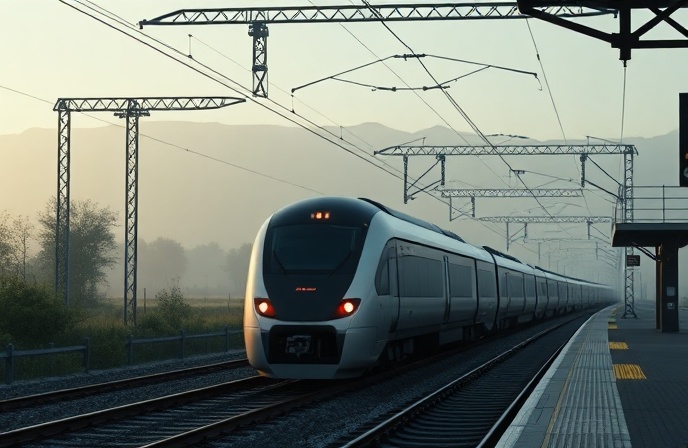
Iarnród Éireann has appointed Mott MacDonald to spearhead the transformative CONNECT rail project, a national initiative designed to overhaul Ireland’s intercity rail network and accelerate the nation’s journey towards climate neutrality. This ambitious program will initially focus on the crucial Dublin–Cork and Dublin–Limerick corridors, promising enhanced connectivity and significant reductions in journey times.
| Key Entity | Critical Detail |
|---|---|
| Lead Organization | Mott MacDonald |
| Client | Iarnród Éireann |
| Project | CONNECT rail project |
| Objective | Transform intercity rail, decarbonization, climate neutrality |
| Key Corridors | Dublin–Cork, Dublin–Limerick |
| Projected Speed Increase | Up to 200 km/h |
| Potential Journey Time Reduction | Up to 30 minutes |
| Funding | EU’s Connecting Europe Facility (CEF), Ireland’s National Development Plan 2021–2030 |
| Strategic Alignment | RAIL2050, Ireland’s Climate Action Plan, European Green Deal |
| Projected Demand Increase | Fourfold by 2050 |
The CONNECT rail project will see Mott MacDonald develop a comprehensive implementation strategy and roadmap for decarbonizing Ireland’s rail infrastructure. This will be underpinned by detailed technical studies and extensive stakeholder consultations to identify necessary interventions across infrastructure, services, and public policy. The ultimate goal is to establish a high-capacity, low-emission rail network capable of offering more frequent services and drastically reduced travel times for passengers, future-proofing the network for generations to come.
Strategic Impact & Operational Enhancements
Early assessments following the commencement of work indicate the potential for significant improvements on key intercity routes. Through targeted infrastructure upgrades and the enablement of speeds up to 200 km/h, travel times on the Dublin–Cork and Dublin–Limerick corridors could be reduced by as much as 30 minutes. These speed enhancements, coupled with the planned introduction of a new electric rail fleet, are set to redefine intercity travel in Ireland, contingent on securing the necessary additional investment.
Ireland’s national railway company, Iarnród Éireann, has selected Mott MacDonald to lead the CONNECT rail project, an ambitious national program aimed at transforming Ireland’s intercity rail network and accelerating the country’s transition to climate neutrality. The project will focus on the Dublin–Cork and Dublin–Limerick corridors, which are essential for Ireland’s social and economic connectivity. Mott MacDonald will develop a detailed implementation strategy and roadmap for decarbonization, supported by in-depth technical studies and stakeholder consultations. These will help define the interventions needed—in infrastructure, services, and public policy—to create a high-capacity, low-emission rail network capable of providing more frequent services and shorter travel times for future generations.
Early findings from the project, following the start of work, indicate that travel times could be reduced by up to 30 minutes on key intercity routes through targeted infrastructure upgrades and increased speeds of up to 200 km/h. These improvements, combined with the planned introduction of a new electric fleet, could significantly shorten journey times between Dublin and Cork and Dublin and Limerick, subject to additional investment.
Funded by the European Union’s Connecting Europe Facility (CEF) and Ireland’s National Development Plan 2021–2030, the CONNECT rail project represents a major step in the implementation of Iarnród Éireann’s RAIL2050 strategy. The initiative aims to modernize infrastructure, reduce carbon emissions, and provide faster, more frequent, and more sustainable services for passengers across the country.
“The CONNECT rail project is a major investment by the European Union and the Irish Government in the development of rail transport as a central element of a sustainable mobility system for citizens. CONNECT will create the plans needed to support frequent services, reduced journey times, and decarbonization, demonstrating our commitment and that of the Irish Government to achieving our climate action goals,” said Mary Considine, CEO of Iarnród Éireann.
Iarnród Éireann estimates that with population growth and a shift to more sustainable modes of transport, demand for rail travel could increase fourfold, reaching 200 million passenger journeys by 2050, avoiding harmful carbon emissions and reducing congestion in cities. The CONNECT project will contribute to the planning needed to support this growth, which will double the number of passengers annually by 2050, while contributing to regional balance, sustainable growth, and the achievement of Ireland’s greenhouse gas reduction targets. The project will also support Ireland’s Climate Action Plan and the European Green Deal, facilitating a significant shift from road to rail transport.
This initiative is a cornerstone of Iarnród Éireann’s RAIL2050 strategy and is substantially backed by funding from the European Union’s Connecting Europe Facility (CEF) and Ireland’s National Development Plan 2021–2030. The project’s overarching aims are to modernize critical infrastructure, significantly cut carbon emissions, and deliver faster, more frequent, and demonstrably more sustainable rail services to passengers nationwide. This aligns with broader national and European commitments to sustainable mobility and climate action.
Industry Context & Future Outlook
Mary Considine, CEO of Iarnród Éireann, emphasized the project’s significance, stating, “The CONNECT rail project is a major investment by the European Union and the Irish Government in the development of rail transport as a central element of a sustainable mobility system for citizens. CONNECT will create the plans needed to support frequent services, reduced journey times, and decarbonization, demonstrating our commitment and that of the Irish Government to achieving our climate action goals.”
Iarnród Éireann projects a fourfold increase in rail travel demand by 2050, potentially reaching 200 million passenger journeys annually, driven by population growth and a societal shift towards sustainable transport. This growth is expected to significantly reduce carbon emissions and urban congestion. The CONNECT project is pivotal in planning for this expansion, aiming to double annual passenger numbers by 2050 while fostering regional balance and contributing to Ireland’s greenhouse gas reduction targets. Its success will be a key factor in facilitating the modal shift from road to rail, supporting both Ireland’s Climate Action Plan and the European Green Deal.
RELATED POSTS

April 7, 2017 11:43 pm
Alstom will deploy the European Rail Traffic Management System (ERTMS)...
July 26, 2017 4:26 am
Here's a voiceover-friendly excerpt:Railway signaling systems: the unseen backbone ensuring...
July 7, 2025 6:33 pm
TPE expands Glasgow facility, boosting Scottish workforce and railway services....
September 15, 2016 12:38 am
CPCS is advising on the Sydney Harbour metro tunnels project,...
August 4, 2025 5:33 am
Western Australia's MGC Solutions is boosting rail safety and efficiency...

October 20, 2009 9:14 pm
Costa Rica’s transport and public works ministry will invite bids...