
Berlin S-Bahn Digital Upgrade: Hitachi Rail, DB InfraGO, & Rail Innovation
Berlin’s S-Bahn gets digital dispatching system, boosting efficiency and passenger experience. Hitachi Rail and DB InfraGO team up for DiStEL.
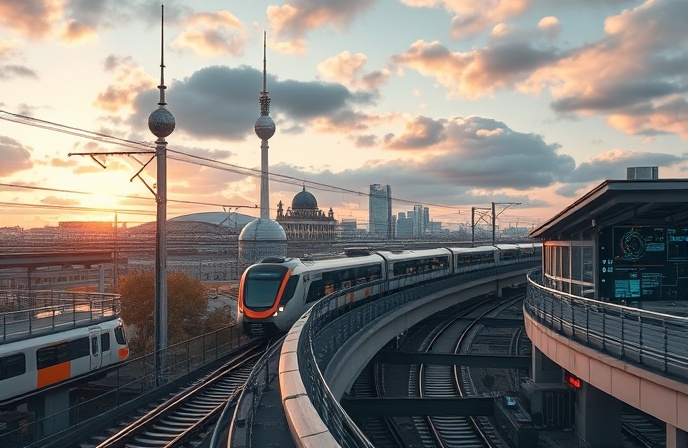
Berlin’s S-Bahn Network Goes Digital: Hitachi Rail and DB InfraGO Deploy Advanced Dispatching System
The pulsating heart of Berlin’s urban rail network, the S-Bahn, has received a significant technological upgrade. In a move designed to enhance operational efficiency and improve passenger experience, Hitachi Rail, in collaboration with infrastructure operator DB InfraGO, has successfully deployed a new digital dispatching system, known as DiStEL. This critical infrastructure overhaul, implemented this year, replaces the legacy dispatching infrastructure and leverages the advanced ARAMIS platform to provide a more agile and responsive control system for the S-Bahn. The project, which represents a significant step in the digital transformation of Germany’s rail network, aims to improve the reliability of train services. It promises enhanced control, quicker response times to disruptions, and, ultimately, a smoother journey for the millions of passengers who rely on the S-Bahn daily. This article delves into the capabilities of DiStEL, the collaborative effort behind its implementation, and the future implications for Berlin’s urban rail system and potentially the broader European rail network.
Enhanced Operational Efficiency through DiStEL
The core of the upgrade lies in DiStEL’s sophisticated architecture, built upon the ARAMIS (Advanced Rail Automation Management Information System) platform. This digital dispatching system provides a centralized point of control for managing the complex operations of the Berlin S-Bahn. The primary objective of DiStEL is to improve several key areas. Firstly, it provides faster reaction times in the event of service disruptions by enabling operators to make swift decisions that reduce delays and provide passengers with more accurate and timely information. Secondly, the system’s interoperability facilitates the integration of various passenger information services. Finally, the system supports future functionalities, such as routing services and the Digital European Driver Order (DEDO). The system enables operators to anticipate and react to disruptions. This proactive approach is particularly crucial in a dense, high-frequency network like Berlin’s S-Bahn, where even minor delays can quickly cascade across the entire system. The benefits extend beyond immediate incident response; DiStEL’s data-driven insights are also designed to provide a basis for improved preventative maintenance and enhanced overall network performance.
Key Features and Functionality: Streamlining Passenger Information and Future Integration
The integration of passenger information services represents a significant enhancement, delivering real-time updates and service alerts directly to passengers. This feature, made possible by DiStEL, reduces passenger uncertainty and frustration during disruptions. Furthermore, the system’s design accommodates future advancements, most notably the integration of routing services which are intended to improve service planning, and DEDO (Digital European Driver Order). DEDO is a pan-European initiative aimed at streamlining driver information and improving the efficiency and safety of rail operations across international borders. This modular approach ensures that the Berlin S-Bahn’s dispatching infrastructure remains future-proof, capable of adapting to the evolving demands of a modern urban rail network. The system supports the implementation of the advanced routing services and is a critical step towards seamless integration of the entire digital rail infrastructure. The scalability and adaptability of the ARAMIS-based DiStEL system are crucial for maintaining the efficiency of a modern rail network.
Collaborative Success: Hitachi Rail and DB InfraGO Partnership
The successful implementation of DiStEL in Berlin underscores the critical importance of collaboration between technology providers and infrastructure operators. The project, which saw Hitachi Rail and DB InfraGO working closely together, highlights the significance of project management. The implementation involved a highly coordinated effort to ensure that the new platform met the specific technical and operational needs of Berlin’s busy urban rail system. Florian Fellbaum, Head of Sales & Business Development Berlin at Hitachi Rail in Germany, emphasized the close coordination and collaboration between all project partners as the most important success factor. This collaborative spirit extends to the ongoing monitoring and adjustment of the system, ensuring that DiStEL remains finely tuned to the evolving needs of the S-Bahn network. The combined expertise, as mentioned by Matthias Engelmann, Head of the Operations Control Center at DB InfraGO, demonstrates the strength of the partnership. This cooperative approach provides a model for future rail infrastructure upgrades.
Conclusion
The deployment of DiStEL on Berlin’s S-Bahn network marks a pivotal moment in the modernization of Germany’s rail infrastructure. By replacing legacy systems with a state-of-the-art digital dispatching platform, Hitachi Rail and DB InfraGO have laid the groundwork for a more efficient, reliable, and passenger-friendly urban rail system. The system’s ability to improve response times during disruptions, integrate diverse passenger information services, and accommodate future advancements such as routing services and DEDO positions the Berlin S-Bahn at the forefront of digital rail innovation. The success of this project serves as a powerful model for other urban rail networks across Germany and Europe, where similar infrastructure upgrades are planned. DiStEL’s scalability and interoperability make it an attractive solution for cities seeking to improve their public transport. The ongoing collaboration between technology providers, infrastructure operators, and regulatory bodies will be critical to realizing the full potential of digital dispatching systems in the years ahead. This initiative is not only crucial for improving transportation efficiency but also aligns with the broader European objectives of rail interoperability, paving the way for seamless cross-border travel and a more sustainable transport future. The Berlin project reinforces the importance of a coordinated approach to digital rail transformation and its impact on public transit.
Company Summary
Hitachi Rail is a global provider of rail transport solutions, specializing in the design, manufacturing, and maintenance of rolling stock, signaling systems, and digital solutions for railway operations. Its ARAMIS platform is a prime example of Hitachi Rail’s technological expertise, providing the foundation for DiStEL’s advanced dispatching capabilities. DB InfraGO, a subsidiary of Deutsche Bahn (DB), is responsible for operating and maintaining Germany’s rail infrastructure, including tracks, signaling systems, and stations. This responsibility makes DB InfraGO a key partner in projects aimed at enhancing the efficiency and reliability of the German rail network.
RELATED POSTS

The Government of Canada is set to implement new regulations...

October 3, 2023 2:54 pm
This article examines the strategic partnership between Škoda Transportation (a...
July 16, 2025 12:33 am
DB Cargo unveils automated rail freight locomotives, using ATO and...
August 31, 2019 3:48 pm
$326 million fuels US rail infrastructure upgrades! This massive...

May 29, 2025 9:01 am
Partnership for Enhanced Cybersecurity in Rolling Stock: Cylus and duagon...
July 4, 2020 4:24 pm
This article examines the strategic partnership between Voith, a leading...