
DB Cargo’s Vectron ATO/RTO: Future of European Rail Freight
DB Cargo unveils automated rail freight locomotives, using ATO and RTO tech. Trial begins October 2025 on Betuweroute. Boosting efficiency and sustainability.
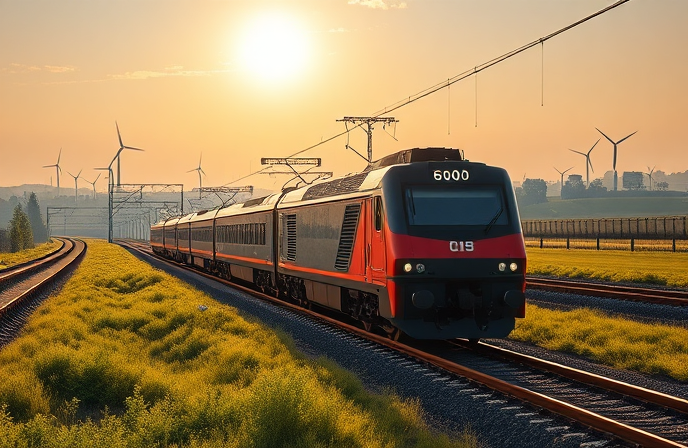
DB Cargo Drives Rail Freight Automation with New Locomotive Technology
In a significant leap forward for rail freight, DB Cargo is set to introduce automated and remote-controlled locomotive technology, marking a pivotal moment in the digitalization of the sector. On July 15, 2025, the company announced the equipping of a Vectron locomotive with Automatic Train Operation (ATO) and Remote Train Operation (RTO) capabilities. This innovative initiative will allow the locomotive to autonomously manage acceleration, braking, and stopping over long distances. The trial phase, scheduled to begin in October 2025, will be conducted on the Betuweroute, a state-of-the-art freight line in Europe. The primary goal is to refine this pioneering technology under real-world operating conditions. This project aims to enhance the efficiency, capacity, and environmental sustainability of rail freight, responding to the growing demand for greener and more efficient transport solutions. This article will explore the technological advancements, the strategic partnerships driving the project, and the potential impacts on the future of European rail freight.
Technological Advancements in Automated Rail Operations
The core innovation lies in the integration of ATO and RTO systems into a standard Vectron locomotive. ATO allows the train to operate autonomously along a predetermined route, controlling speed, braking, and stopping functions. The RTO capability enables remote control of the locomotive, providing operators with the ability to manage and maneuver the train from a central location. Safety protocols are paramount; the system incorporates a train driver on board as a safety measure, ensuring the ability to take control if needed. Additionally, a central remote monitoring and control team constantly oversees the locomotive’s operation, providing an extra layer of safety and operational oversight. These combined technologies aim to optimize train movements, reduce human error, and enhance overall operational efficiency.
Strategic Partnerships and Program Support
This project is a collaborative effort within the “Future Rail Freight Transport to Promote Innovation” program, supported by the Federal Ministry of Transport. DB Cargo is partnering with key players in the industry to develop and refine this advanced technology. The German Aerospace Center (DLR), Hitachi, and Remoot are providing expertise and support, leveraging existing line capacities more effectively and reducing energy consumption. These partnerships are crucial in integrating the technology and ensuring its seamless operation within the existing rail infrastructure. The support from the Federal Ministry of Transport underlines the government’s commitment to promoting innovation and sustainability in the rail freight sector, contributing significantly to the development of a more efficient and environmentally friendly transport system.
Impact on Efficiency, Capacity, and Workforce
The deployment of automated locomotives is expected to significantly enhance the efficiency and capacity of rail freight transport. By automating certain operational aspects, the system reduces the workload on train drivers and allows for optimized train scheduling and routing. This, in turn, leads to an increase in available track capacity, enabling more freight to be transported. Furthermore, the technology directly addresses the current labor shortage by easing the burden on the rail workforce. This allows current employees to focus on other tasks, potentially creating new job roles related to overseeing and managing the automated systems. These advancements are aligned with the industry’s need to counter staff shortages and adapt to evolving workforce dynamics, thereby paving the way for a more sustainable and resilient rail freight sector.
Broader Implications: Automated Hump Shunter Locomotive
Further demonstrating its commitment to rail automation, DB Cargo announced a partnership with Bosch subsidiaries and the German federal government in March to develop an automated heavy shunter locomotive. The prototype of this fully automated hump shunter has successfully completed testing at the Munich North marshalling yard. This initiative signifies a broader strategy for DB Cargo to implement automation across various operational aspects, from line-haul transport to yard operations. The success of the automated shunter and the ATO/RTO Vectron initiatives underscore DB Cargo’s commitment to technology and strategic investment in the future of rail freight. The automation of yard operations and line-haul transport, together, create an ecosystem where more efficient, optimized, and sustainable rail transport becomes a reality.
Conclusion
DB Cargo’s advancements in automated and remote-controlled locomotive technology represent a significant step towards a more efficient and sustainable rail freight sector. The successful integration of ATO and RTO on a Vectron locomotive, along with the developments in automated shunting, showcases the potential of automation to transform the industry. These initiatives address crucial industry challenges, including capacity constraints and the need for a more flexible workforce. The ongoing trial on the Betuweroute will be critical in refining the technology and demonstrating its practical capabilities under real-world operating conditions. The positive impact of these technologies extends beyond operational efficiencies. It creates new opportunities for environmental sustainability by enhancing the attractiveness of rail freight. The future of European rail freight is undeniably linked to these advancements, promising improved competitiveness and a reduced carbon footprint. Continued investment in these technologies is crucial for realizing the full potential of rail freight transport.
Company Summary
DB Cargo, a subsidiary of Deutsche Bahn, is a leading rail freight transport provider in Europe. The company operates extensive networks across multiple countries, handling a wide range of goods. DB Cargo is committed to driving innovation and adopting advanced technologies to enhance efficiency, sustainability, and competitiveness in the rail freight sector.
RELATED POSTS
August 13, 2025 12:33 am
Amtrak Washington Union Station upgrades boost capacity, enhance passenger experience,...
January 7, 2015 11:49 am
Alstom has been awarded a 9-year maintenance contract by SJ1...

April 15, 2019 10:01 pm
High-speed rail experts, Salini Impregilo's Naples-Bari project showcases cutting-edge engineering...

September 21, 2011 6:12 pm
Alstom has won a contract to supply six new Coradia...
February 13, 2017 12:57 am
Here's a voiceover-friendly excerpt:"North Macedonia's railway network gets a boost!...
February 27, 2017 11:30 am
The railways has decided to go ahead with manufacturing on...