
Spain’s Green Rail Energy: €1.33B Investment & Sustainability
Spain’s railway sector gets €1.33B green energy deal, securing renewable power for 2026-2030.
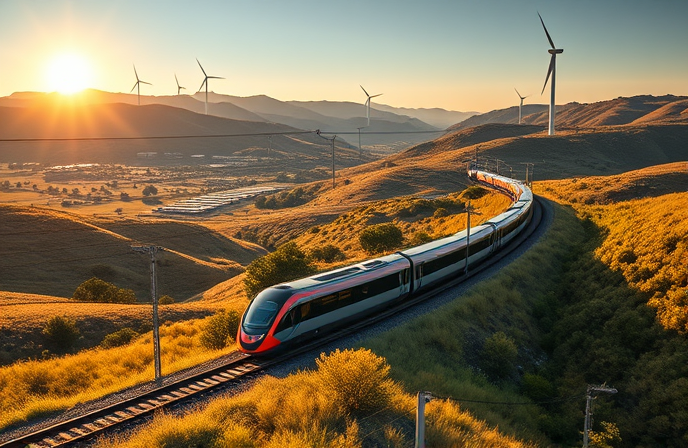
Spain Invests €1.33 Billion in Green Energy for Rail Transport
In a significant move towards sustainable transportation, the Spanish government, through Adif AV (Administrador de Infraestructuras Ferroviarias de Alta Velocidad), has authorized a EUR 1.33 billion tender for the supply of green energy to power its railway network. This initiative, set to run from January 1, 2026, to December 31, 2030, without the possibility of extension, aims to secure a consistent and renewable energy supply for Spain’s extensive rail operations. The tender, a negotiated procedure, will be managed by Adif AV, incorporating key innovations while building upon existing electricity supply frameworks. This article will explore the scope of this ambitious project, including the financial structure, operational logistics, and implications for the future of rail transport in Spain.
A Green Powering Initiative:
The core of the tender centers around sourcing renewable energy for traction across the Adif (Administrador de Infraestructuras Ferroviarias) and Adif AV railway networks. The contract explicitly stipulates that the entire electricity supply will be sourced from renewable sources, backed by Guarantees of Origin (GoO). This commitment directly aligns with the environmental goals outlined in Adif and Adif AV’s 2018–2030 Climate Change Action Plan. In 2024, the energy consumption for traction reached 2.76 TWh, with an anticipated increase to 2.79 TWh in 2025, highlighting the scale of the energy demand this tender addresses. The initiative underscores Spain’s dedication to decarbonizing its rail sector, contributing to its broader climate change mitigation efforts.
Financial Framework and Market Mechanics
The tender’s financial structure adopts a pass-through pricing model. This means the final cost of electricity will fluctuate based on several key factors. These include actual energy consumption, competitive bids received from suppliers, the fluctuating wholesale market price on OMIE (the Iberian Energy Market Operator), the cost of balancing services, and any price hedging conducted via OMIP (the Portuguese branch of the Iberian Energy Derivatives Market). Adif AV will manage access to transmission and distribution networks, coordinating with distribution companies. The tendering process involves a single offer type: an indexed pass-through price, coupled with the option for fixed-price hedges. This flexible approach allows railway operators to develop their own energy price management strategies over a longer term, enhancing their ability to optimize energy costs. Adif AV will then shortlist the three most competitive bids and enter into negotiations to secure the most favourable terms.
Operational Logistics and Supply Chain Management
The electricity supply points are divided into 16 lots, based on geographic proximity criteria, designed to minimize consumption deviations within each group and to standardize market costs. This strategic division facilitates operational efficiency by streamlining the supply chain and mitigating potential disruptions. Railway operators will have the flexibility to manage their energy procurement and price risk. They can request price hedges for all or part of their expected energy consumption over a defined period – monthly, quarterly, or annually – with Adif AV managing the hedging orders with the contracted energy supplier. The new price hedging mechanism will be a key innovation, with the system differentiating between periods of high and low liquidity in the OMIP market.
Implications for Railway Operators and the Industry
This tender presents significant opportunities for railway operators to enhance their energy management strategies. The flexibility to develop independent hedging strategies empowers them to control costs and manage risks more effectively. The initiative encourages sustainability and improves the environmental footprint of rail operations. The adoption of renewable energy aligns with global trends towards greener transportation solutions. This long-term supply agreement promotes financial stability and supports the growth of renewable energy investments within the Spanish railway sector. By prioritizing efficiency, cost-effectiveness, and sustainability, the program sets a new standard for energy procurement in the European railway market.
Conclusion
The EUR 1.33 billion green energy tender by Adif AV marks a pivotal moment in Spain’s rail transport strategy, signifying a strong commitment to sustainability and financial prudence. By securing a long-term, renewable energy supply through a competitive, flexible tender process, Adif AV not only decarbonizes its operations but also empowers railway operators to manage their energy costs effectively. The innovative approach to price hedging and the focus on renewable energy sources position Spain at the forefront of sustainable railway practices in Europe. This move is set to create a more environmentally friendly and economically viable future for rail transport. The success of this initiative could inspire other European nations to explore similar models, contributing to a broader shift towards sustainable energy across the continent’s railway networks.
RELATED POSTS

April 11, 2021 3:35 am
Introduction This article delves into a significant infrastructure investment undertaken...
January 30, 2023 11:24 am
This article examines the significant undertaking by Network Rail (NR)...

December 19, 2014 1:57 pm
Toshiba Corporation today announced that it has supplied a traction energy...

December 12, 2014 2:02 pm
The three full scope Singapore metro driving simulators are currently...
November 25, 2015 7:46 pm
Alstom is to supply seven Citadis trams to SYTRAL (Syndicat...
April 1, 2025 8:08 am
Introduction The British railway system is undergoing a significant transformation,...