
London Piccadilly Line Upgrade: Siemens & Rail Technology Advancements
London’s Piccadilly Line gets 2026 Siemens Mobility upgrade, boosting capacity and comfort. New trains feature walk-through carriages and air conditioning.
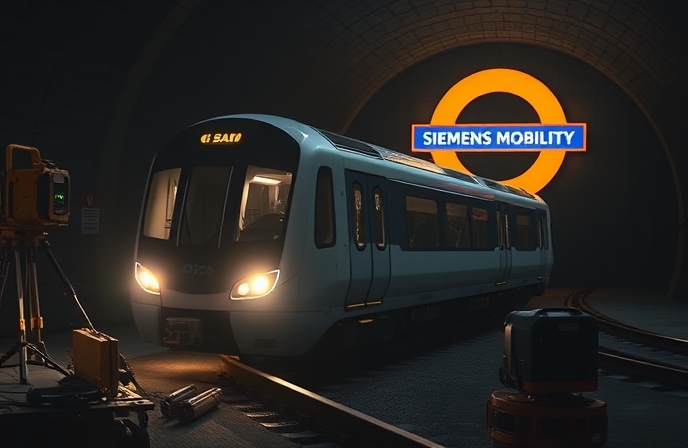
London’s Piccadilly Line Set for 2026 Upgrade with Siemens Mobility Fleet
The rumble of the Underground is set to evolve in the second half of 2026, as Transport for London (TfL) prepares to roll out its new fleet of Piccadilly line trains, marking a significant modernization of one of London’s busiest and most iconic railway lines. Siemens Mobility, the manufacturer, will deliver a fleet boasting increased capacity, enhanced passenger comfort, and improved reliability. This long-awaited upgrade, initially slated for an earlier launch, represents a substantial investment in London’s public transportation infrastructure. This article explores the specifics of the new trains, the challenges of integrating them into the existing network, and the broader implications of the project for TfL and the industry. The project’s core purpose is to improve the passenger experience and the overall efficiency of the Piccadilly line, one of the oldest lines in the London Underground system.
Technological Advancements: The New Train Design
The new Piccadilly line trains represent a leap forward in Underground technology. Featuring walk-through carriages, a first for deep-level lines, these trains will significantly improve passenger flow and reduce crowding. The implementation of air conditioning, a critical upgrade for passenger comfort, especially during the summer months, is a key feature. Other notable improvements include wider doors for faster boarding and alighting, digital passenger information systems providing real-time updates, onboard CCTV for enhanced safety, and a smoother ride experience. Furthermore, the trains are designed to be 20% more energy-efficient than the existing rolling stock, contributing to TfL’s sustainability goals. The innovative design and integration of these features showcase the commitment to modernizing the infrastructure of a 100-year-old transport system.
Integration Challenges and Testing Phase
The integration of modern rolling stock into the Piccadilly line’s century-old infrastructure presents unique engineering challenges. TfL is undertaking rigorous testing, commencing this summer, to ensure seamless compatibility between the new trains and the existing signaling and power systems. This testing phase will include infrastructure and systems evaluations to identify any necessary design adjustments before passenger service begins. The complexities are further compounded by the need to integrate advanced technology within the confined spaces of the deep-level tunnels. This rigorous testing approach is crucial to ensure the reliability and safety of the new trains, as emphasized by Stuart Harvey, TfL’s Chief Capital Officer, who acknowledged the delays but reaffirmed the commitment to delivering a safe and effective service.
Economic and Employment Impact
The Piccadilly line upgrade has a significant positive economic impact. The manufacturing of the new trains supports nearly 1,000 skilled jobs at Siemens Mobility’s Goole facility in Yorkshire. This project not only enhances the London Underground network but also boosts the UK economy. The investment in new rolling stock and associated infrastructure generates employment opportunities and fosters technological advancements within the rail industry. This commitment to local manufacturing demonstrates a strategic approach to infrastructure development, contributing to job creation and economic growth across the United Kingdom.
Future Outlook and Further Line Improvements
The completion of the Piccadilly line upgrade, supported by recent government funding, paves the way for further modernization across the London Underground. TfL plans to use this opportunity to begin preparing for the renewal of the Bakerloo line fleet, which will bring substantial improvements to a second major line in the network. The gradual introduction of the new Piccadilly line trains, starting in late 2026, will usher in a new era for millions of daily commuters. This project demonstrates a commitment to improving the passenger experience, increasing network capacity, and reducing the environmental impact of London’s transport infrastructure. The success of this project will lay the groundwork for future upgrades and expansions, ensuring that the London Underground remains a world-class transportation system for decades to come.
Conclusion
The forthcoming introduction of Siemens Mobility’s new Piccadilly line trains represents a pivotal moment for the London Underground. Despite the delays encountered during the integration process, the project promises to deliver significant benefits, including increased capacity, enhanced passenger comfort, and improved operational efficiency. The deployment of air-conditioned, walk-through carriages marks a noteworthy technological advancement. The extensive testing phase is a testament to the commitment to safety and reliability. The project’s economic impact extends beyond London, supporting jobs and driving innovation in the rail industry. The gradual roll-out from late 2026 sets the stage for further network upgrades, including the Bakerloo line. The Piccadilly Line project reflects the continuous effort to balance the preservation of a historical system with the implementation of modern transportation technology, showing a commitment to enhancing the user experience, making London a more sustainable city, and modernizing the entire Underground network for generations to come.
RELATED POSTS

June 5, 2025 12:01 pm
Alstom is delivering 96 driverless Metropolis metro cars to Chennai,...

April 12, 2025 9:06 am
This article examines the recently awarded contract between Alstom and...
July 3, 2025 5:33 am
Spain's Adif boosts high-speed rail capacity on the Palencia-León line,...

May 26, 2018 4:57 pm
TMH and Hitachi's joint venture produces high-performance traction inverters, revolutionizing...
August 14, 2022 6:33 pm
Tampere Tram Extension: Expanding Urban Mobility in Finland The city...

March 4, 2017 1:00 am
Uganda's Finance minister Matia Kasaija and his Kenyan counterpart are...