
Kanpur Metro Revolution: Alstom’s Rail Innovations & Future of Transport
Kanpur Metro expansion launches, featuring Alstom’s advanced technology. New underground stations improve connectivity and commute times. “Make in India” initiative showcased.
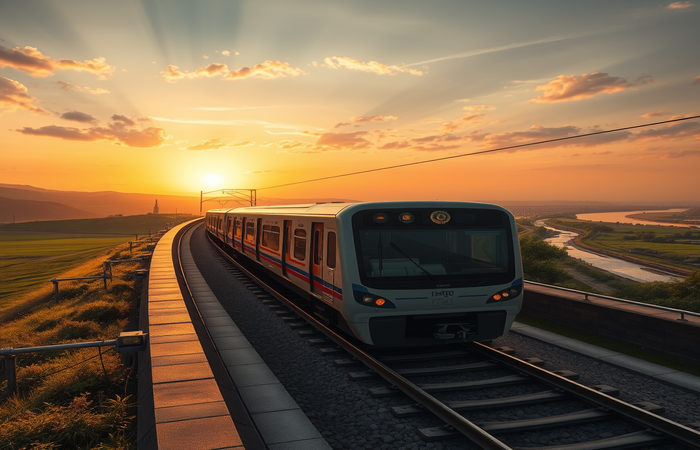
Kanpur Metro Extension Launches with Alstom’s Advanced Technology
Alstom, a global leader in sustainable mobility, has commenced revenue service on the extended Corridor I of the Kanpur Metro, marking a significant advancement in the city’s public transportation network. The extended line, which now includes five new underground stations, promises to dramatically improve connectivity, reduce commute times, and offer a more dependable travel experience for Kanpur’s residents. The project, a collaborative effort between Alstom and the Uttar Pradesh Metro Rail Corporation (UPMRC), showcases the capabilities of the “Make in India” and “Atmanirbhar Bharat” initiatives, with locally-built trains incorporating cutting-edge technology. This article will explore the key innovations and benefits of this expansion, examining the technological advancements, engineering feats, and the impact on the city’s mobility landscape.
Boosting Kanpur’s Connectivity: The New Metro Line
The extended Kanpur Metro service represents a critical upgrade to the city’s infrastructure. This new section will connect more areas and reduce existing transportation bottlenecks. The project focuses on providing safe, efficient, and sustainable transport for the city’s 4.5 million residents. Operating at speeds up to 80 km/h, the metro is set to greatly improve daily commuting and accessibility throughout Kanpur. This extension is a component of a larger vision to modernize the city’s transportation infrastructure, and contribute to economic growth.
Technological Advancements: State-of-the-Art Trainsets
The cornerstone of this project lies in the advanced trainsets designed and manufactured entirely in India at Alstom’s Savli facility. These trains incorporate several key technologies, including Flexx bogies and Mitrac propulsion systems, which enhance energy efficiency and reduce operational costs through regenerative braking. The trains also feature Alstom’s Communication-Based Train Control (CBTC) system, providing safe and automated operations. CBTC, crucial for automated train operation, allows for higher train frequencies and improved safety by providing continuous data exchange between the trains and the control center. The integration of these technologies highlights Alstom’s commitment to innovation in sustainable and smart mobility solutions.
‘Make in India’ Initiative: Local Manufacturing and Engineering
This project exemplifies the “Make in India” and “Atmanirbhar Bharat” initiatives. The trains were designed and manufactured at Alstom’s Savli facility. The engineering work, including the signalling system developed in Gurugram, shows the capabilities of Indian engineers. The first trainset was delivered in 2021, and with 40 operational trains already in service, the project is well on its way to delivering the full fleet of 67 three-car trainsets. Each trainset can carry around 960 passengers. This signifies a major step in building a self-reliant railway industry.
Enhanced Commuter Experience: Design and Accessibility
The new metro trains prioritize passenger comfort and accessibility. Each train offers air-conditioning, automated doors, and designated spaces for passengers with reduced mobility, ensuring inclusivity. The passenger information systems provide real-time updates. The design of the trainsets is inspired by Uttar Pradesh’s cultural heritage, with aesthetic design combined with robust, stainless-steel car bodies. The focus on passenger experience contributes significantly to promoting public transport and improving overall quality of life for commuters.
Conclusion
The launch of the extended Kanpur Metro service, powered by Alstom’s technology, represents a substantial leap forward in urban mobility. The project underscores the effectiveness of the “Make in India” and “Atmanirbhar Bharat” initiatives, demonstrating the capacity of local manufacturing and engineering expertise to deliver world-class transportation solutions. The advanced CBTC technology, efficient propulsion systems, and the emphasis on passenger experience positions the Kanpur Metro as a model for other cities seeking to modernize their public transport systems. The increased connectivity, reduced travel times, and the focus on sustainability are all key ingredients in the recipe for future railway developments. The success of this project will likely inspire other municipalities to invest in similar projects and will reinforce the importance of sustainable mobility and its impact on urban development. The expansion also sets a precedent for collaboration between international companies and Indian entities to drive innovation and meet the growing demands of India’s rapidly evolving railway sector.
Company Summary
Alstom is a global leader in smart and sustainable mobility. The company is present in India with a full portfolio tailored to meet both national and international needs. With six production facilities and four major engineering centers, Alstom actively contributes to both domestic and global rail projects. Alstom supports India’s ongoing rail modernisation and sustainable transport initiatives, reinforcing its significant role in the Indian railway ecosystem.
RELATED POSTS

May 22, 2025 4:49 am
UK’s Northern City Line Achieves Landmark: First Commuter Route to...

July 30, 2022 3:35 pm
Modernizing French Rail: Hitachi’s Deployment of Digital Signaling Technology This...
January 13, 2021 11:03 pm
The Transpennine Route Upgrade (TRUe): A Case Study in Large-Scale...
June 8, 2022 2:19 am
This article examines the significant retrofitting of the European Train...
October 29, 2020 6:07 am
The High Speed 2 (HS2) project, a high-profile undertaking to...
March 22, 2020 8:41 am
This article delves into the significant infrastructure development underway in...