
Revolutionizing Rail: Blu Wireless & Westermo’s mmWave Partnership
Introduction
The railway industry is undergoing a significant transformation, driven by the increasing demand for enhanced connectivity and data-driven operations. Traditional wired communication systems, while reliable, often struggle to meet the bandwidth and latency requirements of modern applications, such as real-time train control, passenger information systems, and predictive maintenance. This article explores a strategic partnership between Blu Wireless, a developer of millimeter-wave (mmWave) wireless technology, and Westermo, a leading provider of railway communication equipment, that promises to revolutionize railway connectivity. The partnership aims to leverage Blu Wireless’s high-bandwidth, low-latency mmWave technology to address the limitations of existing infrastructure and unlock new possibilities for operational efficiency, safety, and passenger experience. We will examine the technological advantages of mmWave, the specifics of the partnership between Blu Wireless and Westermo, the market implications of this collaboration, and the potential future developments in railway wireless communication technologies.
Millimeter-Wave Technology in Railway Applications
Millimeter-wave (mmWave) technology, operating in the frequency range of 30-300 GHz, offers several key advantages for railway applications. Its high bandwidth capacity is crucial for supporting data-intensive applications such as high-definition video streaming for passenger entertainment, real-time data transmission for train control systems (CBTC – Communication-Based Train Control), and large-scale data collection for predictive maintenance. Furthermore, its short wavelengths enable highly directional antennas, reducing interference and improving security. This is particularly beneficial in dense railway environments where multiple trains and communication systems operate in close proximity. Low latency is another significant advantage; critical for real-time applications requiring immediate responses, such as Automatic Train Protection (ATP) systems. The integration of mmWave technology with existing railway infrastructure, however, presents significant engineering challenges, requiring careful consideration of signal propagation, antenna placement, and power management to ensure reliable performance across varying environmental conditions.
The Blu Wireless and Westermo Partnership
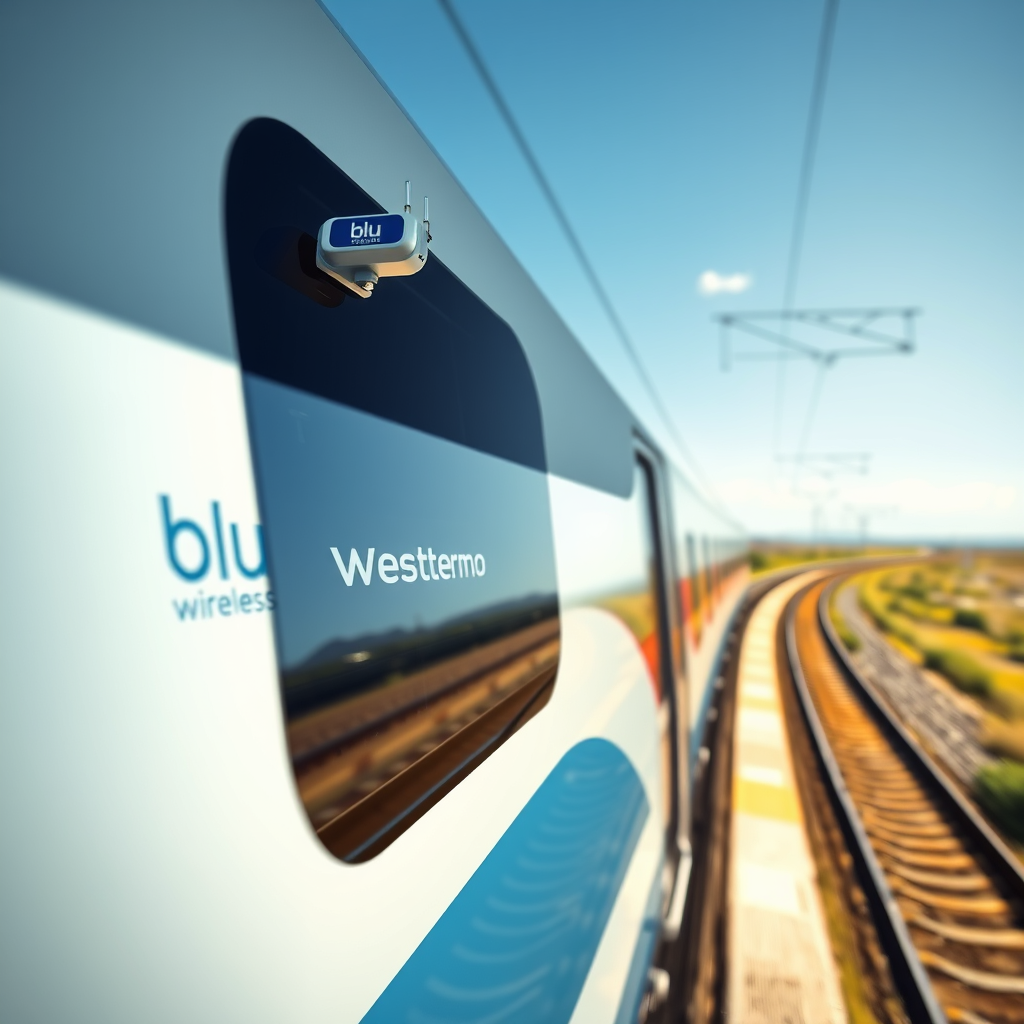
The strategic partnership between Blu Wireless and Westermo represents a significant step towards wider adoption of mmWave technology in the railway sector. Westermo, with its extensive experience and established presence in the railway market, provides Blu Wireless with a crucial route to market and access to key industry players. This collaboration leverages the strengths of both companies: Blu Wireless’s innovative mmWave technology and Westermo’s expertise in robust, reliable railway communication solutions. The minority stake acquired by Ependion, Westermo’s parent company, further underscores the strategic importance of this partnership and signifies a long-term commitment to the development and commercialization of mmWave-based railway communication systems. This joint venture accelerates the deployment of cutting-edge technology and fosters innovation within the railway industry.
Market Implications and Future Developments
The successful integration of Blu Wireless’s mmWave technology, facilitated by the Westermo partnership, has the potential to significantly impact the railway market. The improved connectivity will enable the implementation of advanced technologies such as predictive maintenance, reducing operational costs and improving safety. Enhanced passenger information systems will improve the overall passenger experience, while increased bandwidth capacity will facilitate the integration of new onboard services. The successful UK government-backed project to replace fiber optic trackside connections with mmWave solutions highlights the significant potential for widespread adoption. Future developments will likely focus on optimizing mmWave technology for different railway environments, integrating it seamlessly with existing infrastructure, and addressing potential challenges related to regulatory compliance and cybersecurity.
Conclusions
The strategic partnership between Blu Wireless and Westermo marks a pivotal moment in the evolution of railway connectivity. Blu Wireless’s mmWave technology, with its high bandwidth, low latency, and improved security, offers a compelling alternative to traditional wired communication systems, addressing the increasing demand for enhanced data transmission in the modern railway environment. Westermo’s established presence in the railway industry provides a vital pathway for commercialization, enabling widespread adoption of this innovative technology. The partnership’s success will depend on effectively addressing the engineering challenges associated with mmWave deployment in railway environments and ensuring seamless integration with existing infrastructure. The potential benefits are substantial, encompassing improved operational efficiency, enhanced safety features, and a greatly improved passenger experience. The successful completion of the Innovate UK project further validates the feasibility and potential of this technology, paving the way for significant advancements in railway communications infrastructure globally. The future of railway communication systems increasingly points towards wireless solutions like mmWave, promising a safer, more efficient, and technologically advanced railway industry. The Blu Wireless and Westermo collaboration is a powerful example of industry collaboration driving innovation, and its success will likely trigger broader adoption of similar technologies within the railway sector worldwide.
RELATED POSTS

August 7, 2025 2:33 am
Norfolk Southern uses goats to control kudzu in Atlanta rail...

July 29, 2025 11:33 am
Goldschmidt Sweden invests in a major modernization project, expanding its...

May 11, 2019 7:54 pm
Chicago's Damen Station: A model for modern, accessible transit,...
December 29, 2017 6:03 am
Optimize your railway infrastructure for a superior passenger experience. ...
March 9, 2017 3:09 am
"In 2018, the Port Authority invested $2.2 million in the...

November 18, 2025 2:54 am
Pandrol partners with MCRI to boost its rail welding presence...