
Trans-Borneo Railway: Feasibility Study & Future
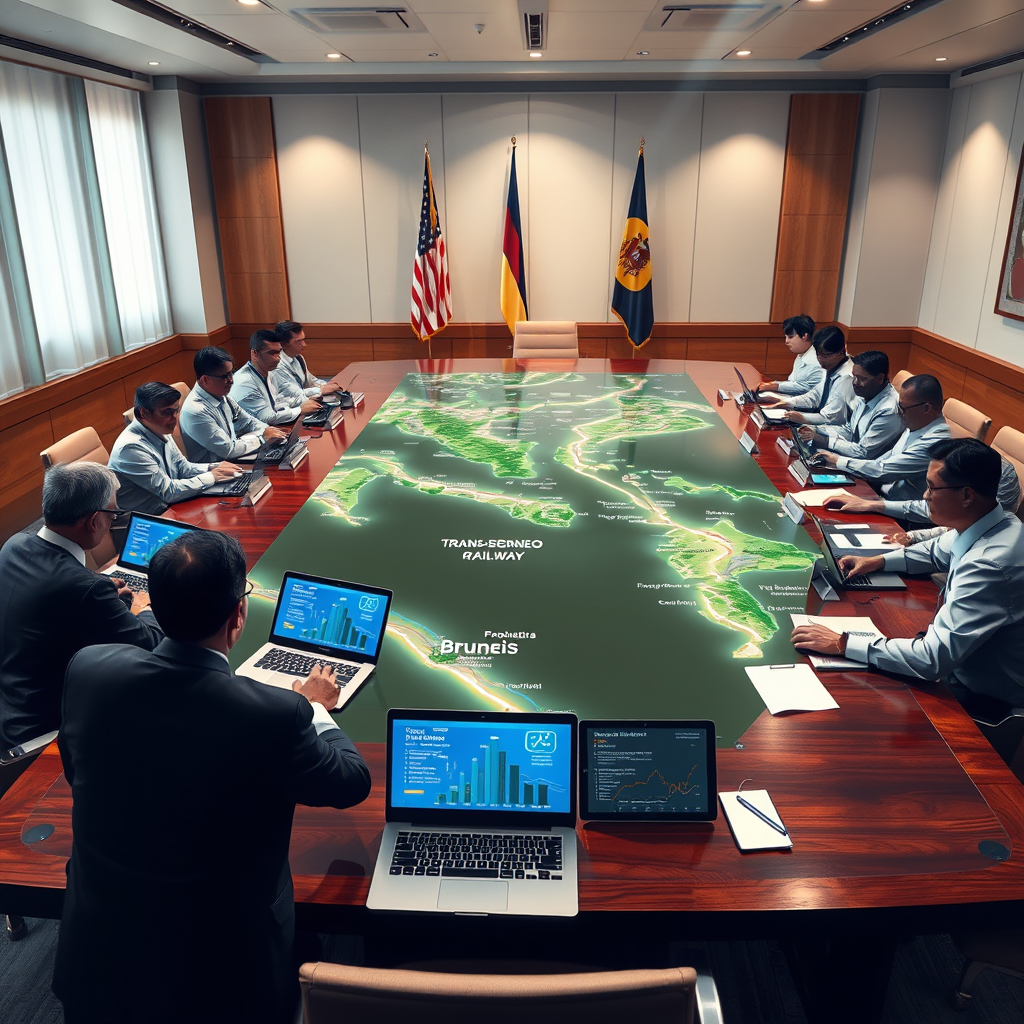
The Trans-Borneo Railway: A Feasibility Study and its Implications
The proposed Trans-Borneo Railway (TBR) promises to revolutionize transportation across Borneo, connecting Sarawak (Malaysia), Brunei, and Kalimantan (Indonesia). This ambitious project, however, remains firmly in the planning stages. The Malaysian government has announced the commencement of a crucial feasibility study in August 2024, a 12-month undertaking that will determine the project’s viability. This article will delve into the critical aspects of this study, analyzing its potential impact on regional connectivity, economic development, environmental considerations, and the technical challenges inherent in such a large-scale infrastructure project. The study will assess the commercial, technical, and environmental factors, potentially shaping the project’s future trajectory and highlighting the complex interplay between national interests, regional cooperation, and sustainable development.
The Scope of the Feasibility Study
The feasibility study, slated for completion by August 2025, will thoroughly examine the Trans-Borneo Railway’s economic justification, technical feasibility, and environmental impact. The economic assessment will analyze projected passenger and freight volumes, potential revenue streams, and the overall return on investment (ROI). The technical assessment will encompass route selection, track design and construction, signaling systems, rolling stock requirements, and operational strategies. This also includes the crucial evaluation of potential integration with existing rail networks in each participating nation and identification of critical infrastructure gaps. Finally, a comprehensive environmental impact assessment (EIA) will assess the potential disruption to the region’s rich biodiversity, mitigating measures, and the alignment of the project with international environmental standards.
Proposed Routes and Phases
Preliminary plans envision a phased approach to the TBR’s construction. Phase one focuses on a west coast route, potentially running from Kota Kinabalu (Malaysia) through Brunei and Sibu (Malaysia) to Pontianak (Indonesia). This route offers existing infrastructure for connection and potential logistical advantages. Phase two would extend the network to encompass central Malaysian regions and the Indonesian east coast, culminating at Nusantara, Indonesia’s planned new capital city. The Tutong district station in Brunei is envisioned as a crucial hub connecting these two phases. However, these plans are subject to considerable modification based on the findings of the feasibility study.
Challenges and Considerations
The Trans-Borneo Railway faces significant challenges. The dense rainforest environment presents substantial logistical hurdles during construction, necessitating careful environmental planning and mitigation strategies. Securing cross-border agreements between three nations with potentially differing regulatory frameworks and priorities will be a crucial step. The project’s financing will require substantial investment from both public and private sources, and coordinating funding across borders is a challenging task. Finally, the study must assess the social and economic impacts on local communities throughout the affected regions. The rail network’s integration with existing transportation systems, ensuring smooth intermodal transfer of goods and passengers, is also a critical factor.
Conclusion
The Trans-Borneo Railway represents a bold vision for regional connectivity and economic development in Borneo. The ongoing feasibility study is paramount in determining the project’s viability and shaping its future course. The study’s comprehensive assessment of economic, technical, and environmental factors will inform crucial decisions about route selection, infrastructure development, and operational strategies. Addressing the significant challenges—environmental protection, cross-border cooperation, funding, and social impact mitigation—will be essential for the project’s success. The outcome of the study will not only influence the development of the TBR, but will also serve as a case study for large-scale infrastructure projects in challenging environments. The study’s results will critically inform whether the Trans-Borneo Railway becomes a symbol of regional cooperation and sustainable progress, or remains a visionary project unrealized. The findings of this feasibility study are expected to illuminate the path forward, determining whether this ambitious undertaking becomes a reality, shaping the future of transportation and economic development across Borneo for decades to come. Success depends on careful planning, sustainable practices, and effective collaboration between the three nations involved. The project’s environmental impact, economic viability, and social implications all warrant thorough examination. Ultimately, the decision will hinge on a balanced evaluation of benefits and potential drawbacks, creating a framework for thoughtful development and transparent decision-making processes.
RELATED POSTS

March 11, 2017 7:31 am
Alstom will supply 15 Euroduplex Océane train sets to SNCF...
March 26, 2025 3:45 pm
This article explores the significant implications of Alstom’s €500 million...

December 22, 2019 6:29 am
This article explores the burgeoning field of battery-powered trains and...

March 18, 2025 6:05 am
This article examines the significant €130 million contract awarded to...
August 8, 2019 4:59 am
Modernizing Cardiff Central Station: A Case Study in Railway Infrastructure...
June 30, 2019 1:49 am
This article examines the recent expansion of Bogestra’s (Bochum-Gelsenkirchener Straßenbahnen...