
ZELTECH & Dreamstar Lines pilot HyOrc clean-energized locos in
ZELTECH and Dreamstar Lines team up to assess clean-energy locomotive implementation using HyOrc’s innovative, multi-fuel engine on a vital railway corridor.
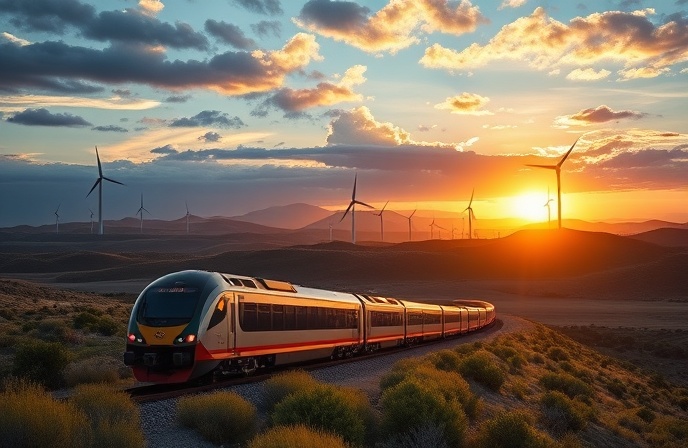
Zero-Emission Locomotive Technologies (ZELTECH) and Dreamstar Lines have formalized an agreement to assess the implementation of advanced clean-energy locomotive solutions on the critical Los Angeles–San Francisco passenger rail corridor. This collaboration targets the deployment of hybrid locomotives powered by HyOrc’s proprietary Rankine-cycle multi-fuel engine, a technology for which ZELTECH holds exclusive US licensing rights for all locomotive applications.
| Key Entity | Critical Detail |
|---|---|
| Primary Companies | Zero-Emission Locomotive Technologies (ZELTECH), Dreamstar Lines, HyOrc |
| Core Action | Memorandum of Understanding (MoU) for evaluating and introducing clean-energy locomotive solutions. |
| Technology Focus | HyOrc Rankine-cycle multi-fuel engine (exclusive US locomotive license for ZELTECH). |
| Target Corridor | Los Angeles–San Francisco passenger rail corridor. |
| Timeline | Ongoing evaluation and future deployment, with a pilot project in California planned. |
This strategic alliance marks a significant step for HyOrc into the North American rail market, with the company’s CEO, Reginald Fubara, highlighting the engine’s efficiency, reliability, and fuel flexibility. The partnership aims to leverage the busy Los Angeles–San Francisco route as a proving ground for these clean rail technologies, accelerating their commercial adoption.
Strategic Impact and Partnership Formation
HyOrc and ZELTECH are set to establish a joint venture dedicated to the development and deployment of hydrogen and multi-fuel locomotive repower systems across the United States. ZELTECH CEO Tom Mack emphasized the pressing need for clean power solutions in California’s rail infrastructure, stating that HyOrc’s engine brings zero-emission locomotives closer to reality. Dreamstar Lines’ involvement is pivotal, as the company is preparing to launch its overnight passenger service on the same corridor, positioning the new technologies for practical application and potential widespread adoption within California, further bolstered by existing state initiatives supporting zero-emission rail.
Operational Vision and Technological Foundation
Dreamstar Lines president Thomas Eastmond articulated a vision for a cleaner, smarter transportation future, underscoring the partnership’s role in advancing this objective. HyOrc’s core business lies in developing patented hydrogen-capable combustion and waste-to-fuel systems, with applications extending beyond railways to shipping and off-grid power generation. This collaboration builds on a prior MoU between HyOrc and ZELTECH for the joint development and deployment of hydrogen-ready gas-engine locomotives in the US. The initial focus will be a pilot project in California, where the companies intend to collaborate with the California Energy Commission and other agencies to secure grant funding. The objective is to demonstrate HyOrc’s external-combustion, zero-emission, multi-fuel powertrain as a cost-effective decarbonisation strategy for freight operators.
Industry Context
The railway industry is at a critical juncture, facing increasing pressure to decarbonize operations. This collaboration between ZELTECH, Dreamstar Lines, and HyOrc directly addresses this imperative by offering a tangible path towards zero-emission freight and passenger services. The HyOrc Rankine-cycle engine’s multi-fuel capability and potential for hydrogen integration provide operators with a flexible and forward-looking solution. For rail CEOs, this development signifies a move from theoretical discussions to practical, scalable solutions, promising reduced operational costs through fuel efficiency and adherence to evolving environmental regulations. The focus on California, a state at the forefront of emission standards, further signals the growing viability and regulatory support for such advanced clean-energy technologies.
Last June 2025, we published an article about Renfe’s Aranjuez maintenance hub. Click here to read – Future of Rail: Renfe’s Railway Technology Hub, Aranjuez: Essential Guide

Railway infrastructure, rolling stock and transport technologies specialist focused on global rail industry developments, high-speed rail systems, signaling technologies and freight transportation. Covering railway investments, public transport modernization, rail operations and international mobility projects across Europe, Asia and North America.
RELATED POSTS

October 1, 2026 7:09 am
United States regulators confirmed a September 30 deadline for the...

October 8, 2026 1:15 pm
Alstom secured a €1bn contract to build 13 automated trains,...

October 4, 2026 5:14 pm
Alstom secured a CA$4.7 billion order from VIA Rail Canada...

October 1, 2026 12:13 am
Illinois approved $1.5 billion annually for the Northern Illinois Transit...

October 6, 2026 2:14 am
Union Pacific launched export rail shipments with Ferromex to deliver...

October 1, 2026 6:10 am
Amtrak approved a System Expansion Committee on July 30 to...