
WMATA Platform Reconstruction: DC Rail Upgrades
WMATA’s massive platform reconstruction project tackles critical Metrorail safety and efficiency issues. Learn how proactive maintenance saves money and ensures a smoother ride!
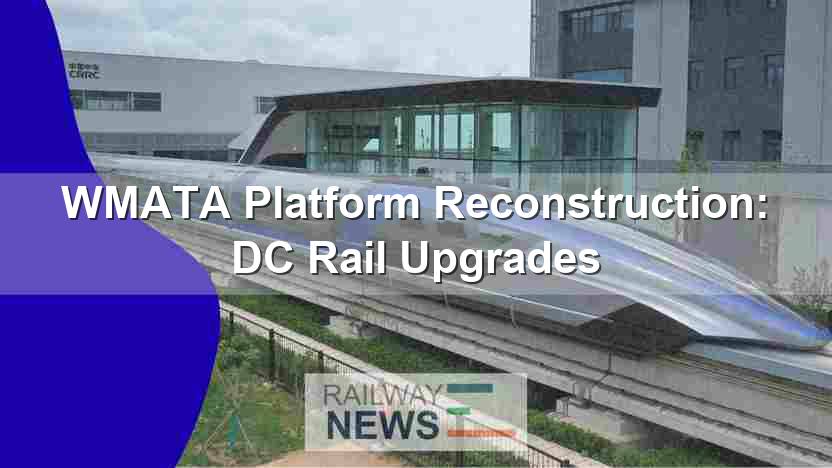
Major Platform Reconstruction Project for the Washington Metropolitan Area Transit Authority (WMATA)
The Washington Metropolitan Area Transit Authority (WMATA), responsible for the operation of the Washington, D.C. Metrorail system, faces a significant challenge: the deterioration of outdoor station platforms. Decades of exposure to the elements have resulted in substantial structural deficiencies at numerous stations, compromising both safety and operational efficiency. This article will delve into the details of WMATA’s ambitious three-year, $300-$400 million plan to address these issues, focusing on the logistical complexities, engineering challenges, and the critical need for proactive infrastructure maintenance within large-scale transit systems. We will examine the phased approach to platform reconstruction, highlighting the intricate planning involved in minimizing service disruptions while completing vital repairs. The article will also consider the broader implications of this project for future infrastructure maintenance and planning within WMATA and other comparable transit agencies across the nation.
The Scope of the Problem and Planned Solutions
WMATA’s Metrorail system encompasses 45 outdoor stations, many of which have experienced significant platform degradation due to weathering and age. To ensure passenger safety and maintain operational integrity, WMATA has implemented temporary repairs at several locations. However, the current initiative represents a detailed effort to address the root causes of the problem. This three-year plan will involve the complete demolition and reconstruction of platforms at 20 stations. The initial phase, beginning in 2019, targets stations such as Braddock Road, King Street, and Eisenhower Avenue. Subsequent phases, spanning until 2021, will encompass other critical locations including Van Dorn Street, Franconia-Springfield, Huntington, and Reagan National Airport, along with several others in Maryland and Virginia.
Logistical and Engineering Considerations
The scale of this project presents immense logistical hurdles. Maintaining continuous rail service during platform reconstruction is paramount. WMATA’s strategy for managing this involves careful planning and coordination. The location and layout of certain stations allow for construction without completely halting operations. For other stations, however, more complex strategies, potentially involving temporary closures or phased construction, may be necessary. The project’s engineering aspects demand rigorous attention to detail. The replacement platforms must meet stringent safety standards and incorporate durable materials designed to withstand environmental stressors for decades. Careful consideration will be given to materials selection, foundation design, and integration with the existing station structures.
Funding and Stakeholder Collaboration
Securing funding for this substantial undertaking required strong collaboration among various stakeholders. Legislatures in Virginia, Maryland, and the District of Columbia contributed dedicated capital funding to the project, demonstrating a shared commitment to improving the Metrorail system. This successful collaboration underscores the importance of strong intergovernmental partnerships in funding large-scale infrastructure projects and highlights the broader economic and social benefits of a robust and reliable public transit network. WMATA also engaged in extensive internal planning and consultation with construction contractors to ensure efficient project execution and cost-effectiveness.
Lessons Learned and Future Implications
The WMATA platform reconstruction project provides invaluable lessons for future infrastructure management. The experience gained from this undertaking will inform future maintenance strategies and investment planning. Proactive maintenance, rather than reactive repairs, will become a greater priority to mitigate future deterioration. Regular inspections, employing advanced materials, and developing optimized construction techniques will be key to ensuring longevity and safety. The project’s success will also serve as a model for other transit agencies nationwide, highlighting the need for timely intervention in addressing aging infrastructure to prevent catastrophic failures and maintain operational efficiency. The substantial investment in platform reconstruction emphasizes the long-term financial viability of planned preventative maintenance and highlights the cost-effectiveness of addressing issues proactively compared to emergency repair solutions.
Conclusions
The Washington Metropolitan Area Transit Authority’s (WMATA) extensive platform reconstruction project represents a significant investment in the future of its Metrorail system. This three-year, multi-million dollar initiative aims to detailedly address the structural deficiencies in outdoor station platforms caused by years of environmental exposure. The project demonstrates the complexity of managing large-scale infrastructure improvements within an operational transit system. WMATA’s phased approach, coupled with careful planning and stakeholder collaboration, seeks to minimize service disruptions while completing vital repairs. The project’s success is critically important not only for passenger safety and operational efficiency but also for setting a precedent for future infrastructure maintenance strategies within WMATA and other transit agencies. The lessons learned – from funding and logistical planning to engineering design and stakeholder communication – will be invaluable in guiding future infrastructure renewal efforts, ensuring the long-term reliability and safety of the Metrorail system. This proactive approach towards maintenance highlights the strategic importance of long-term planning and sustainable investment in public transportation infrastructure.

Railway infrastructure, rolling stock and transport technologies specialist focused on global rail industry developments, high-speed rail systems, signaling technologies and freight transportation. Covering railway investments, public transport modernization, rail operations and international mobility projects across Europe, Asia and North America.
RELATED POSTS
September 6, 2026 5:19 am
Hitachi delivered Taiwan's first N700ST high-speed train from Japan in...
September 6, 2026 6:17 am
Hungary ordered a national ban on most freight trains from...
September 6, 2026 1:17 am
Hitachi Toshiba Supreme Consortium confirmed the first of 12 N700ST...

September 5, 2026 4:19 pm
CPK launched formal tender talks with four consortia to design...
September 7, 2026 8:16 am
Midea, Gree and TCL shipped air conditioners via China Railway...

September 6, 2026 4:12 am
Alstom delivered the first of 100 new G Class trams...