
Mastering the Yard: The Critical Role of Shunting in Rail Ops
Discover the precise mechanics of Shunting. Learn how rail operators assemble trains, manage marshalling yards, and utilize gravity shunting for logistical efficiency.
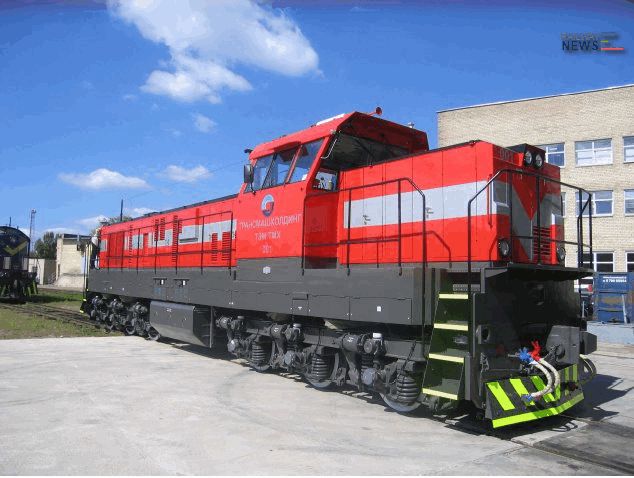
⚡ In Brief
- Shunting is statistically the most dangerous activity in railway operation: Despite lower speeds than mainline running, shunting accounts for a disproportionate share of all railway worker fatalities and serious injuries. ORR data for Britain (2023) recorded 47% of all worker injuries in railway operations occurring during shunting or work in the cess and on foot near moving vehicles — at speeds typically below 25 km/h. The hazard is the combination of unpredictable movement of heavy rolling stock, confined yard geometry, and the presence of ground staff on foot between moving vehicles. Network Rail’s Work Order (NR/L2/OPE/021) classifies shunting as a “safety-critical work” activity requiring specific training certification, competency assessment, and Personal Track Safety (PTS) qualification for all involved personnel.
- A hump yard’s retarder system is a precision speed-control device, not just a brake: When a wagon is released over the hump, it must arrive at its designated classification track at a speed of approximately 2.5–4.0 km/h — fast enough to couple firmly with any already-standing wagons but slow enough not to damage cargo or cause a derailment at the buffer stops. The classification retarders (typically electro-pneumatic rail brakes that squeeze the wagon’s wheel flanges from both sides) must decelerate each wagon from its rolling speed (typically 8–14 km/h at the primary retarder location) to the target arrival speed, accounting for each wagon’s individual rolling resistance, weight, and the resistance of any wagons already standing in the track (which the approaching wagon must compress against). The computer system controlling the retarder calculates the required retardation in real time using continuous speed measurement and a database of wagon rolling resistance characteristics.
- The hump speed profile determines the yard’s theoretical throughput: A conventional hump yard pushes wagons over the hump at a constant speed of approximately 3–6 km/h. As each wagon clears the crest and begins to roll down, the next wagon is pushed forward. The minimum interval between successive wagon releases is determined by the time required for the preceding wagon to clear the primary retarder location — typically 25–45 seconds per wagon release. At 30-second intervals, a hump yard can theoretically process 120 wagons per hour. The largest North American hump yards (Bailey Yard, North Platte, Nebraska — the largest freight classification yard in the world) process 3,000–5,000 wagons per day across two humps, operating continuously around the clock.
- Remote-controlled shunting locomotives (RCLs) have dramatically changed yard safety: Introduced in North America in the 1980s and progressively adopted in European yards from the 1990s, remote-controlled shunting locomotives allow the locomotive to be controlled by a shunter wearing a radio control unit (RCU) — a harness-mounted transmitter that operates the locomotive’s traction, braking, horn, and lights. The shunter walks alongside the moving locomotive rather than riding in the cab, maintaining direct line-of-sight to the coupling point and the track ahead. Studies by the AAR (Association of American Railroads) found that RCL operations reduced yard shunting injuries by 37% compared to conventional cab-operated shunting, primarily by eliminating the risk of cab-to-ground falls during repeated coupling/uncoupling cycles and improving the shunter’s ability to judge clearances during propelling moves.
- Automatic Digital Automatic Coupling (DAC) will transform shunting by eliminating manual coupling from yard operations: The European Union’s Shift2Rail and Europe’s Rail programmes have mandated that European freight rolling stock transition from the current UIC screw link coupling to Digital Automatic Coupling (DAC) — a coupler that makes mechanical, air brake, and electrical connections simultaneously on impact, eliminating the need for a shunter to manually screw a link between wagons, connect brake hoses, and attach electrical cables. DAC trials across multiple European networks (2022–2024) confirmed that DAC reduces the average wagon coupling time from 4–6 minutes (manual) to under 30 seconds (automatic) and eliminates the category of yard injuries attributable to manual coupling operations — approximately 28% of all UK yard worker injuries by ORR data. Full European DAC rollout is planned by 2035.
The report that the Railway Inspectorate submitted to the Board of Trade following the accident at Carlisle Kingmoor goods yard on 14 March 1927 was in many respects a typical document of its era — measured, technical, and restrained in its conclusions. A shunter named Thomas Barber had been crushed between two wagons during a fly shunting operation, the third such fatality at Kingmoor in eighteen months. The Inspectorate’s conclusion was that fly shunting — the practice in which a locomotive would accelerate a wagon or group of wagons along a siding and then uncouple while still moving, allowing the wagons to continue under their own momentum toward a target road while the locomotive braked — was inherently dangerous because it placed the shunter in the path of uncoupled, unbraked rolling stock with no means of control other than a pinch bar. The Inspectorate recommended that fly shunting be restricted to specific authorised locations with defined speed limits and sight-line requirements. The London Midland and Scottish Railway, which operated Kingmoor, introduced a local prohibition on fly shunting at grades steeper than 1 in 500 and at speeds above 10 mph. The national picture did not change materially. Fly shunting remained common practice on British goods yards throughout the steam era and into the diesel age. It is still practised today at some locations under strict local rules, still produces periodic injury events, and is still the subject of periodic regulatory attention from ORR and its predecessors. The distance between the 1927 Inspectorate report and today’s continuing regulatory concern about yard safety practices is not 97 years of inaction — it is 97 years of incremental improvement in training, equipment, and rule-making against the backdrop of a fundamentally hazardous activity that cannot be made safe through any single engineering or procedural intervention. Understanding shunting properly means understanding why that gap persists, and what the industry’s current technological responses — remote control, automation, DAC — are attempting to do about it.
What Is Shunting?
Shunting (called “switching” in North American railway terminology) is the movement of railway vehicles within a yard, depot, or station area to assemble, disassemble, sort, or position rolling stock — as distinguished from “running” on the main line. Shunting operations are conducted under specific local rules that differ from mainline running: lower speed limits (typically 25 km/h maximum in yards, 10 km/h when approaching vehicles to couple), specific ground staff communication protocols, and different signalling arrangements (shunt signals rather than main-line aspects). The scope of shunting includes: assembling freight trains from individual wagons sorted by destination; dividing arriving trains and sorting wagons to outward classification tracks; positioning passenger rolling stock in depots for servicing, berthing, and maintenance; adding or removing vehicles from passenger formations; and propelling (pushing) vehicles to platforms or sidings for operational purposes.
The governing standards in the UK include Network Rail’s Rule Book Module S1 (Shunting) and the associated competency framework under NR/L2/OPE/021. In Europe, ERA (European Union Agency for Railways) operational rules apply under Commission Implementing Regulation (EU) 2019/773. In North America, the FRA (Federal Railroad Administration) 49 CFR Part 218 governs switching operations.
Hump Shunting: Gravity as the Sorting Engine
Hump shunting is the dominant method for high-volume freight wagon classification in large marshalling yards. Its operational principle is simple: wagons are pushed by a locomotive over a raised crest (the “hump”), which gives each wagon enough potential energy to roll down the far side and travel the required distance to its designated classification track under gravity. The engineering challenge is precisely controlling the speed at which each wagon arrives at its destination — fast enough to couple firmly with standing wagons but slow enough to avoid damage.
The Potential Energy Budget
Hump potential energy and rolling velocity:
Hump height (crest above classification track level): h = 3.5 m (typical)
Wagon mass: m = 20,000 kg (laden, 20 tonnes)
Potential energy at hump crest:
PE = m × g × h = 20,000 × 9.81 × 3.5 = 686,700 J = 687 kJ
This energy converts to kinetic energy minus rolling resistance losses.
Rolling resistance force for a freight wagon:
F_roll ≈ C_roll × m × g = 0.002 × 20,000 × 9.81 = 392 N
(C_roll ≈ 0.002 for a well-maintained steel wheel on clean rail)
Distance from hump crest to classification track end: L = 400 m (typical)
Energy lost to rolling resistance: W_roll = F_roll × L = 392 × 400 = 156,800 J
Net kinetic energy at target point:
KE = PE − W_roll = 687,000 − 156,800 = 530,200 J
Velocity at target point (without retarders):
v = √(2 × KE / m) = √(2 × 530,200 / 20,000) = √53.02 = 7.28 m/s = 26.2 km/h
Target arrival velocity: 2.5–4.0 km/h (0.69–1.11 m/s)
Kinetic energy to be removed by retarders:
ΔKE = ½ × m × (v_initial² − v_target²)
= ½ × 20,000 × (7.28² − 1.0²)
= 10,000 × (52.99 − 1.0) = 519,900 J ≈ 520 kJ per wagon
This 520 kJ must be absorbed by the retarder system (converted to heat
in the retarder pads) each time a 20-tonne laden wagon is processed.
The Retarder System: Precision Speed Control
A hump yard retarder is an electro-pneumatic rail brake that applies friction forces to the sides of the wagon’s wheel flanges as the wagon rolls through. The retarder consists of two rows of steel brake beams on each side of the rail, actuated by pneumatic cylinders to clamp against the flange. The braking force is proportional to the clamp pressure, which is adjusted by the yard control computer in real time based on continuously measured wagon speed (from a radar or optical speed sensor preceding the retarder), wagon identity (from an RFID transponder or optical wagon number reader), and the calculated rolling resistance of the specific wagon type and load.
The control algorithm must solve a prediction problem: given the wagon’s current speed and mass, how much retardation is needed to bring it to the target arrival speed at the specific classification track, accounting for the rolling resistance of the track between retarder and target, the gradient of the classification track, and whether the target track contains stationary wagons (which must be compressed against, adding an impact energy requirement to the arrival kinetic energy budget)? Modern hump yard control systems use a continuous predictive model — updated 10 times per second using real-time speed measurement — to compute the required retarder force for each 0.1 m of wagon travel through the retarder zone.
Flat Shunting: Methods, Movements, and Efficiency
Flat shunting — shunting on level or near-level track without a hump — is the universal method for all shunting operations except high-volume freight classification at purpose-built hump yards. It encompasses the full range of locomotive-propelled movements that position, assemble, and disassemble trains in stations, depots, smaller freight yards, and sidings.
The Propelling Move and Its Safety Rules
A “propelling move” — where the locomotive pushes vehicles ahead of it, with the locomotive at the rear of the movement — is the most common and most hazardous type of shunting movement. In a propelling move, the driver cannot see the track ahead of the leading vehicle and must rely on either a ground staff member (shunter) positioned ahead of the movement giving radio or hand signal instructions, or a CCTV or camera view from the front of the leading vehicle. Rule Book Module S1 requires that for any propelling move, a responsible person must be positioned at the front of the movement to observe the track ahead and communicate with the driver, unless the move is within a designated area with specific sight-line protections and a defined safe system of work.
The speed limit for propelling moves in most UK yards is 15 mph (24 km/h) on the approach to a destination and 5 mph (8 km/h) for the final 100 m before coupling or buffer contact. These speed limits reflect the braking distance requirements for a locomotive pushing a train of unknown braking capability: if a propelling move strikes an obstacle, the locomotive’s brakes must stop the entire consist (which may have partially filled brake pipes and unknown wagon braking) within the sight distance available to the leading shunter. The 5 mph final approach speed corresponds to a kinetic energy of approximately 56 kJ for a 180-tonne locomotive-plus-wagons consist — manageable by a buffer stop designed to absorb 40–80 kJ impact energy.
Fly Shunting: Controlled Momentum Transfer
Fly shunting is a shunting technique in which the locomotive accelerates a wagon (or group of wagons) to a target speed along a track, then decouples while still moving — allowing the wagon to continue under its own momentum onto the target siding while the locomotive brakes and remains on the originating track. The technique requires: a siding connection accessible from the locomotive’s track without passing over it (i.e., the siding diverges ahead of the locomotive’s stopping point); a shunter positioned at the connection point who sets the points for the wagon’s route; and precise speed control to ensure the wagon reaches the target road at coupling speed without overshooting.
The safety concern with fly shunting is that once the wagon is uncoupled and rolling independently, its speed can only be controlled by the handbrake on the wagon itself (operated by a shunter running alongside) or by a siding retarder. If the wagon is too fast, it may overrun the target road and strike buffer stops; if too slow, it may fail to travel the full distance and come to rest in the points, fouling the locomotive’s exit route. Network Rail Rule Book Module S1 permits fly shunting only under a local special instruction, at specific authorised locations, with defined maximum speeds and a responsible person observing the movement from a position of safety.
Remote-Controlled Locomotives and Autonomous Shunting
Remote Control Locomotives (RCL): The Safety Step Change
Remote-controlled shunting locomotives — in which the locomotive’s traction, braking, horn, and lighting are controlled by a shunter wearing a radio transmitter unit rather than by a driver in the cab — represent the most significant safety improvement in yard operations of the past 40 years. The RCL concept, pioneered by Canac International and adopted by North American Class I railroads through the 1980s–1990s, allows the shunter to position themselves at the optimal observation point for each movement — typically alongside the coupling point for coupling/uncoupling operations, and ahead of the leading vehicle for propelling moves — rather than being constrained to the locomotive cab.
RCL safety improvement data (AAR research, 1995–2005):
Conventional cab-operated shunting injuries:
Rate: 3.2 injuries per 100,000 hours of shunting operation
RCL-operated shunting injuries (same yards, same wagons):
Rate: 2.0 injuries per 100,000 hours
Reduction: 37.5% fewer injuries
Injury type breakdown (change with RCL introduction):
Cab-to-ground falls during coupling: −65% (shunter no longer needs to board cab)
Propelling move collisions: −42% (better sightlines from alongside)
Coupling injuries (foot/hand trap): −28% (better position for coupling operations)
Struck by passing vehicle: +8% (shunter now on ground near moving stock)
→ Net injury rate still reduced despite slight increase in struck-by risk
Typical RCU (Radio Control Unit) system specifications:
Radio frequency: 900 MHz or 2.4 GHz (licenced band)
Range: 250–500 m (line of sight)
Response time (command to actuation): < 100 ms
Emergency stop button: dedicated hardware, fastest actuation priority
Fail-safe: loss of radio signal → automatic emergency brake application
within 3 seconds of signal loss (IEC 62280 requirement)
Automated Hump Yard Control
Modern hump yards use a fully automated control system — typically designated YCAS (Yard Control and Automation System) — that integrates wagon tracking (RFID readers or optical character recognition identifying each wagon’s UIC number as it approaches the hump), real-time speed measurement (Doppler radar sensors at multiple points along the rolling track), retarder control (pneumatic or electro-hydraulic actuators controlled by the YCAS algorithm), and point switching (motorised point machines commanded by YCAS to set the correct route for each wagon as it clears the hump). The YCAS receives the train plan — the list of wagons in the arriving train and their required outward classification tracks — from the yard master’s computer system (which in turn receives it from the national freight management system), and automatically sequences the wagon releases and retarder interventions to sort the entire arriving train into its outward configuration with minimal manual intervention.
The largest YCAS installations — including DB’s Maschen yard near Hamburg (the largest marshalling yard in Europe, with 48 classification tracks and processing capacity of over 3,500 wagons per day on each of its two humps) and Bailey Yard in Nebraska — operate with a single yard supervisor monitoring the automated system on a SCADA display, intervening manually only when a wagon stalls between retarder and target (requiring a shunting locomotive to push it the remaining distance) or when a wagon’s rolling characteristics deviate significantly from its database profile (typically due to a stuck brake or bearing overheating). The human role in automated hump operations has shifted from executing the sequence to monitoring the automation and managing exceptions.
Digital Automatic Coupling (DAC): The Technology That Will Transform Shunting
The most significant pending change to European freight shunting practice is the mandated transition from the UIC screw link coupling (which has connected European freight wagons since the 1860s) to Digital Automatic Coupling (DAC). The screw link coupler requires a shunter to physically stand between two wagons, lift a heavy screw-link bar, hook it through the drawgear of the adjacent wagon, and screw the link tight — followed by connecting brake hoses between wagons and, on electrically equipped wagons, connecting control cables. This process takes 4–6 minutes per wagon coupling and is statistically the single most injury-intensive activity in European freight shunting, accounting for approximately 28% of all UK yard worker injuries by ORR classification.
How DAC Works
DAC uses a coupler head geometry designed so that when two wagons approach at low speed (below 5 km/h), their coupler heads engage automatically — the mechanical lock engages on impact, simultaneously: securing the mechanical connection to carry buff and draft forces; aligning and sealing the brake pipe connection (compressed air); and connecting an electrical/data bus that carries brake command signals, wagon identification, and wagon health monitoring data. No manual intervention is required for any of the three connections. The shunter’s role in a DAC-equipped yard reduces to positioning wagons within coupling range (using a remote-controlled locomotive or by directing the locomotive driver) and verifying that the automatic coupling has completed successfully — a visual or LED indicator status check rather than a physical manipulation.
| Operation | UIC Screw Link (Current) | DAC (2035 target) |
|---|---|---|
| Coupling time per wagon | 4–6 minutes (mechanical + hoses + cables) | < 30 seconds (automatic on impact) |
| Physical contact required? | Yes — shunter between wagons | No — automatic on wagon approach |
| Brake connection | Manual hose connection (2–3 min) | Automatic on coupling |
| Brake system required | Pneumatic only | Pneumatic + electrical brake command bus |
| Data connectivity | None | Train composition data + wagon health monitoring |
| Injury risk at coupling | Significant (28% of UK yard injuries) | Eliminated (no manual operation needed) |
| Train formation time (50 wagons) | ~250–300 minutes (manual coupling) | ~40–60 minutes (automated positioning + auto-coupling) |
| Enables longer trains? | Limited by manual coupling time and brake test time | Yes — electric brake command allows longer trains with faster brake test |
Shunting Signals: How Yards Are Controlled
Shunting operations are controlled by a different suite of signals from mainline running. The key difference is that shunting signals authorise movement within a defined zone (typically a siding or a yard track) rather than along a specific route to a distant point — reflecting the local, low-speed nature of yard movements where train separation is managed by direct observation rather than block sections.
UK Shunting Signal Types
In the UK, shunting is primarily controlled by three signal types under Rule Book Module S1. Ground signals (position light signals — two white lights arranged in a diagonal pattern for “proceed” and a vertical arrangement for “stop”) authorise movements within a station or yard area from ground level, at heights visible to drivers approaching at low speed. Disc signals (older design: a circular disc showing different colours for proceed/caution/stop) are still found in some heritage locations and smaller yards. Radio signals — an instruction given by the shunter directly to the driver by radio — are used for movements controlled by the person on the ground rather than by a fixed signal. The combination of ground signals (for infrastructure-controlled movements through points) and radio instructions (for flexible positioning movements) gives yard masters the ability to manage complex simultaneous movements through the yard.
In continental Europe, a similar system applies under ERA operational rules: shunting signals (German: Rangiersignale; French: signaux de manœuvre) control movements within yard limits, with a specific signal aspect or order distinguishing “shunting permitted” from “halt” — different from the main-line signal aspects to prevent confusion between mainline and yard movements.
Shunting Methods: Full Technical Comparison
| Method | Primary Force | Throughput | Infrastructure Cost | Safety Risk Profile | Best Application |
|---|---|---|---|---|---|
| Flat (locomotive push/pull) | Locomotive traction | Low — one movement at a time | Low — standard yard layout | Medium — propelling move observation risk | All yard types; passenger depots; small freight yards |
| Hump (gravity) | Gravity from hump elevation | High — up to 120 wagons/hour | High — hump, retarders, YCAS | Low (automated; minimal ground staff in live area) | Large freight classification yards |
| Fly shunting | Wagon inertia after locomotive uncouples | Medium — faster than flat for single wagons | Low — no special infrastructure | High — uncoupled unbraked rolling stock | Restricted; authorised locations only |
| Remote-controlled (RCL) | Locomotive traction (radio-controlled) | Medium — same as flat but faster coupling | Medium — RCU equipment (€30–80k per loco) | Medium-low — 37% injury reduction vs cab operation | Industrial sidings; medium yards; depot moves |
| Automated yard (YCAS + hump) | Gravity (hump) + retarders | Very high — 3,000+ wagons/day | Very high — YCAS, RFID, radar, automated points | Low — minimal staff in live area | Major freight hubs; Class I railroad primary yards |
The World’s Major Marshalling Yards
| Yard | Location | Classification Tracks | Daily Capacity | Notable Feature |
|---|---|---|---|---|
| Bailey Yard (Union Pacific) | North Platte, Nebraska, USA | 114 (2 humps) | 10,000 wagons/day | World’s largest marshalling yard by area (2,850 acres) and daily throughput; 24/7 continuous automated operation; visitor viewing tower for public observation |
| Maschen Rangierbahnhof (DB) | Near Hamburg, Germany | 48 southbound + 64 northbound (2 humps) | 7,000 wagons/day | Largest marshalling yard in Europe; opened 1977; fully automated YCAS with DB Netz’s SmartRail integration planned 2026–2030; key node on North Sea ports–Continental Europe corridor |
| Clapham Junction (Network Rail) | London, UK | Multiple — complex junction, not classification yard | ~2,500 train movements/day (all types) | Busiest railway junction in the world by train movements; mix of mainline, suburban, freight, and empty stock; complex flat shunting and propelling movements for EMU positioning |
| Antwerp-Noord (Infrabel) | Antwerp, Belgium | 56 (2 humps) | 3,000 wagons/day | Gateway yard for Port of Antwerp freight distribution to inland European destinations; operates DAC pilot programme from 2023 on selected wagon flows |
| Zhengzhou North (China Railway) | Zhengzhou, Henan, China | 60+ (multi-hump) | 6,000+ wagons/day | Largest marshalling yard in Asia; fully automated YCAS with AI-enhanced wagon routing and real-time wagon health monitoring via onboard telematics |
| Wembley Euro Terminal (Freightliner) | London, UK | Flat yard — intermodal terminal, not classification | ~1,200 wagon movements/day | Primary intermodal terminal for Channel Tunnel freight; remote-controlled shunters throughout; direct connection to Network Rail mainline and HS1 freight paths |
Editor’s Analysis
The persistence of serious injury rates in shunting operations, despite nearly a century of incremental safety improvements, reflects a fundamental tension between the physical demands of the task and the limitations of engineering mitigation. The screw link coupling is a nineteenth-century technology that places a human being between two heavy vehicles weighing tens of tonnes — and the accident statistics for that interaction are consistent and predictable. Remote-controlled locomotives reduced those statistics by 37%; they did not eliminate them. The DAC transition — which is the first technological change in a century that has the potential to eliminate manual between-wagon operations entirely rather than reducing their frequency — is therefore not merely an operational efficiency improvement. It is a qualitative safety step change. When DAC is universally deployed on European freight wagons (the 2035 target), the single most dangerous routine activity in European freight railroading will have been automated away. The challenge is that “universally deployed” requires retrofitting or replacing approximately 450,000 wagon coupler assemblies across the European freight fleet — a project of enormous scale and cost, the funding of which the EU Shift2Rail programme has partially but not fully addressed. The DAC mandate without complete funding for the retrofit is a specification without a guaranteed implementation path. The precedent in railway history for large-scale coupler standardisation programmes — the US transition from link-and-pin to Janney automatic couplers in 1893, which required a federal Safety Appliance Act and five years of mandatory fleet conversion — suggests that regulatory compulsion is a necessary but not sufficient condition: the capital must also be there. Whether the EU’s industrial policy will provide that capital in time for the 2035 target is the key uncertainty — and the answer will determine whether DAC’s injury elimination promise is realised in this decade or deferred to the next.
— Railway News Editorial
Frequently Asked Questions
1. What is “loose shunting” and why has it been largely banned in modern practice?
Loose shunting (or “loose coupling”) was a variation of fly shunting in which wagons were deliberately left with their screw link couplers at maximum slack — not tightened after coupling — so that when a locomotive braked sharply, the wagons at the rear of the consist would continue forward under their own inertia and “run loose” past the locomotive, which had stopped on a diverging track. The loose wagons would then roll into the target siding under their own momentum. The technique allowed a single locomotive to sort wagons into multiple sidings in sequence without having to perform a separate propelling movement for each — it was a gravity-assist method on level track, using the wagon’s accumulated kinetic energy rather than the hump’s potential energy. The technique’s dangers were clear and documented: once loose, the wagons were entirely unbraked and uncontrolled — their speed could only be controlled by a brake stick (a long pole applied by a shunter walking alongside to the wagon’s handbrake wheel) or by a siding retarder. Overspeed events were frequent, and the consequences — wagons striking buffer stops at excessive speed, telescoping into standing wagons, or derailing on tight siding curves — resulted in cargo damage and periodically in fatalities to shunters caught between wagons during impact. The technique was formally prohibited in UK goods yards by British Railways in 1968 following a series of injury events, with residual local practice continuing into the 1970s before effective enforcement ended it. It remains technically prohibited under current Rule Book Module S1, with the only permitted variant being strictly controlled fly shunting at authorised locations with defined maximum speeds.
2. How does the hump yard retarder “know” how fast to brake each wagon — does every wagon have a unique rolling resistance characteristic?
Every wagon does indeed have a somewhat unique rolling resistance characteristic, and this is precisely the engineering challenge that distinguishes good hump yard control from poor hump yard control. Rolling resistance varies between wagon types (an empty flat wagon rolls very freely; a laden tank wagon has higher rolling resistance from bearing load and potentially from sticky or over-greased bearings); between individual wagons of the same type (bearing condition, wheel profile, brake application status); and with environmental conditions (temperature affects bearing grease viscosity; rain on the rail reduces wheel-rail rolling resistance slightly). Early hump yards used fixed retarder settings calibrated for an “average” wagon — producing systematic overspeed of light wagons (which rolled further than expected) and understeer of heavy wagons (which stopped short). Modern YCAS systems maintain a rolling resistance database for each wagon type and update individual wagon rolling resistance estimates in real time: as each wagon passes through the primary retarder, its actual deceleration (measured by entry and exit speed sensors spanning the retarder) is compared to the predicted deceleration for that wagon’s type, mass, and condition. Systematic deviations (a wagon consistently rolling faster than its type average) are flagged as a potential bearing or brake anomaly and can trigger a wagon health alert to the wagon maintainer. The continuous feedback loop between measured wagon behaviour and retarder setting allows modern YCAS to achieve arrival speed accuracy of ±0.5 km/h at the classification track buffer stop — tight enough to ensure reliable coupling without wagon damage in all but the most adverse wind conditions.
3. What happens when a “runner” wagon escapes the retarder system and travels at excessive speed into a classification track?
A “runner” — a wagon that reaches its classification track at excessive speed (typically above 6–8 km/h when the target is 2.5–4 km/h) — is one of the most serious failure modes in hump yard operations, for the obvious reason that it will collide with any standing wagons at the far end of the track at a speed that can cause cargo damage, derailment, or injury to staff in the vicinity. The causes of runners include: retarder failure (pneumatic actuator leakage reducing clamp force), wind assistance on a light wagon on a day with strong tailwind, an incorrectly identified wagon (wrong mass or type in the YCAS database leading to under-retardation), and ice or contamination on the rail in the retarder zone reducing friction. Modern YCAS systems include secondary speed monitoring downstream of the secondary retarder — a final speed measurement point close to the classification track entrance — that can trigger a last-resort retarder intervention or, if no retarder is available, an alert to yard staff to clear the track. Buffer stops at the end of classification tracks in hump yards are designed for higher impact energies than in normal sidings — typically 150–300 kJ capacity — and hydraulic buffer stops (which absorb energy through fluid displacement) are increasingly preferred over fixed buffer stops because they limit the deceleration rate of the impacting wagon rather than applying an impulse force that can cause coupler damage or wagon derailment. Despite these mitigations, runner events occur at a low but non-zero frequency in all hump yards and are the primary cause of cargo damage claims in hump yard operations — estimated at €10–30 per wagon-classification-movement averaged across European hump yard operations.
4. How does DAC’s electrical brake command bus change train braking compared to the current pneumatic-only system — and what are the safety implications?
The current UIC pneumatic brake system (described in the Air Brake article, #86) propagates the brake command from the locomotive to the rear wagon as a pressure change in the brake pipe — travelling at approximately 295 m/s (slower than sound in open air due to pipe friction and dead-volume effects). On a 750 m freight train, the brake command reaches the last wagon approximately 2.54 seconds after the locomotive applies it, creating a sequential, wave-propagating braking pattern that causes coupler compression waves (“run-in”) as the front brakes before the rear. DAC’s electrical brake command bus carries the brake signal at electromagnetic wave speed — effectively instantaneous — to every wagon’s electro-pneumatic brake valve simultaneously. This “simultaneous braking” eliminates the longitudinal brake wave and the associated coupler run-in, reducing longitudinal train dynamics (the buff and draft forces that can cause derailment on long trains with mixed brake response) and improving stopping distance by approximately 10–15% compared to equivalent pneumatic-only braking at the same speed. The safety implication of eliminating brake wave run-in is particularly significant on heavy freight trains where coupler forces during brake application can approach the design limit of the UIC screw link’s tensile strength. DAC’s simultaneous braking reduces these peak coupler forces by 25–35% compared to UIC pneumatic braking on identical trains — reducing the risk of coupler failure under emergency braking and enabling heavier trains (longer or more densely loaded) to be operated safely on grades where UIC pneumatic trains would require slower descent speeds to manage coupler forces. This heavier train capability is a significant commercial benefit for freight operators, representing an increase in effective freight capacity per train-path of 15–25%.
5. Is shunting ever done on mainline railway tracks — and if so, how is the safety of main-line traffic managed during shunting operations?
Shunting on mainline tracks — specifically, using the main running line for shunting movements rather than a dedicated yard track — does occur, particularly at stations without adjacent sidings and in terminal stations where empty passenger stock must be moved between platforms and stabling roads. This type of operation, called “wrong line order” shunting or “platform shunting” in the UK, requires a formal permission system that temporarily suspends or modifies the normal block working rules to allow shunting movements on lines that would normally be reserved for train running. In the UK, this is managed under Rule Book Module S1’s “wrong line order” procedure: the signaller grants a formal permission for the shunting movement, applies a track circuit block to prevent any train being given line clear in the affected section, and maintains radio communication with the shunter throughout the movement. The protection mechanisms include: the opposing signal being maintained at danger for the duration of the shunting; the section being treated as “occupied” by the signalling system regardless of track circuit state; and the shunter being responsible for ensuring all vehicles are clear of the running line before the wrong line order is surrendered and normal working resumed. At locations where main-line shunting is frequent — terminal stations like London Waterloo, where incoming services must have their traction removed or repositioned before the next service can enter the platform — the protection procedures are codified in local working instructions that define the specific permitted movements, the responsibilities of each person involved, and the exact interlocking conditions that must apply before each movement is authorised. The frequency of main-line shunting is a significant contributor to the delay performance of busy terminal stations, and the operational planning for depot movements often represents a significant fraction of the “non-passenger” working in any complex station’s timetable.
RELATED POSTS

April 7, 2026 4:33 pm
From HS2's $137bn to California's $126bn rail disaster — discover...
April 15, 2026 4:06 am
From £33bn to £100bn+, from 2026 to mid-2030s. HS2 is...
April 2, 2026 9:48 am
China expanded its high-speed rail network to 50,000 km by...
April 1, 2026 6:21 pm
Federal Transit Administration awarded $20.6 billion in formula-based apportionments to...
April 1, 2026 2:14 pm
Saudi Arabia Railways launched a 1,700 km freight rail corridor...
April 1, 2026 8:40 pm
BNSF Railway expands Galesburg, Illinois, yard capacity, with second hump...