
Wairarapa Line: NZ Level Crossing Upgrades for Future Rail Safety
Carterton level crossings to close permanently for Wairarapa Line modernization, part of a wider safety upgrade, preparing for new trains.
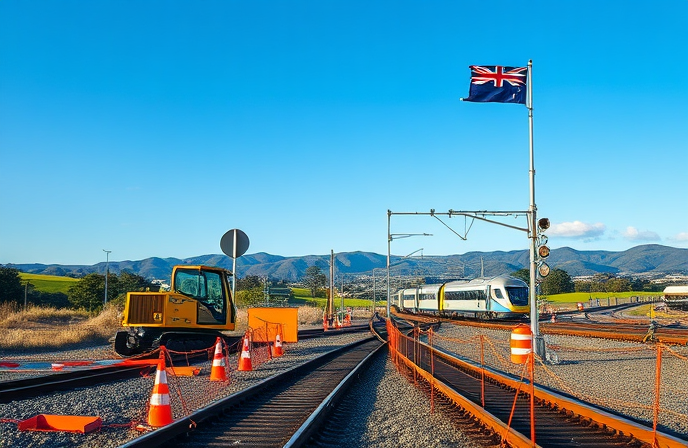
Carterton Level Crossing Closures Underway as Wairarapa Line Modernization Advances
In a significant step toward enhancing safety and preparing for increased service frequency, KiwiRail is permanently closing two level crossings in Carterton, New Zealand, as part of the Wairarapa Line safety upgrade. The closures, slated for Victoria Street in mid-September and Rhodes Street in November 2025, are crucial components of a broader initiative. This is aimed at modernizing the line. The project is set to accommodate the introduction of new hybrid-electric trains scheduled for 2029. These closures, alongside a comprehensive upgrade of the remaining level crossings, are designed to mitigate risks associated with increased train speeds and service frequency, ensuring the safety of both motorists and pedestrians. The project is spearheaded by KiwiRail as part of a larger initiative to modernize the Wairarapa Line.
The Rationale Behind the Closures
The decision to close the Victoria and Rhodes Street level crossings, which was made following an independent region-wide report issued in early 2024, is directly driven by the imperative to minimize risk. As KiwiRail Programme Director Andy Lyon explained, “With more services travelling at quicker speeds, it’s crucial that we minimise risk around level crossings.” The closures will convert the affected streets into pedestrian-only crossings, featuring protected walkways equipped with signals and gates that only allow access when the track is clear. This strategy reflects a proactive approach to risk management and a commitment to adapting infrastructure to the demands of modern railway operations.
Current Progress and Planned Enhancements
Work on the level crossing upgrades extends beyond the closures, with active projects at Belvedere Road, expected to conclude at the end of July, and a subsequent move to Pembroke Road, scheduled for completion in November. Concurrently, civil works are progressing at Kent Street and Brooklyn Road crossings. All level crossings along the Wairarapa line are being equipped with pedestrian mazes, designed to create a clear and protected path over the railway tracks, while effectively separating pedestrians from vehicular traffic. These safety upgrades are phased to ensure minimal disruption while progressively enhancing the overall safety of the Wairarapa Line.
Signal System Upgrade and Future Implementation
A critical component of the Wairarapa Line’s modernization is the forthcoming installation of a new signalling system. When this is operational in early 2027, the pedestrian gates and vehicle barrier arms at all crossings will become fully functional, further reinforcing safety protocols. This advanced signaling technology will provide a sophisticated layer of protection, coordinating train movements with the operation of safety barriers, ensuring smooth and safe crossings. During this transition phase, KiwiRail continues to emphasize the importance of constant vigilance, reminding all to “always look for trains, every crossing, every time.”
Wider Implications and Future Development
The closures in Carterton are not isolated incidents. A total of four level crossings will be permanently shut down, including those at Bell and Brandon Streets in South Wairarapa. These closures are part of KiwiRail’s comprehensive strategy to improve safety and prepare the line for its expansion. The project, supported by the new hybrid-electric trains arriving in 2029, highlights the ongoing efforts to upgrade infrastructure. This supports more frequent and efficient rail services, meeting growing transportation demands and reducing reliance on road transport. The integration of cutting-edge technology and strategic infrastructure adjustments positions the Wairarapa Line for long-term sustainability and enhanced operational efficiency.
Conclusion
The closure of the Carterton level crossings and the broader safety upgrades on the Wairarapa Line represent a pivotal investment in New Zealand’s railway infrastructure. These proactive measures, driven by a commitment to safety and efficiency, are directly linked to preparing for the deployment of new hybrid-electric trains in 2029. The integration of pedestrian mazes, enhanced signaling systems, and controlled barrier arms will dramatically reduce risks at level crossings, while simultaneously enhancing service frequency and speed. The initiatives reflect a strategic response to the challenges of increasing transportation demands and the imperatives of modernizing railway systems. The Wairarapa Line’s transformation, driven by forward-thinking engineering and strategic planning, is a model for how railways can adapt to meet the demands of the future.
RELATED POSTS
June 9, 2025 5:01 pm
HS2's M6 South viaduct section successfully launched, a key milestone....

November 9, 2018 7:47 pm
ŠkodaTranstech's ForCity Smart Artic trams achieve German BoStrab homologation, opening...
February 10, 2025 9:30 am
The Enhancement of the LOSSAN Rail Corridor: A Multi-Million...
February 26, 2018 11:25 am
Upgrade Indian Railways with GE's Evolution-series locomotives: 1,000 advanced,...
July 10, 2025 1:34 am
Commuter Rail Agencies Gear Up for Uncertain Future with New...
January 20, 2026 11:39 am
Siemens completed £61M digital signalling upgrades across the UK rail...