
WA Yarloop Station: Rail Accessibility Upgrade
Yarloop Station’s stunning upgrade showcases best practices in accessible rail design, boosting community revitalization. Discover how this A$32 million project achieved DDA compliance and improved regional rail services!
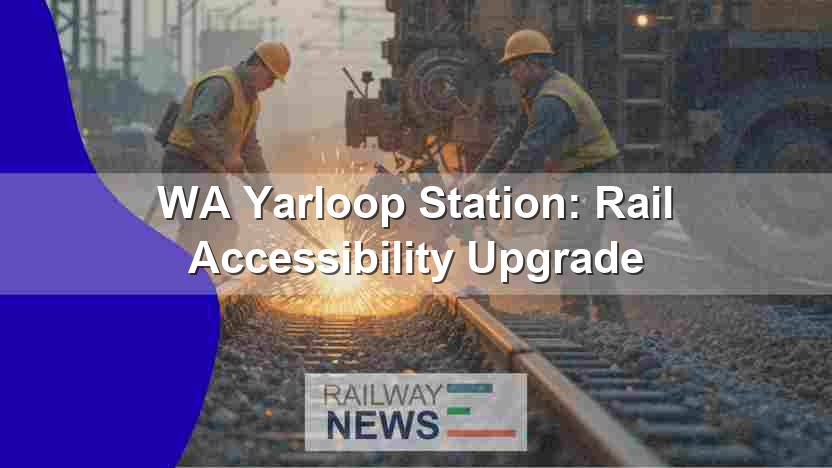
This article examines the significant upgrade undertaken at Yarloop Station in Western Australia, focusing on its impact on accessibility, community revitalization, and its role within the broader context of improving regional rail services. The project, funded by the A$32 million ($24.6 million USD) Rail Future Fund, exemplifies a commitment to enhancing passenger experience and aligning infrastructure with the Disability Discrimination Act (DDA) standards. The upgrade goes beyond mere compliance, aiming to create a more inclusive and welcoming environment for all passengers, regardless of physical ability. We will analyze the scope of the works, the collaboration between government agencies and private contractors, and the wider benefits for the local community and the regional rail network. The project serves as a model for similar infrastructure improvements across Australia and internationally, highlighting the importance of accessible and user-friendly public transportation.
Accessibility Enhancements and DDA Compliance
The core objective of the Yarloop Station upgrade was to ensure full compliance with the Disability Discrimination Act (DDA). This involved a detailed overhaul of the station’s facilities to cater to passengers with disabilities. Key improvements include the construction of ramps alongside existing stairs to provide alternative access to the platform. New, sheltered seating areas provide comfortable waiting spaces for all passengers. Improved lighting enhances safety and visibility, particularly crucial in low-light conditions. The project also incorporated accessible pathways connecting the platform, car park, and pedestrian crossing, eliminating significant barriers to access for passengers with mobility challenges. These changes demonstrate a shift towards inclusive design, ensuring that public transport is accessible to all members of the community, not just those without physical limitations.
Improved Infrastructure and Community Impact
Beyond accessibility, the upgrade significantly improved the overall infrastructure of Yarloop Station. Modernization of the existing access road and car park enhances the convenience and usability of the station for all passengers. The addition of new car bays, including one designated accessible parking bay (ACROD bay – Australian Disability Parking Permit), demonstrates the project’s focus on meeting the diverse needs of its users. The upgrade extends beyond the immediate station environment; its impact is felt more broadly within the community. For the town of Yarloop, recovering from the devastating 2016 fires, the station upgrade represents a significant step in its rebuilding and revitalization. Improved access facilitates connectivity, boosting tourism and economic activity within the region. This integrated approach to infrastructure development showcases the positive ripple effects that well-planned projects can have on local communities.
Collaboration and Project Delivery
The Yarloop Station upgrade showcases effective collaboration between government agencies and the private sector. The Public Transport Authority (PTA) partnered with Arc Infrastructure (formerly Brookfield Rail) to deliver the project. This public-private partnership leveraged expertise from both sectors, ensuring the efficient and effective execution of the upgrade. The project’s completion within the projected timeframe underscores the effectiveness of this collaborative approach, minimizing disruption and maximizing the benefits for the community. This successful partnership exemplifies a model for future infrastructure projects, demonstrating that collaboration can lead to superior outcomes in terms of project delivery, cost-effectiveness, and community impact.
Wider Regional Rail Network Integration
The Yarloop Station upgrade is not an isolated project but rather an integral part of a larger initiative to revitalize the Australind train service, running between Perth and Bunbury. This initiative aims to boost tourism in the South-West region, offering faster and more convenient travel options. The improvements at Yarloop Station contribute directly to this wider goal by enhancing the overall passenger experience along the Australind line. By improving accessibility and convenience, the upgrade makes the train service a more attractive option for both local commuters and tourists, ultimately contributing to the economic and social development of the region. The project highlights the importance of considering individual station upgrades within the context of a broader strategic vision for improving regional rail networks.
Conclusion
The upgrade of Yarloop Station in Western Australia serves as a compelling example of how thoughtful infrastructure development can enhance accessibility, revitalize communities, and contribute to the broader goals of improved regional rail services. The project’s success lies not only in its achievement of DDA compliance but also in its holistic approach to improving the overall passenger experience and addressing the specific needs of the local community. The collaboration between the Public Transport Authority and Arc Infrastructure demonstrates the benefits of public-private partnerships in delivering complex infrastructure projects effectively and efficiently. The integration of the Yarloop Station upgrade within the wider revitalization plan for the Australind train service highlights the interconnectedness of infrastructure improvements and their impact on regional economic development and tourism. The project’s success should be seen as a benchmark for future infrastructure initiatives, emphasizing the importance of inclusive design, community engagement, and strategic planning to create truly sustainable and beneficial public transportation systems.

Railway infrastructure, rolling stock and transport technologies specialist focused on global rail industry developments, high-speed rail systems, signaling technologies and freight transportation. Covering railway investments, public transport modernization, rail operations and international mobility projects across Europe, Asia and North America.
RELATED POSTS

September 6, 2026 5:19 am
Hitachi delivered Taiwan's first N700ST high-speed train from Japan in...

September 6, 2026 4:12 am
Alstom delivered the first of 100 new G Class trams...

September 6, 2026 1:17 am
Hitachi Toshiba Supreme Consortium confirmed the first of 12 N700ST...
September 6, 2026 8:17 am
DB InfraGO reopened the Nuremberg-Regensburg line in Bavaria on 31...
September 6, 2026 12:20 pm
Indian Railways ordered a probe after a fire destroyed 2...

September 7, 2026 4:11 am
ÖBB Rail Cargo Group leased 500 Eanos-y scrap-metal wagons from...