
WA Grain Rail Upgrade Signals Boost for Agriculture
Western Australia’s Midland Railway gets a $100 million upgrade! Boosting the line’s capacity to 19 TAL will revolutionize grain transport efficiency for rail professionals.
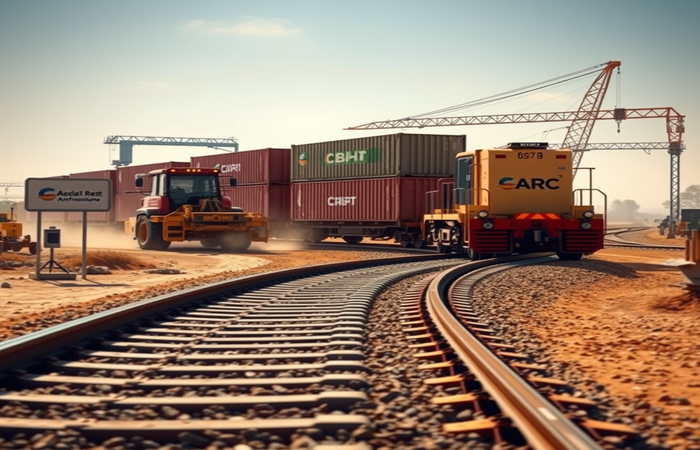
Grain Rail Upgrade Agreement in Western Australia Signals Boost for Agricultural Supply Chain
Perth, Australia – October 26, 2024 – Arc Infrastructure has solidified an agreement with the Western Australian Government to undertake significant upgrades to the Midland Railway (MR) track, specifically between Mingenew and Carnamah. This project, a crucial component of the State Government’s Agricultural Supply Chain Improvements (ASCI) program, marks a pivotal step in enhancing the efficiency and capacity of the state’s grain transport infrastructure. The finalized agreement encompasses a substantial financial commitment of $45 million from both the state and federal governments, supplemented by a $22 million contribution from Arc Infrastructure itself. This collaborative effort is designed to modernize a critical section of the rail network, thereby benefiting Western Australian grain growers and bolstering the state’s agricultural export capabilities. This article delves into the details of the upgrades, their strategic importance, and the innovative construction methodologies employed to minimize disruption.
Strategic Importance of the Midland Railway Upgrade
The Midland Railway line serves as a vital artery for transporting grain from the agricultural heartlands of Western Australia to the Geraldton Port. The upgrade project, encompassing approximately 77 kilometers of track, involves replacing timber sleepers with concrete and steel, as well as replacing 96 kilometers of rail. These enhancements will increase the line’s axle load capacity from 16 Tonne Axle Load (TAL) to 19 TAL. This increase translates directly into the ability to handle heavier and more frequent freight trains, thereby improving the overall efficiency of grain transport. The upgrade is particularly crucial given that the CBH Group, the sole customer of the line, relies on it for year-round grain transportation to the port. A more robust and reliable rail network is essential for maintaining the competitiveness of Western Australian grain exports in the global market.
Key Features of the Upgrade: Concrete Sleepers and Rail Replacement
The upgrade project’s core components focus on enhancing the track’s durability and capacity. The transition from timber sleepers to concrete and steel sleepers represents a significant improvement in the track’s lifespan and load-bearing capabilities. Concrete sleepers are known for their greater resistance to wear and tear, weather, and pest damage compared to timber alternatives. This will reduce the frequency of maintenance and extend the operational life of the track. Simultaneously, replacing the existing rail with newer, higher-grade steel will enable the line to handle heavier axle loads. The 19 TAL capacity represents a substantial improvement over the current 16 TAL, permitting the use of heavier, more efficient freight trains. These upgrades are critical for the long-term sustainability and efficiency of grain transport in the region.
Innovative Construction Methodology and Cost-Efficiency
Arc Infrastructure, in collaboration with the CBH Group, has devised an innovative construction methodology to minimize disruption during the upgrade. The plan involves closing large sections of the track for several months during construction. According to Nathan Speed, Acting Chief Executive Officer of Arc Infrastructure, this approach, combined with Arc’s utilization of its internal teams for the work, is expected to reduce the overall project cost by over $30 million. This cost-saving strategy enables a more efficient use of the ASCI funding. The parties will work together to optimize grain movement across the network before and during construction outages, ensuring that grain transport is managed effectively throughout the upgrade process. The construction is scheduled to commence in mid-2026.
Conclusion: A Modernized Rail Network for a Stronger Agricultural Sector
The agreement between Arc Infrastructure and the Western Australian Government to upgrade the Midland Railway track signifies a crucial investment in the state’s agricultural infrastructure. The project, backed by significant financial commitments from various levels of government and Arc Infrastructure, will modernize a critical rail line used primarily for grain transport. The decision to replace timber sleepers with concrete and steel, alongside the replacement of 96 kilometers of rail, promises to increase the track’s load capacity from 16 TAL to 19 TAL. This increase will lead to greater efficiency in freight operations. This in turn will benefit the CBH Group and the wider agricultural sector. The innovative construction methodology, which involves carefully planned track closures and the utilization of internal teams, underscores a commitment to cost-effectiveness and minimizing disruption. The project’s planned commencement in mid-2026 marks a significant step towards a more resilient and productive freight rail infrastructure network. This enhancement will help ensure the continued success of Western Australia’s grain industry. The upgrades are a sign of a bright future for the industry and for the overall economy of the state.
Company Summary
Arc Infrastructure: A leading rail infrastructure provider in Western Australia, responsible for maintaining and upgrading rail networks essential for freight transport. They are committed to improving the efficiency and reliability of the state’s rail infrastructure.
CBH Group: A cooperative and one of Australia’s largest grain handlers and exporters, which relies heavily on the rail network to transport grain to ports. They are the sole customer for this particular rail line.
RELATED POSTS

December 4, 2021 8:02 pm
The Electrification of Rail Baltica: A Comprehensive Engineering Undertaking This...

November 23, 2015 8:30 pm
Chinese authorities have proposed a high-speed railway connecting its western...

February 17, 2025 8:59 pm
This article examines the significant role of Aecom in the...
July 30, 2021 3:05 pm
The Northern Link Project: A Deep Dive into Hong Kong’s...
June 12, 2025 3:00 pm
New bi-mode locomotives arrive in Bristol, boosting UK freight rail...
January 31, 2021 10:15 am
This article explores the comprehensive Red and Purple Modernization (RPM)...