
Vossloh’s Le Havre Tram Audit: Rail Insights
Vossloh’s advanced rail audit technology ensures optimal Le Havre tram network performance. Discover how proactive rail maintenance maximizes efficiency and safety!
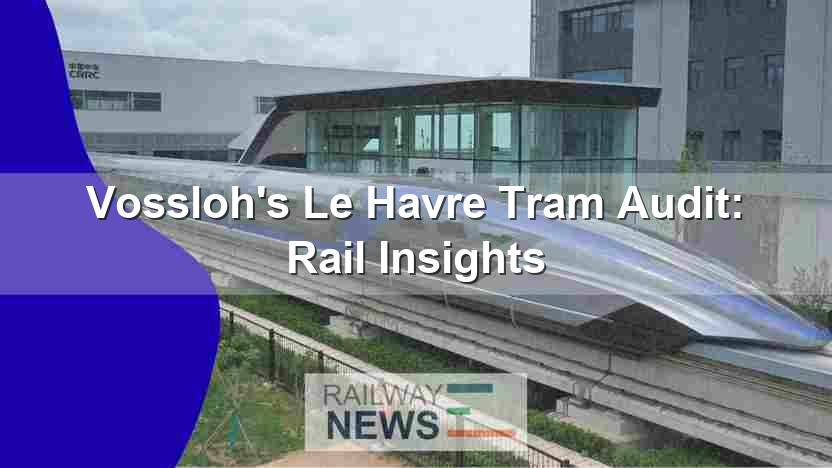
This article examines the detailed rail infrastructure audit conducted by Vossloh, a leading rail technology company, on the Le Havre tram network in France. The audit, commissioned by Compagnie des Transports de la Porte Océane (CTPO), a subsidiary of Transdev, aimed to provide a detailed assessment of the network’s 52km of track after five years of operation. The process involved utilizing state-of-the-art measurement and testing technologies, coupled with sophisticated Vossloh-developed analysis software. This meticulous approach allowed for a precise and detailed evaluation of rail condition, exceeding the capabilities of routine maintenance inspections. The study highlights the importance of proactive maintenance strategies in optimizing the longevity and efficiency of light rail systems and provides valuable insights into the application of advanced technologies in rail infrastructure management. The findings underscore the value of periodic, in-depth audits in ensuring the continued safe and reliable operation of urban transit networks.
Assessing Rail Health: Methodology and Technology
Vossloh’s audit employed cutting-edge measurement and testing equipment, providing highly accurate data on various parameters crucial to rail health. This included assessing geometric irregularities (e.g., gauge, alignment, and level), detecting defects such as corrosion, wear, and head cracking, and measuring the overall condition of the rail profile. The data acquisition process leveraged specialized vehicles equipped to carry out non-destructive testing (NDT) techniques. The use of advanced analysis software enabled the automated detection and classification of defects, significantly enhancing the efficiency and accuracy of the assessment. The sophisticated software also allowed for predictive maintenance strategies based on the collected data, thus optimizing maintenance budgeting and scheduling.
Operational Considerations and Logistical Challenges
The audit presented significant logistical challenges, given the need to inspect the entire 52km network during limited overnight closures. Efficient planning and coordination of Vossloh’s teams from France and Germany were crucial for completing the work within the allocated timeframes. The simultaneous deployment of multiple inspection teams was meticulously planned and executed to maximize efficiency and minimize disruption to the daily operations of the Le Havre tram system. The successful completion of the audit within these operational constraints highlights the capabilities of Vossloh’s experienced personnel and the effectiveness of their operational strategy.
Analysis of Findings and Recommendations
The audit’s findings confirmed CTPO’s initial assessment that the overall condition of the Le Havre tram tracks was good. However, the detailed data provided by Vossloh’s technology allowed for the identification of specific areas requiring attention. This granular level of detail allowed for the development of targeted and optimized maintenance strategies. The report likely included detailed recommendations for preventative maintenance measures and suggested improvements to existing maintenance schedules based on the identified defects and their potential for future deterioration. These recommendations aimed at optimizing the utilization of the allocated maintenance budget, ensuring the long-term health of the infrastructure.
The Importance of Proactive Rail Maintenance
The Le Havre tram network audit demonstrates the critical role of proactive rail infrastructure maintenance in ensuring system reliability and safety. Regular inspections, such as those performed by Vossloh, are essential for identifying potential problems early, before they escalate into major issues requiring costly repairs and significant service disruptions. The combination of routine maintenance and periodic detailed audits, utilizing advanced technologies like those used by Vossloh, represents an efficient approach to railway management. Early detection allows for targeted intervention, extending the lifespan of rail infrastructure, improving operational efficiency, and enhancing the overall safety of the system. This proactive approach promotes a cost-effective and sustainable approach to maintaining essential urban transportation networks.
Conclusions
The Vossloh rail audit of the Le Havre tram network serves as a compelling case study demonstrating the benefits of leveraging advanced technologies in rail infrastructure management. The meticulous assessment, using state-of-the-art measurement and analysis tools, provided CTPO with a detailed understanding of its rail network’s condition beyond what standard maintenance practices could achieve. The audit’s findings, while affirming the generally good state of the tracks, highlighted specific areas requiring attention, allowing for the development of targeted maintenance strategies. This precise information allows for efficient resource allocation and ultimately, cost savings in the long run. The logistical challenges overcome during the audit – performing the detailed assessment during limited night-time closures – underscore the expertise and planning capabilities of Vossloh’s team. The success of this project emphasizes the growing importance of integrating advanced technologies into rail maintenance practices for maximizing efficiency, optimizing resource allocation, and ensuring the long-term safety and reliability of urban transit systems. The proactive approach exemplified by CTPO’s commissioning of this audit should serve as a model for other light rail operators worldwide, highlighting the value of a preventive rather than reactive approach to rail maintenance, leading to safer, more efficient, and more sustainable urban transportation networks.

Railway infrastructure, rolling stock and transport technologies specialist focused on global rail industry developments, high-speed rail systems, signaling technologies and freight transportation. Covering railway investments, public transport modernization, rail operations and international mobility projects across Europe, Asia and North America.
RELATED POSTS

September 6, 2026 4:12 am
Alstom delivered the first of 100 new G Class trams...
September 6, 2026 8:17 am
DB InfraGO reopened the Nuremberg-Regensburg line in Bavaria on 31...

September 5, 2026 10:14 pm
MTA confirmed $600M in annual savings to balance New York's...
September 7, 2026 4:15 pm
Zimbabwe approved the EUR 3 billion Harare Light Rail project,...
September 6, 2026 8:12 pm
MBTA confirmed Red Line is slow zone-free for the first...

September 8, 2026 3:13 pm
Metrolinx completed a new Bloor GO tunnel and 2.5 km...