
Virgin Trains to Orlando: $4B Rail Expansion
Florida’s high-speed rail expansion: a $4 billion Virgin Trains project creating 10,000+ jobs. Learn how this massive undertaking is reshaping transportation!
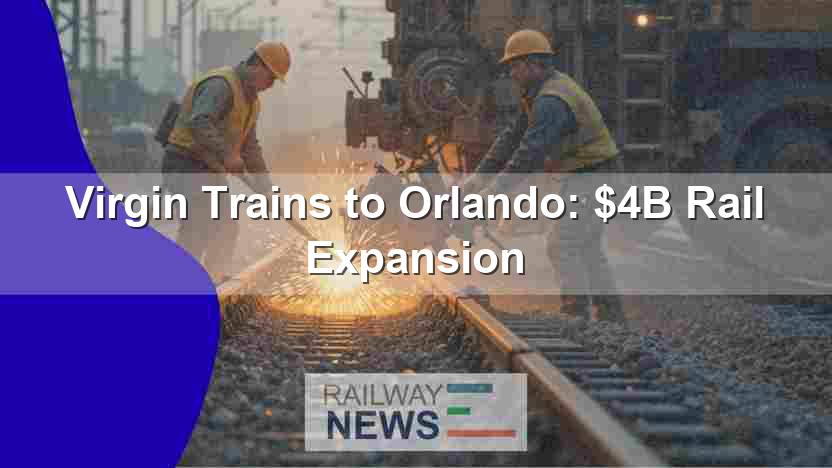
This article examines the significant infrastructure project undertaken by Virgin Trains USA (formerly Brightline), focusing on the awarding of $4 billion in contracts for the construction of a high-speed rail line connecting West Palm Beach and Orlando, Florida. The project represents a substantial investment in Florida’s transportation infrastructure, promising economic benefits and improved connectivity between major population centers. We will delve into the details of the project, exploring the scope of work, the selected contractors, the anticipated economic impact, and the challenges inherent in such a large-scale undertaking. The analysis will consider the strategic importance of this expansion for Virgin Trains USA and its implications for the broader Florida transportation landscape. This project showcases a significant commitment to improving intercity rail travel and offers valuable insights into the complexities and potential rewards of large-scale infrastructure development.
The Scope of the Project: West Palm Beach to Orlando
Virgin Trains USA awarded five major contracts totaling $4 billion for the construction of a 273-kilometer (170-mile) high-speed rail line extending its existing South Florida network to Orlando International Airport (OIA). This expansion is a crucial second phase of the company’s development plan, aiming to connect two of Florida’s largest metropolitan areas. The project encompasses extensive track laying, the construction of new stations and associated infrastructure, and the procurement of significant quantities of materials, including approximately 490,000 railroad ties and 2.35 million tonnes of ballast (granite and limestone). The selected contractors—Hubbard Construction Company, Wharton-Smith, The Middlesex Corporation, Granite, and HSR Constructors—represent a consortium of experienced firms with proven capabilities in large-scale infrastructure projects.
Project Phases and Logistics: A Phased Approach to Construction
The project is being executed in phases, with work on Zone One and Zone Two, including the OIA station and the Virgin Trains maintenance facility, already underway. The phased approach allows for efficient resource management and minimizes disruptions. The logistical challenges are immense, requiring the coordinated movement of vast quantities of materials via rail and road. This includes the efficient transportation of 2.35 million tons of ballast using approximately 20,000 railcars, highlighting the complex supply chain management required for such a project. Effective scheduling and coordination between contractors are vital to ensuring timely completion.
Economic Impact: Job Creation and Revenue Generation
The project is expected to generate significant economic benefits for Florida. Virgin Trains USA projects the creation of over 10,000 jobs during the construction phase, providing a considerable boost to the state’s employment sector. Additionally, the project is anticipated to generate over $650 million in federal, state, and local tax revenue, contributing to public coffers and supporting various government services. The improved connectivity facilitated by the new rail line is also expected to stimulate economic activity along the corridor, benefitting businesses and communities alike. The long-term economic effects should be carefully monitored to ensure that these projections are realized.
Challenges and Considerations: Overcoming Hurdles in Large-Scale Projects
Despite the significant benefits, large-scale infrastructure projects such as this one inevitably face challenges. These can include land acquisition issues, regulatory approvals, environmental concerns, and potential cost overruns. Careful planning, robust risk management strategies, and proactive engagement with stakeholders are essential to mitigate these risks and ensure the successful completion of the project. Potential delays, while acknowledged as a possibility, need to be actively addressed and mitigated through well-defined contingency plans.
Conclusions: A Landmark Investment in Florida’s Future
The Virgin Trains USA expansion to Orlando represents a major investment in Florida’s infrastructure, promising substantial economic benefits and improved intercity connectivity. The awarding of $4 billion in contracts to a consortium of experienced contractors underscores the scale and complexity of the project. The anticipated job creation, tax revenue generation, and enhanced economic activity along the corridor highlight the significant positive impacts. While challenges related to land acquisition, regulatory processes, and potential cost overruns are inherent to such large-scale undertakings, a phased approach, rigorous planning, and effective risk management are crucial for successful project delivery. The project’s completion, expected in 2022, will mark a significant milestone in Florida’s transportation infrastructure, paving the way for enhanced mobility, economic growth, and a more sustainable transportation system. The success of this project will serve as a model for future large-scale infrastructure investments, highlighting the importance of strategic planning, collaborative partnerships, and effective risk mitigation in delivering complex, high-impact projects.

Railway infrastructure, rolling stock and transport technologies specialist focused on global rail industry developments, high-speed rail systems, signaling technologies and freight transportation. Covering railway investments, public transport modernization, rail operations and international mobility projects across Europe, Asia and North America.
RELATED POSTS

October 8, 2026 1:15 pm
Alstom secured a €1bn contract to build 13 automated trains,...

October 1, 2026 7:09 am
United States regulators confirmed a September 30 deadline for the...

October 4, 2026 5:14 pm
Alstom secured a CA$4.7 billion order from VIA Rail Canada...

October 5, 2026 6:12 pm
AECOM and Jacobs secured a contract in September 2026 to...

October 1, 2026 12:13 am
Illinois approved $1.5 billion annually for the Northern Illinois Transit...

October 4, 2026 11:08 pm
Sound Transit confirmed the September 30 opening of Seattle Pinehurst...