
Victoria’s Rail Upgrade: Ballarat Network Efficiency
Victoria’s $96 million Ballarat Rail upgrade dramatically improves freight and passenger flow. Discover how track separation and modernized signaling boost efficiency and unlock regional growth!
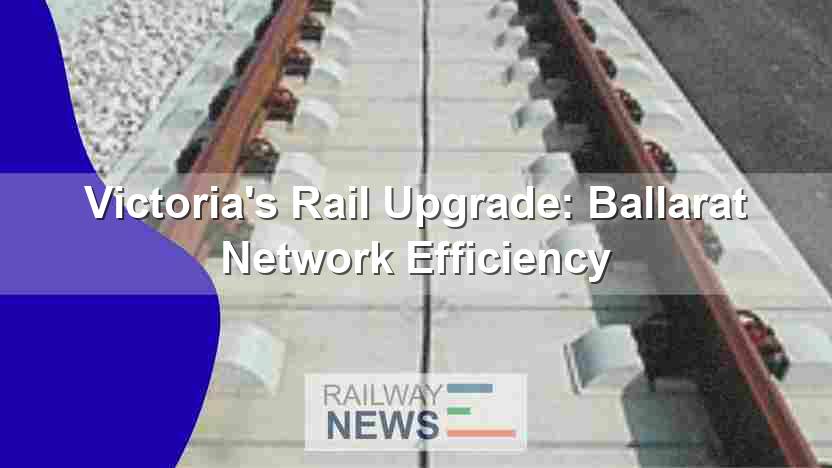
The Victorian government’s commitment to upgrading its rail infrastructure is exemplified by the A$130 million ($96 million USD) investment in the Ballarat rail network. This significant project, the Freight-Passenger Rail Separation Project, aims to alleviate congestion, improve efficiency, and enhance both passenger and freight transport across the crucial Ballarat corridor. The project builds upon the earlier Murray Basin Rail Project, addressing critical bottlenecks and laying the groundwork for future expansion. This article will delve into the specifics of the project, outlining its key components, anticipated benefits, and its long-term impact on regional transportation in Victoria. The analysis will consider the project’s multifaceted approach to improving track geometry, signaling systems, and overall network capacity to achieve a more efficient and reliable rail system. The ultimate goal is to showcase how targeted infrastructure investment can significantly improve the flow of both passenger and freight traffic, ultimately bolstering economic growth and connectivity in regional Victoria.
Freight and Passenger Separation: A Key Strategy
A primary focus of the Freight-Passenger Rail Separation Project is the physical separation of broad-gauge passenger services from standard-gauge freight services within the Ballarat station precinct. This separation significantly reduces conflicts between passenger and freight trains, eliminating a major source of delay and congestion. By dedicating specific tracks to each mode of transport, the project optimizes operational efficiency and reduces the likelihood of scheduling conflicts. This streamlined approach is crucial for improving punctuality and reliability for both passenger and freight services, ensuring that each can operate at optimal capacity without interference.
Track Duplication and Improved Geometry
The project involves the duplication of over 1 kilometer of track between Ballarat station and North Ballarat Junction, specifically addressing the bottleneck at the Armstrong Street bridge. Track duplication allows for simultaneous movement of passenger and freight trains, preventing delays caused by single-track sections. Coupled with improvements to track geometry, this upgrade reduces travel times and enhances safety. Improved track geometry, including curve adjustments and gradient improvements, allows trains to travel at higher speeds, further contributing to overall efficiency gains.
Signaling System Modernization
The aging 1970s signaling system on the Ballarat corridor is being modernized and simplified. This upgrade improves the overall safety and reliability of train operations. A reduced number of signaling systems streamlines control and enhances the precision of train scheduling. Modern signaling systems incorporate advanced technologies that improve capacity and efficiency, allowing for a higher frequency of train movements. This aspect of the project lays the foundation for future capacity increases and operational enhancements, essential for accommodating growing demand.
Enhanced Freight Capacity and Future Passenger Services
The project aims to provide at least 42 return freight paths per week from the Murray Basin region via Ballarat to the ports. This significant increase in freight capacity supports economic growth by facilitating the efficient movement of goods. The improvements also pave the way for future increases in passenger services. The project specifically supports an additional daily V/Line service to Ararat, added services to Maryborough, and the preservation of the dual-gauge connection between Maryborough and Dunolly. This holistic approach to infrastructure improvement not only addresses current needs but also provides the infrastructure necessary to accommodate future growth in both passenger and freight transport.
Conclusion
The A$130 million ($96 million USD) investment in the Freight-Passenger Rail Separation Project represents a significant commitment to improving the Ballarat rail network in Victoria. The project’s multifaceted approach, encompassing track duplication, improved track geometry, modernized signaling systems, and dedicated freight and passenger corridors, addresses key bottlenecks and unlocks significant operational efficiencies. By separating passenger and freight traffic, the project substantially reduces delays and enhances the reliability of both services. The modernization of the signaling system contributes to improved safety and operational control, while the increased freight capacity supports economic growth in the Murray Basin region by facilitating efficient transportation of goods to ports. The project’s benefits extend beyond immediate improvements, as the upgraded infrastructure provides a solid foundation for future expansion of both passenger and freight services. The collaborative effort between Rail Projects Victoria, Transport for Victoria, and V/Line, incorporating feedback from the freight industry, ensures that the project aligns with the needs of all stakeholders. Ultimately, this investment demonstrates a commitment to modernizing regional rail infrastructure, fostering economic growth, and enhancing the quality of life for residents of regional Victoria through improved transport connectivity.
The success of this project hinges not only on its technical aspects but also on its broader contribution to regional development. The enhanced freight capacity supports businesses in the Murray Basin, facilitating access to markets and reducing transportation costs. The improved passenger services improve connectivity for regional communities, promoting tourism and economic activity. The long-term implications are significant, ensuring the Ballarat rail network remains a vital artery for both passenger and freight transportation for years to come. The project serves as a model for future infrastructure investments, demonstrating the effectiveness of a holistic approach that integrates freight and passenger needs to create a more efficient and sustainable transportation system. The careful planning, stakeholder engagement, and phased implementation contribute to a well-executed project that delivers tangible benefits to the Victorian economy and its communities.

Railway infrastructure, rolling stock and transport technologies specialist focused on global rail industry developments, high-speed rail systems, signaling technologies and freight transportation. Covering railway investments, public transport modernization, rail operations and international mobility projects across Europe, Asia and North America.
RELATED POSTS
September 6, 2026 5:19 am
Hitachi delivered Taiwan's first N700ST high-speed train from Japan in...

September 5, 2026 4:19 pm
CPK launched formal tender talks with four consortia to design...

September 5, 2026 7:14 pm
HS2 Ltd signed renegotiated civils contracts with EKFB and Align...

September 6, 2026 4:12 am
Alstom delivered the first of 100 new G Class trams...
September 6, 2026 1:17 am
Hitachi Toshiba Supreme Consortium confirmed the first of 12 N700ST...
September 6, 2026 6:17 am
Hungary ordered a national ban on most freight trains from...