
Victoria’s Gippsland Rail Line Upgrade: A$530M Project Insights
The $530 million Gippsland rail line upgrade is transforming eastern Victoria. Discover how track duplication, signaling upgrades, and station improvements are boosting efficiency and passenger experience!
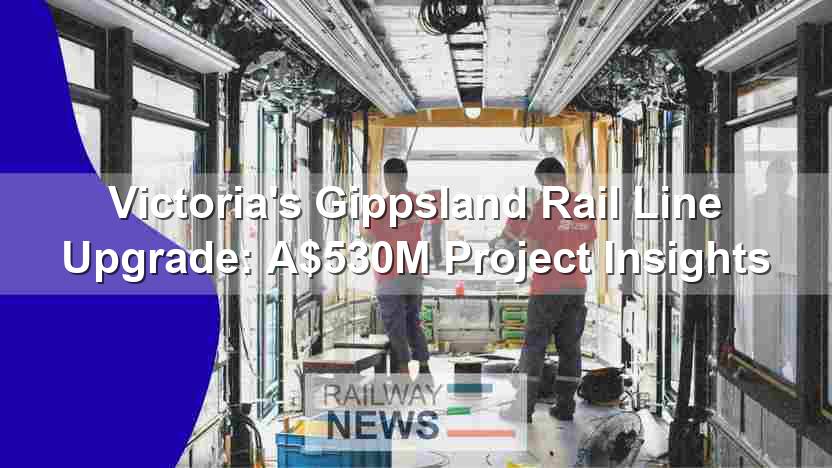
This article explorers into the significant A$530 million upgrade project underway on Victoria’s Gippsland rail line. The project, a joint venture between the federal and state governments, aims to dramatically improve rail services for the eastern Victorian region. This involves not only increased service frequency but also a substantial overhaul of infrastructure, including track duplication, signaling upgrades, and station improvements. The upgrade is crucial for accommodating growing passenger demand, enhancing the efficiency of freight transport, and ultimately bolstering the economic vitality of the Gippsland region. We will explore the various stages of the project, highlighting the technical challenges overcome, and the long-term benefits anticipated for commuters and the broader community.
Initial Survey and Geotechnical Investigations
The project commenced with essential survey works at Traralgon station, employing laser scanning technology to meticulously assess ground and environmental conditions. This initial phase is critical for informed design and planning. The data gathered informs the construction of new platforms and ensures the stability and safety of the upgraded infrastructure. A concurrent six-week geotechnical investigation between Bunyip and Longwarry stations provided crucial subsurface data, allowing Rail Projects Victoria (RPV) to develop precise construction plans, minimizing potential unforeseen complications and delays.
Station Upgrades and Track Improvements
Beyond the survey work, the upgrade encompasses significant station improvements. The project includes the construction of second platforms at several key stations – Morwell, Bunyip, and Longwarry – to increase capacity and allow for more frequent train services. At Traralgon station, a new entrance and over 90 new car parking spaces have already been added, reflecting the commitment to enhancing passenger convenience. Further upgrades are also underway at Moe, Morwell, and Trafalgar stations, enhancing accessibility and overall passenger experience. The track itself is undergoing significant improvements, including track duplication to increase line capacity and reduce congestion, alongside upgrades to the signaling system for improved safety and efficiency.
Signaling and Capacity Enhancements
The modernization of the signaling system is paramount to the project’s success. Upgrading the signaling infrastructure allows for safer and more efficient train operation, enabling increased service frequency and higher speeds where feasible. This is crucial for handling the anticipated increase in passenger and freight traffic. Improved signaling systems reduce the risk of human error, enhance train control, and optimize the flow of trains along the line, thereby improving overall operational efficiency and reliability.
Economic and Social Impacts
The Gippsland Line upgrade is not merely an infrastructure project; it’s a vital investment in the economic and social well-being of the region. Improved rail services facilitate easier commuting for residents, fostering a more connected community. Enhanced freight capacity boosts the efficiency of transporting goods to and from the Gippsland region, supporting local businesses and industries. The project also positively impacts the local economy through job creation during construction and the ongoing maintenance of the upgraded infrastructure. The increased accessibility provided by reliable and efficient rail transport contributes to the overall livability and attractiveness of the region.
Conclusions
The A$530 million upgrade of Victoria’s Gippsland rail line represents a substantial investment in the future of eastern Victoria. The project, characterized by meticulous planning, detailed surveys, and detailed geotechnical investigations, is focused on improving both passenger and freight rail services. The construction of new platforms at key stations, alongside track duplication and signaling upgrades, will significantly enhance operational efficiency and capacity. The improvements extend beyond increased service frequency; they encompass enhanced passenger amenities at stations, including new car parks and entrances. This detailed approach reflects a commitment to not only modernizing the infrastructure but also improving the overall passenger experience.
The economic benefits are far-reaching, supporting the growth of local businesses and industries through improved freight transport capabilities. The project’s positive social impact is equally significant, fostering a more connected community through easier and more reliable commuting options. The successful completion of this project will stand as a testament to the Victorian government’s dedication to providing modern, efficient, and accessible public transportation, shaping the future of the Gippsland region for years to come. The initial survey and geotechnical work, although seemingly preliminary, demonstrates a commitment to thorough planning that minimizes risk and ensures the project’s long-term viability and success.
To summarize, the Gippsland Line upgrade is more than just a series of infrastructure improvements; it’s a strategic investment in the economic and social fabric of a vital region. By addressing current limitations and preparing for future growth, this project lays the foundation for a more prosperous and connected eastern Victoria. The meticulous attention to detail in the initial phases, highlighted by the survey and geotechnical studies, bodes well for the success of the entire undertaking, promising a lasting and positive impact on the lives of those who live, work, and travel within the Gippsland region.

Transport and railway industry editor covering global rail infrastructure, sustainable mobility, urban transit systems and next-generation railway technologies with a focus on accessible and industry-focused reporting.
RELATED POSTS

October 8, 2026 1:15 pm
Alstom secured a €1bn contract to build 13 automated trains,...

October 1, 2026 7:09 am
United States regulators confirmed a September 30 deadline for the...

October 8, 2026 12:18 pm
Siemens Mobility signed an agreement with VinSpeed to supply 350...

October 4, 2026 5:14 pm
Alstom secured a CA$4.7 billion order from VIA Rail Canada...

October 5, 2026 6:12 pm
AECOM and Jacobs secured a contract in September 2026 to...

October 1, 2026 12:13 am
Illinois approved $1.5 billion annually for the Northern Illinois Transit...